
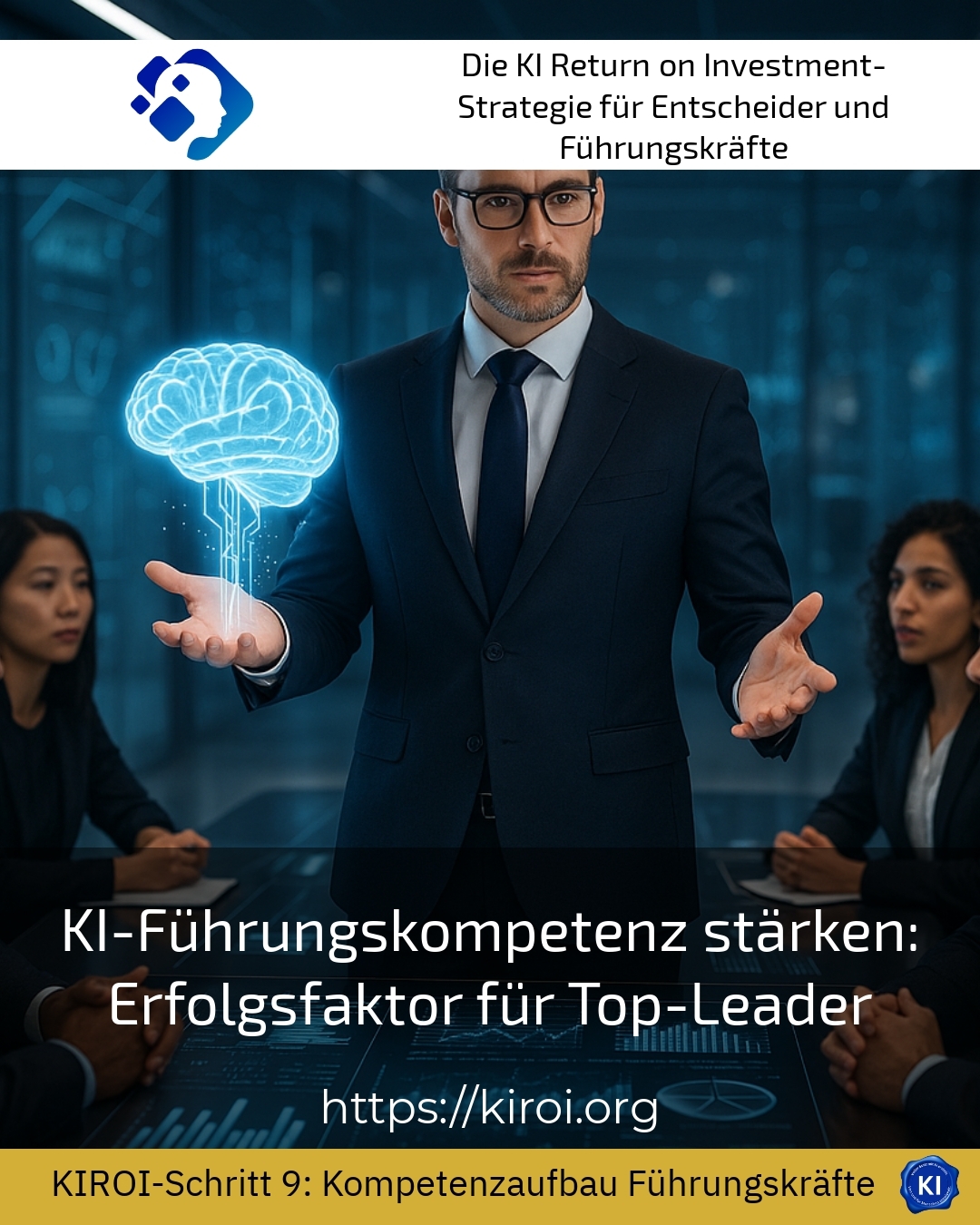
Why do so many highly qualified leaders fail precisely when intelligent technologies transform their organisations?
This question is currently occupying board members, managing directors and decision-makers worldwide. The answer frequently does not lie in a lack of expertise. It lies rather in an underestimated competence: AI leadership skills. Top leaders face the challenge of navigating their teams through technological disruption. In doing so, classic management expertise is no longer sufficient. The ability to deploy intelligent systems strategically while bringing people along in the process is becoming the decisive success factor. Clients frequently report feeling overwhelmed and uncertain. They are looking for orientation in a world that is changing rapidly. This is precisely where professional guidance comes in, providing impulses and supporting executives.
The new reality for leaders in the digital age
The business world has changed fundamentally. Algorithms analyse data faster than any human team. Automated processes take over routine tasks at a breathtaking pace. Intelligent assistants help with complex decision-making. This development affects all industries and company sizes. It demands an entirely new profile of competencies from leaders. The traditional role of the manager, who controls and delegates, is giving way to a new understanding. Modern leaders must build bridges between technology and people. They must create trust in times of uncertainty. And they must understand for themselves what the new tools can achieve.
Take the example of a medium-sized manufacturing company. The managing director was faced with the introduction of a predictive maintenance system. His employees feared for their jobs. The engineers doubted the reliability of the algorithms. It was only through targeted communication and the involvement of all stakeholders that the transformation succeeded. Initially, the manager lacked an understanding of the emotional dimension of change. Another example comes from retail. Here, a store manager implemented intelligent inventory management. The initial scepticism quickly gave way to enthusiasm. The employees realised that the technology relieved them of burdens. Suddenly they had more time for customer service. In the third case, an insurance company struggled with the integration of chatbots. The customer advisors felt threatened. The head of sales first had to understand for himself which tasks the technology could take over. Only then could he convince his team.
Why AI leadership competence is becoming a competitive advantage
Companies with technologically competent leaders achieve better results [1]. This is not solely due to the technology itself. Rather, it is down to the way it is introduced and used. Leaders with pronounced AI leadership skills build acceptance within their teams. They recognise potential at an early stage. They avoid costly misjudgements. And they use the resulting freedom for innovation and creativity.
A logistics company faced the challenge of optimising its route planning. The previous planning manager relied on experience and intuition. The new system promised savings of fifteen percent. However, the responsible department head recognised that technology alone would not bring success. He invested time in training his dispatchers. He explained how the algorithms worked in a transparent manner. The result exceeded expectations. At the same time, a hospital introduced a system for diagnostic support. The doctors initially reacted with rejection. They saw their expertise being called into question. The hospital director managed to position the technology as an assistant. He emphasised the final decision-making authority of the medical staff. Thus, the integration succeeded. In the financial sector, an investment company implemented algorithmic trading. The portfolio manager had to learn to trust the technology. At the same time, he retained control over strategic decisions. This balance required new leadership qualities.
Best practice with a AIROI customer
An internationally active trading company with several thousand employees was facing a comprehensive digital transformation. The management had already made considerable investments in intelligent systems, but the results fell short of expectations. The analysis revealed that middle management had not been sufficiently involved, and these managers felt overwhelmed rather than supported by the technology. As part of the transruption coaching, we initially supported the second and third-tier managers individually, taking their concerns seriously and developing potential solutions together. The coaches helped to build an understanding of the possibilities and limitations of the new technologies without neglecting the human component. Parallel to this, we worked with the management on a new communication strategy that placed transparency and participation at the centre. After six months, acceptance of the systems had increased significantly, and the managers reported increased self-confidence in dealing with the new tools. The staff turnover rate fell measurably and employee satisfaction rose. This example shows how important it is for change processes to be accompanied by experienced coaches who bring both technological understanding and psychological expertise.
The five pillars of modern leadership with intelligent systems
Successful leaders in technology-driven environments are characterised by five core competencies. The first pillar is a fundamental understanding of technology. Leaders do not need to be able to code. However, they must understand what systems can achieve and where their limits lie. The second pillar encompasses emotional intelligence. Dealing with fears and resistance requires empathy and strong communication skills. Thirdly, modern leaders need strategic thinking. They must recognise which technologies are relevant to their company. Fourthly, adaptability is indispensable. Technological development is advancing rapidly. And fifthly, ethical judgment is required. Not everything that is technically possible is also sensible or morally justifiable.
A pharmaceutical company applied these principles when introducing research assistance systems. The lab managers were trained to become technology ambassadors. They understood the algorithms and were able to answer questions from their teams. A media organisation transformed its editorial processes in a similar way. The editor-in-chief learned to view automated text generation as support. She retained creative and journalistic control. In the construction industry, a project manager revolutionised cost planning. He used predictive analytics for resource optimisation. His experience and the technological tool complemented each other perfectly.
Strengthening AI leadership skills through targeted development
The good news is that these competencies can be learned. They are not innate talents. Rather, they are skills that can be developed through reflection and practice. Clients frequently report that they initially felt overwhelmed. However, through targeted guidance, they gained confidence and poise. The first step often consists of self-reflection. Where do I stand? What fears do I have? What do I want to achieve? These questions form the basis for every development process.
An energy supplier commissioned a comprehensive leadership development programme. The participants worked on concrete case studies from their everyday work. They learned to better evaluate technological decisions. A tourism group took a different approach. Here, managers did work shadowing in the technology departments. They experienced firsthand how the systems work. This created understanding and dismantled prejudices. A restaurant chain used mentoring programmes. Young, tech-savvy employees coached experienced managers. This reverse-mentoring approach proved to be extremely effective. Both sides benefited from the exchange.
The role of coaching in strengthening leadership skills
Professional guidance can significantly accelerate the development process. An experienced coach provides a space for reflection and asks the right questions. They offer impetus without prescribing ready-made solutions. As part of transruption coaching, we work specifically on the individual challenges faced by leaders. In doing so, we clearly position ourselves as companions for projects involving technological transformation. We do not claim to solve all problems. Rather, we support you in finding your own solutions [2].
A female automotive supplier managing director sought support with the realignment of her company. The industry was undergoing a transition. New technologies required new business models. During coaching, she developed a clear vision for the future. An IT service provider was faced with the challenge of adapting its leadership culture. The previous hierarchies no longer suited the agile way of working. Through systematic support, the cultural shift succeeded. In the healthcare sector, we assisted a nursing service manager with the introduction of documentation systems. The nursing staff feared extra work. Together, we developed an implementation strategy that involved all stakeholders.
Best practice with a AIROI customer
A medium-sized engineering firm with a long history and a strong market position recognised that digitalisation was unstoppable, and the managing director sought ways to make his company fit for the future. The particular challenge lay in the corporate culture, which was strongly shaped by a tradition of craftsmanship and in which technological innovations were met with scepticism. As part of the AIROI support programme, we first worked together to analyse existing processes and identify areas with the greatest potential for optimisation. In doing so, we made a point of recognising the experience of long-serving staff and utilising it as a resource, rather than viewing it as an obstacle. The managing director learnt to adapt his communication style and to convey the benefits of the new systems in a way that resonated with his workforce. We supported several pilot projects in which teams were able to test new tools and contribute their experiences. The phased introduction helped to break down resistance and build trust. After a year, the company had not only increased its productivity but had also developed a new openness to change. The managing director reported that he himself had benefited most from the process, as he had learnt to see change as an opportunity and to redefine his leadership role.
Overcoming resistance and bringing teams along.
Every change generates resistance. This is a natural human reflex. Leaders with pronounced AI leadership skills understand these dynamics. They do not react with pressure, but with understanding. They create spaces for concerns and questions. They communicate transparently about goals and expectations. And they celebrate small successes to build motivation.
A telecommunications company introduced an intelligent customer service system. The call centre agents feared becoming redundant. Management responded with open communication, showing how the technology filters repetitive queries. The employees were able to focus on complex customer concerns. A retail company experienced similar resistance when introducing demand forecasting. The buyers trusted their experience more than the algorithms. Acceptance only grew once the forecasts proved to be accurate on multiple occasions. A consulting firm used the introduction of new analysis tools as an opportunity. It involved all consultants in the selection process. The employees felt heard and taken seriously. The implementation went smoothly.
Ethical Responsibility as Part of Leadership Competence
With great technological power comes great responsibility. Leaders must incorporate ethical questions into their decisions. What data may be used? How transparent must algorithmic decisions be? What impact does automation have on jobs? These questions require reflection and clear values [3].
An employment agency faced a dilemma. The new applicant management system promised efficiency gains. At the same time, however, there was a threat of unconscious bias in the algorithms. Management decided on a transparent approach. They had the system regularly checked for fairness. An insurance company used risk assessment systems. Management ensured that no demographic groups were systematically disadvantaged. A retailer deliberately refrained from using certain surveillance technologies. They did not want to jeopardise the trust of their employees. These decisions required courage and foresight.
My AIROI Analysis
The strengthening of AI leadership skills does not represent an optional additional qualification, but is developing into an indispensable core competency for all leaders. The examples from various industries impressively demonstrate that the success of technological transformation does not depend on the technology itself, but on the people who introduce and use it. Leaders who rise to this challenge will successfully lead their organisations into the future. Those who ignore it risk losing touch.
The good news is that it is never too late to develop these competencies. The first step is to honestly analyse one's own situation. Where do my strengths lie? Where is my potential for development? What support do I need? Professional guidance can significantly accelerate and ease this process. We at transruptions-Coaching see ourselves as partners on this journey. We provide impetus, we ask questions, and we accompany concrete projects. In doing so, we always respect the autonomy of our clients. For ultimately, every leader must find their own path. Technological development will not slow down. On the contrary: the speed of change continues to increase. Leaders who invest in their development now are creating the foundation for long-term success. They will not only master their own challenges, but also be role models for their teams and organisations.
Further links from the text above:
[1] McKinsey Digital Insights on leadership in digital transformation
[2] transruptions coaching approach and methodology
[3] World Economic Forum article on ethical responsibility in intelligent systems
For more information and if you have any questions, please contact Contact us or read more blog posts on the topic Artificial intelligence here.









 Deutsch
  English (UK)