
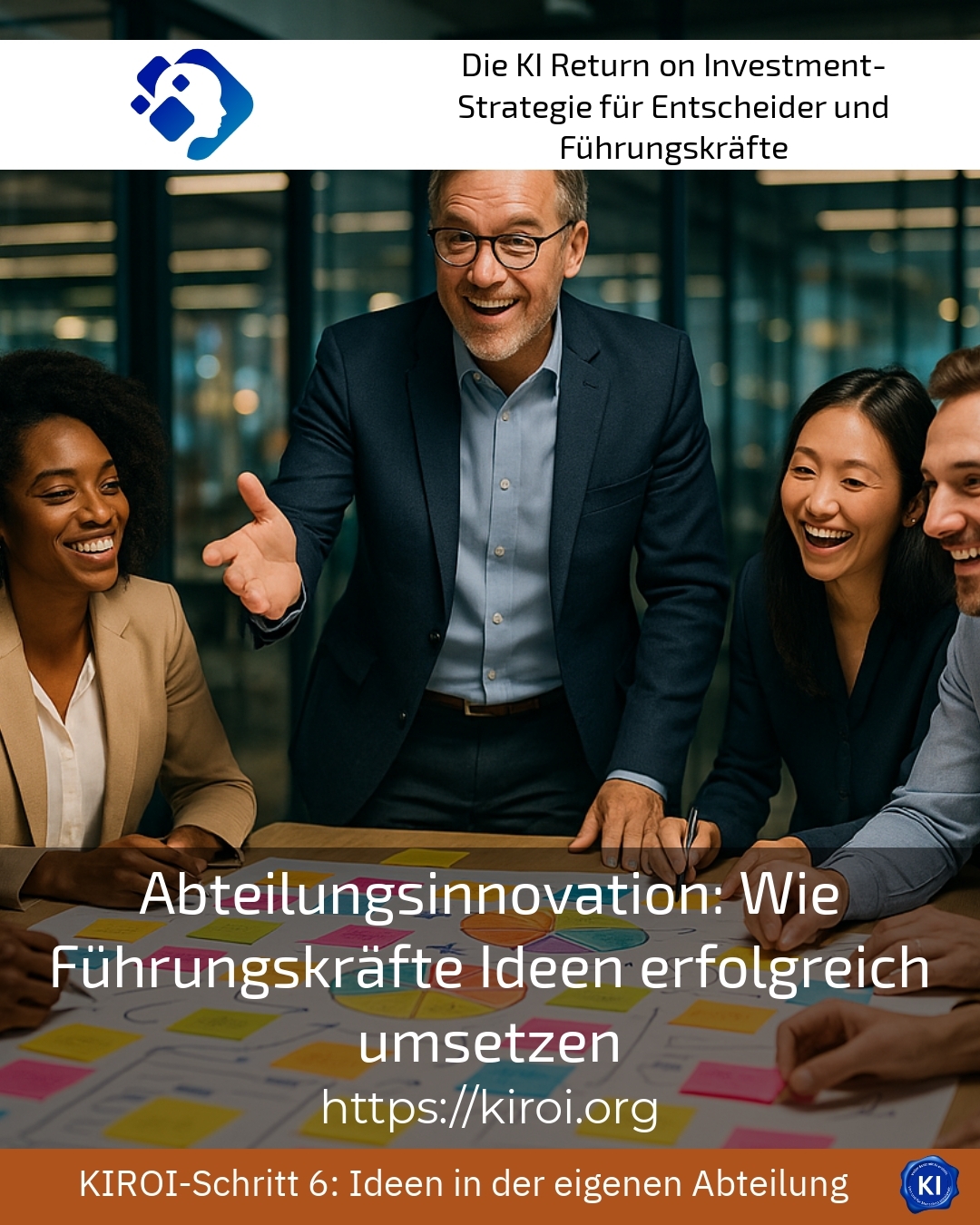
Imagine a single idea transforming the entire success of your department. This is precisely what managers experience when they strategically approach departmental innovation and develop their teams into true idea factories. But why do so many promising concepts fail to be implemented? And how do some department heads manage to drive groundbreaking changes seemingly effortlessly? The answer lies in a combination of methodology, understanding people, and the courage to question established structures. This article takes you on a journey through proven strategies and shows, using concrete examples, how managers not only collect ideas but successfully bring them to life.
Understanding the Fundamentals of Successful Departmental Innovation
Before managers can initiate change, they must understand the foundation. Innovation rarely happens by chance. It requires systematic work and clear frameworks. For instance, a department head in sales realised that his employees were collecting valuable customer feedback daily. However, this information was getting lost in notes and emails. He introduced a simple digital system that centrally bundled all feedback. Within a few months, his team developed three new service concepts from it.
It was a similar situation in the HR department of a medium-sized company. The manager noticed recurring complaints about complicated holiday request forms. Instead of ignoring the problem, she invited her team to a structured brainstorming workshop. Together, they developed a simplified process that halved the processing time. The key was to give employees space for their observations.
A third example comes from the customer service sector. A department manager there was struggling with high staff turnover. She began to systematically evaluate exit interviews and identify patterns. The insights gained were incorporated into a new onboarding programme. This programme took into account the actual needs of new colleagues. Staff turnover noticeably decreased because the manager turned problems into opportunities.
Best practice with a AIROI customer
A medium-sized manufacturing company faced the challenge that innovative ideas from production regularly got lost because there were no clear structures for their evaluation. The production management turned to transruptions-coaching to establish a sustainable innovation process. Together, we developed a three-stage procedure that first collected ideas, then evaluated them through a cross-departmental committee, and finally implemented them with clear responsibilities. The manager learned the importance of transparent communication and regular feedback for team motivation. Within six months, employees submitted over fifty suggestions for improvement, twelve of which were implemented directly. The introduction of a monthly idea forum, where every submitted idea received official feedback, was particularly effective. This appreciation significantly increased participation and created a culture where innovations were welcomed and not perceived as disruptions to daily business. The example impressively shows how professional support can provide impetus for sustainable change.
Overcoming resistance and bringing teams along.
Every change elicits resistance. Experienced leaders anticipate this and plan accordingly. A department head in accounting wanted to introduce a new software system. The long-serving employees reacted sceptically. Instead of simply mandating the system, he offered training sessions and appointed internal experts. These multipliers helped their colleagues with questions. The resistance gradually transformed into acceptance.
There was discontent in a marketing department when the executive wanted to introduce agile working methods. Many felt the new structures were an additional burden. The department head reacted cleverly and listened first. She adapted the approach to the needs of her team. Some elements she adopted fully, others she modified significantly. This flexibility showed the team that their opinion mattered.
A particularly instructive example is provided by an IT department where an ambitious project almost failed. The manager had underestimated the importance of regular communication. Rumours and uncertainty began to spread. The situation only calmed down when they introduced weekly update meetings. The employees finally understood why certain decisions were made. Transparency proved to be the key to success.
Promoting departmental innovation through clear communication
Communication forms the backbone of any successful change. Leaders who clearly communicate their vision gain support. For example, a purchasing manager wanted to build more sustainable supply chains. He explained the background and benefits to his team in detail. Together, they identified suppliers who met the new requirements. The team felt involved and actively supported the change.
A manager in quality management acted similarly when she wanted to introduce new testing procedures. She organised information events and patiently answered all questions. She took critical voices seriously and integrated justified objections. This openness created trust and considerably accelerated the implementation. The employees became co-creators rather than mere executors.
In the logistics sector, another example illustrates the importance of emotional intelligence. A department head noticed that an experienced employee felt overlooked. Consequently, this employee subtly blocked every suggestion for improvement. A personal conversation clarified the situation. The employee was given a key role in the innovation process. His expertise enriched the project, and the resistance melted away.
Best practice with a AIROI customer
A senior manager in the service sector sought disruption coaching because her team had stagnated and was no longer delivering new ideas. The employees were working routinely, but without discernible passion. During the coaching process, we analysed the causes together and discovered that previous ideas had repeatedly been rejected without sufficient justification. This experience had demotivated the team and created a culture of silence. We developed a concept that provided every rejected idea with an appreciative and comprehensible explanation. Additionally, we introduced a reward system for particularly creative suggestions, offering not only financial but also intrinsic recognition. The manager learned to provide positive feedback regularly and to celebrate small successes. Within a few months, the atmosphere in the department noticeably transformed. Employees began contributing ideas again, and clients frequently report a new sense of community that has improved collaboration. This example illustrates how professional support can help break down entrenched structures.
Establish sustainable structures for continuous departmental innovation
One-off successes are not enough. Leaders must create structures that function permanently. An example from the financial sector illustrates this impressively. The department head set up a monthly innovation meeting. Everyone was allowed to submit suggestions, regardless of position or experience. This equality promoted the flow of ideas and strengthened cohesion.
In one research department, they took things a step further. There, management reserved ten percent of working time for experimental projects. Employees could pursue their own ideas without pressure to justify them. Some experiments failed, while others led to valuable insights. This tolerance for failure created an atmosphere in which creativity could flourish.
This approach also works in the administrative sphere. A head of administration introduced a digital idea board where all suggestions were visible. Colleagues commented on and added to each other's ideas. In this way, individual thoughts developed into collaborative concepts. The transparency ensured that good ideas were not lost.
Ensure measurable success and continuous improvement
Innovation must be measurable to be convincing in the long term. Leaders require clear key figures to document progress. For example, a sales manager defined concrete goals for the introduction of new sales strategies. He tracked monthly how many customer visits followed the new scheme. This data helped him to demonstrate successes and make adjustments.
A learning and development specialist used employee surveys to measure the success of new training programmes. She systematically compared satisfaction scores before and after their introduction. The positive changes convinced even sceptical voices within management. Figures and facts built trust in her work.
In production, a department manager relied on visual dashboards. These showed in real-time how process improvements impacted efficiency. The employees could immediately see the contribution their ideas were making. This visibility further motivated them and encouraged more suggestions.
My AIROI Analysis
The examples described clearly show that successful departmental innovation is no accident, but the result of conscious decisions and consistent implementation. Leaders who want to shape change successfully must first understand that people are at the centre. Technical solutions and new processes only work if those involved understand and accept them. The role of the leader thereby transforms from decision-maker to enabler, from controller to coach. Structures that systematically collect, evaluate, and implement ideas prove to be particularly effective. The emotional component should not be underestimated, as appreciation and recognition often drive innovation more strongly than financial incentives. Transruption coaching accompanies leaders precisely in this process and provides impulses that enable sustainable change. Experience shows that external perspectives often reveal blind spots and open up new possibilities. Leaders who engage in this guidance not only develop their department further but also grow personally from the challenges. Innovation is not a goal that can be achieved once and then ticked off. It is a continuous process that requires attention, commitment, and the willingness to constantly dare to try new things and learn from mistakes.
Further links from the text above:
[1] Harvard Business Review – Innovation
[2] McKinsey – The Eight Essentials of Innovation
[3] Gallup – Employee Engagement Drives Growth
For more information and if you have any questions, please contact Contact us or read more blog posts on the topic Artificial intelligence here.








 Deutsch
  English (UK)