
The term „Optimal Transport in ML“ primarily belongs to the fields of Artificial Intelligence, Big Data and Smart Data, as well as Industry and Industry 4.0. In the world of Machine Learning (ML), optimal transport describes a method of how data can be moved from one form to another to more efficiently recognise patterns or improve processes.
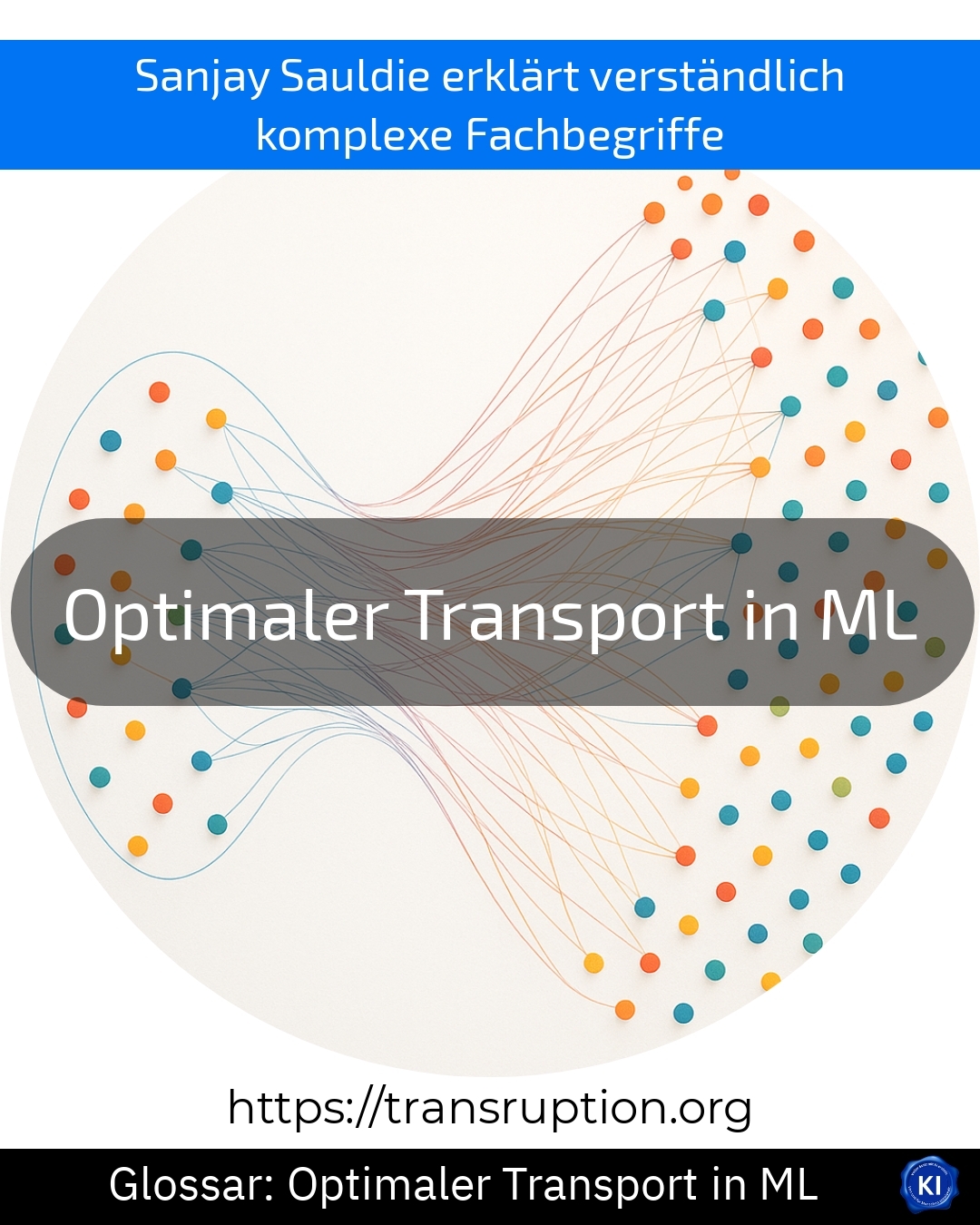
Imagine you run a factory and have many different delivery routes for your products. Optimal transport in ML helps to find the best routes so that raw materials arrive quickly and cheaply. In the digital realm, this means algorithms calculate the „transport routes“ between different datasets to identify similarities or differences.
A practical example: A company wants to better distinguish between images of defective and flawless products. Optimal transport in ML compares the distribution of image data and helps the algorithm learn faster which images show defects and which do not. This makes production more efficient and reduces the error rate.
Optimal transport in ML thus ensures that data is used smartly and resource-efficiently – an important step towards greater efficiency and better results.











 Deutsch
  English (UK)