
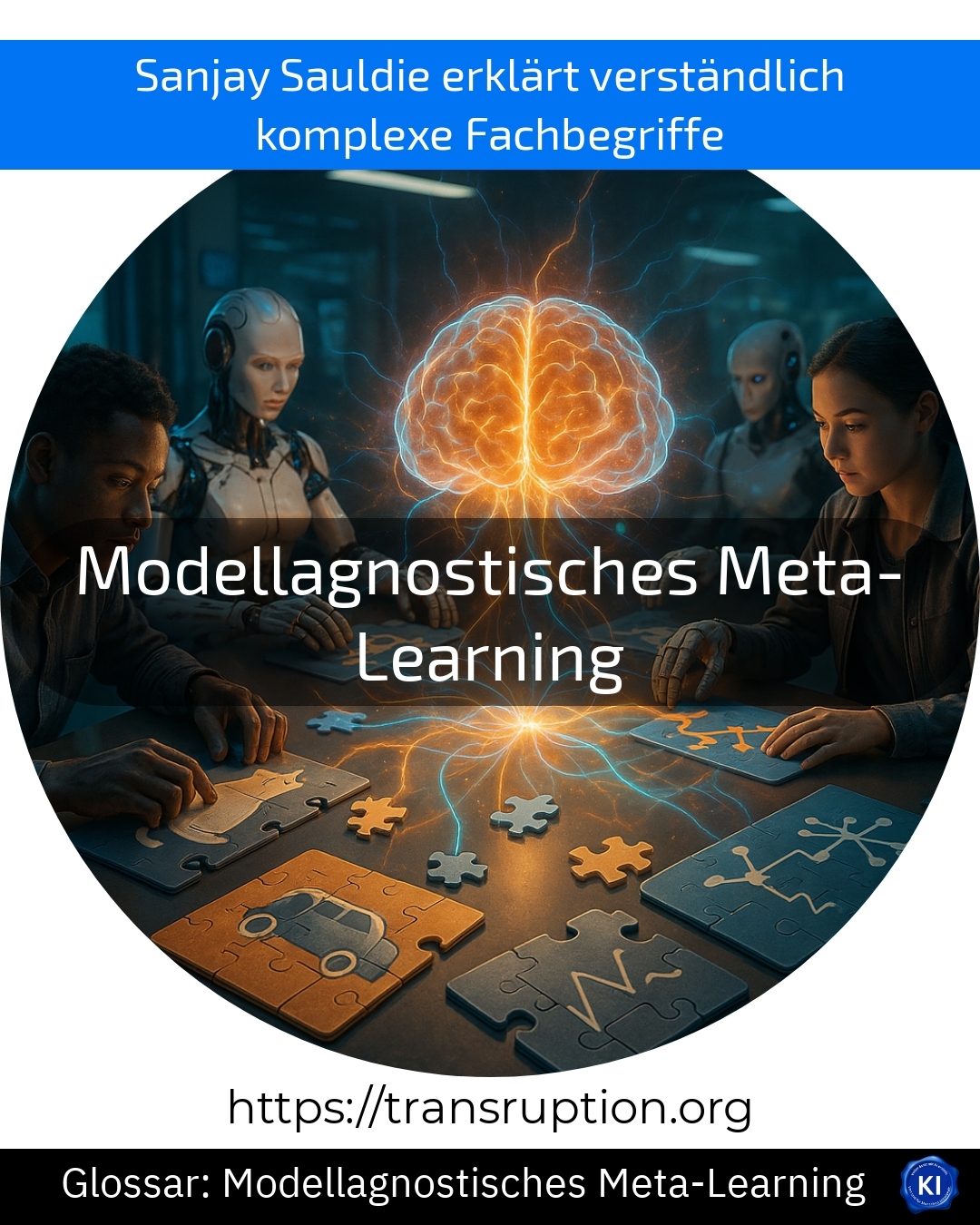
The term „model-agnostic meta-learning“ comes from the fields of artificial intelligence, automation, and big data. It involves training machines or programmes to learn new tasks particularly quickly and effectively – regardless of which model is used in the background.
The special feature: This learning is „model-agnostic“. This means the learning ability is not dependent on a specific algorithm or learning model. Instead of starting from scratch every time, model-agnostic meta-learning allows a system to use past experiences and adapt rapidly to new requirements.
A simple example: Imagine you are working with an intelligent production facility. It is supposed to assemble a completely new product variant today, the blueprint of which it has never seen before. Thanks to model-agnostic meta-learning, the machine can learn how to handle the new task with just a few trial runs – without extensive reprogramming or costly re-learning.
This makes model-agnostic meta-learning particularly valuable wherever requirements change frequently, as the systems remain flexible and adaptable.









 Deutsch
  English (UK)