
The term low-rank matrix factorisation is primarily found in the fields of Artificial Intelligence, Big Data and Smart Data, as well as Industry and Industry 4.0. It is a method that can be used to simplify and present large amounts of data in a clear and organised manner.
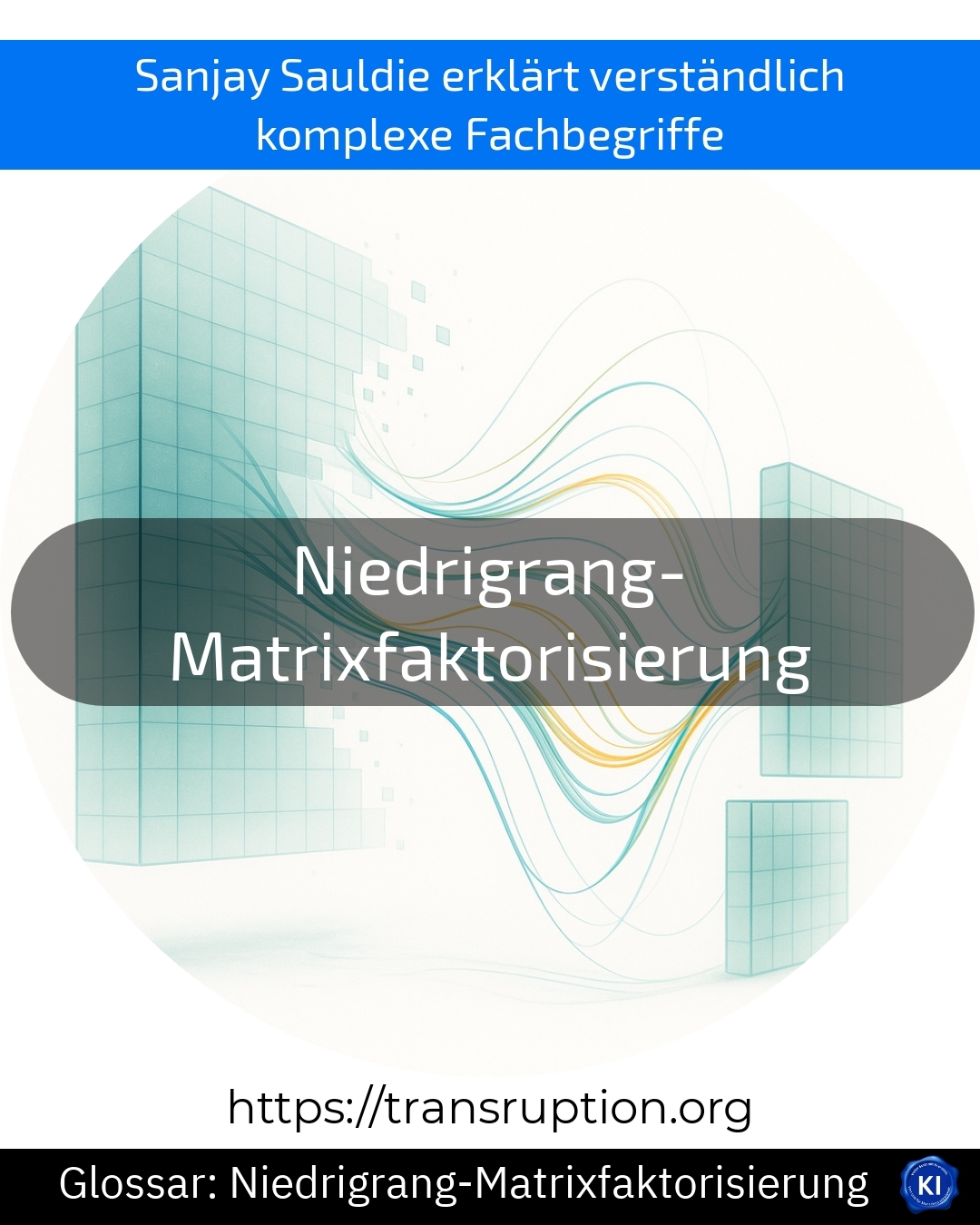
Imagine a huge Excel spreadsheet with thousands of rows and columns, for example, containing customer data, production figures, or user behaviour. This spreadsheet often contains a lot of empty fields or superfluous information. Low-rank matrix factorization automatically decomposes this large spreadsheet into smaller, simpler structures, making patterns and correlations easier to identify.
A vivid example is personalised product recommendations in online retail: here, the previous purchases and interests of many users are stored in a large matrix. With low-rank matrix factorization, the computer can recognise „hidden“ preferences and trends to display targeted, suitable recommendations. This benefits both companies and customers through more focused offers and improved service.
In short: Low-rank matrix factorisation helps to make complex datasets understandable and usable.











 Deutsch
  English (UK)