
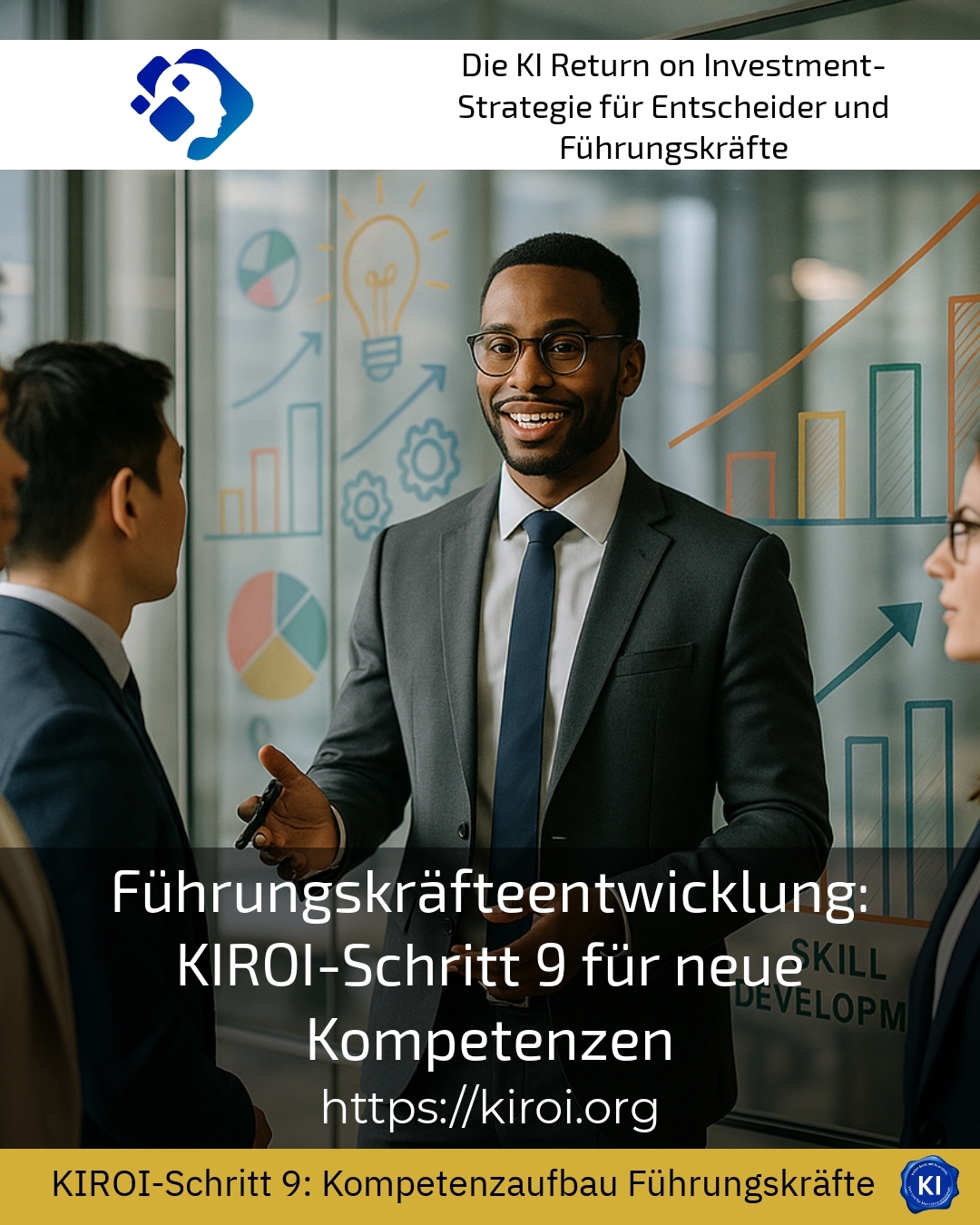
Targeted leadership development is increasingly gaining importance, particularly when it comes to building new competencies that meet the demands of the modern working world. As an important component of this development, the KIROI Step 9 supports leaders in systematically expanding both their classical leadership qualities and digital skills, especially in dealing with Artificial Intelligence (AI).
Leadership Development: The Role of KIROI Step 9 in Competency Advancement
Leadership development is more than just a short-term training offer. The KIROI Step 9 is understood as an integral component that builds new competencies in a holistic context. It not only imparts knowledge but also promotes practical application. In addition to classic methods such as seminars and workshops, innovative learning formats are used, such as coaching, mentoring, and learning-on-the-job approaches.
An example from the manufacturing sector shows how managers can learn about and utilise AI-driven process optimisation through specially designed workshops. This not only improves efficiency but also fosters a deeper understanding of digital transformation processes. In the IT sector, companies are increasingly relying on executive coaching sessions that address ethical issues and the safe handling of AI systems. In the service sector too, individual coaching sessions enable the strengthening of digital communication skills, which are particularly essential for hybrid teams.
This practice-oriented leadership development, with a focus on new competencies, enables leaders to become more capable and actively shape the transformation within their organisations.
Practical methods for sustainable development of new leadership skills
KIROI Step 9 utilises a combination of formal and informal learning processes. Coaching, for example, enables individual support, where leaders learn to critically assess AI-powered tools and use them effectively. Likewise, companies are implementing mentoring programmes in which experienced leaders share their knowledge of digital technologies. Particular emphasis is placed on reverse mentoring, where younger employees open up new digital perspectives to older management members.
Learning-on-the-job and job rotation effectively complement these approaches. For instance, pharmaceutical industry executives gain practical experience by testing AI-based applications directly in their day-to-day work across various departments. In the financial sector, job rotation programmes are used to familiarise executives with different departments, thereby creating a more comprehensive understanding of digital implementations.
The support provided by these methods ensures that not only professional expertise is expanded, but also personal development and self-reflection are encouraged – essential aspects of modern leadership development.
BEST PRACTICE with one customer (name hidden due to NDA contract) A medium-sized IT service company implemented a leadership development programme that includes online modules on AI basics and workshops on ethical AI usage. This was supplemented by individual coaching, which enabled the leaders to directly apply new AI competencies in current projects. This resulted in palpable innovations in customer service and significantly strengthened team dynamics.
Tips for the successful implementation of new leadership skills
Successful leadership development should always include clearly structured development plans that are tailored to individual needs and company objectives. The combination of face-to-face and digital learning formats enables flexible and sustainable skills development.
Companies in the mechanical engineering sector report that regular feedback and 360-degree assessments help to make progress in skills development transparent and to manage it in a targeted way. In consulting, managers are increasingly relying on peer coaching, which promotes the exchange of experience and knowledge and creates space for reflection. Service providers emphasise the importance of hybrid training formats in order to lead authentically and effectively, even in digital working environments.
Equally important is the promotion of a learning-friendly corporate culture in which mistakes are seen as opportunities for further development. Only in this way can the added value of leadership development be sustainably secured and current challenges be responded to flexibly.
My analysis
Leadership development, with an eye towards new competencies, today requires an integrative and practical approach. The KIROI Step 9 offers a promising framework for strengthening digital and social skills in parallel. It is crucial, in this context, to tailor measures individually to the needs of leaders and to support them through continuous guidance, such as coaching and mentoring. This way, leaders can not only be prepared for classic leadership tasks but also master the challenges of digital transformation with confidence.
Further links from the text above:
Leadership Development: With KIROI Step 9 to Competence Elite
KIROI Step 9: Leadership Development with AI Competency
How to succeed in leadership development – Methods, concepts
For more information and if you have any questions, please contact Contact us or read more blog posts on the topic Artificial intelligence here.











 Deutsch
  English (UK)