
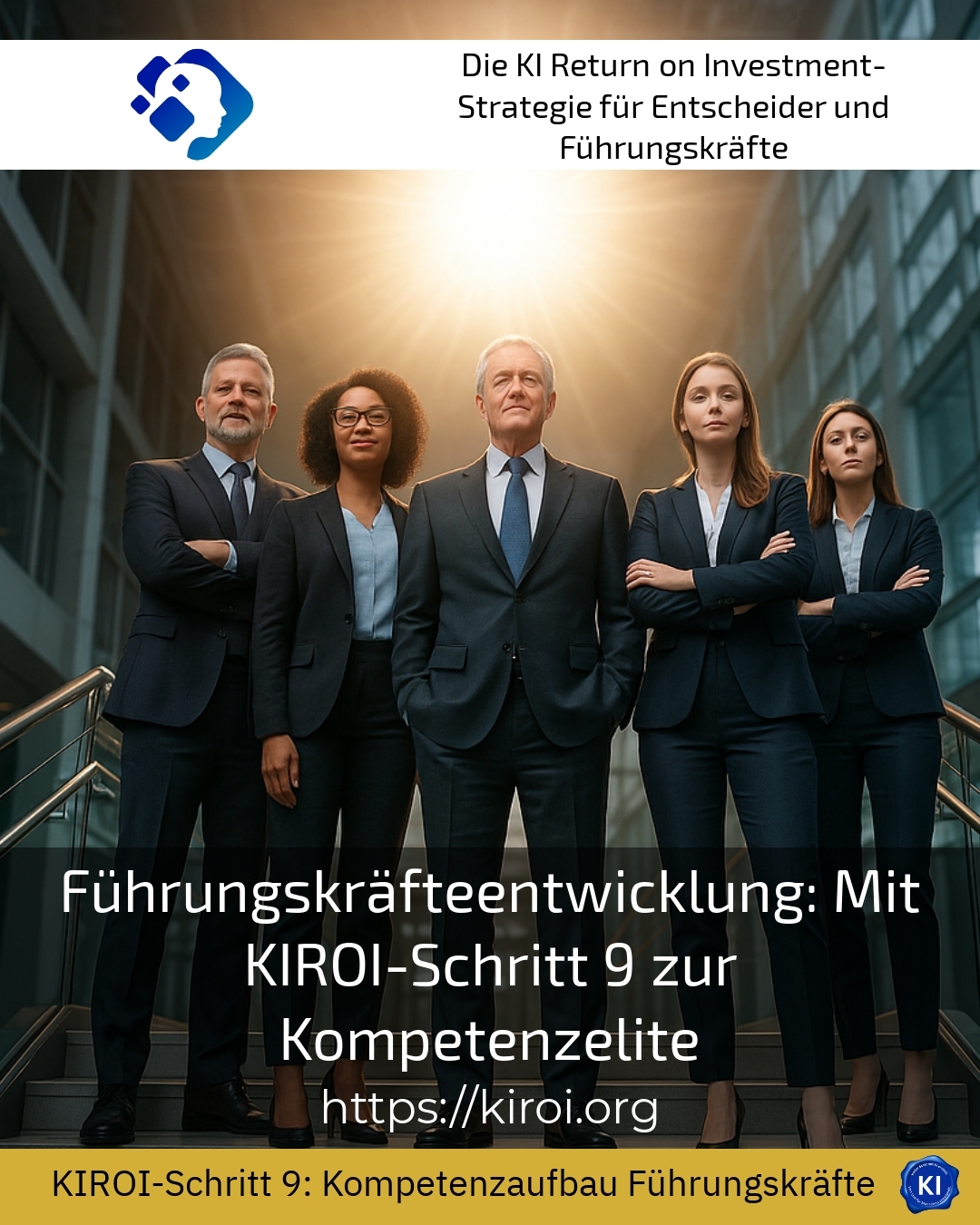
Leadership development is currently one of the key tasks for companies aiming to strengthen their competitiveness. In particular, the AIROI Step 9 supports leaders in developing into a competence elite and mastering the challenges of digital transformation with flying colours. This targeted development measure not only helps to expand leadership skills but also promotes confident use of modern technologies, especially Artificial Intelligence (AI).
Leadership Development: A Holistic Approach to Competency Strengthening
Leadership development encompasses systematic measures that strengthen leaders' technical, social, and methodological skills. The AIROI Step 9 plays a crucial role in this, as it specifically develops competencies in the area of AI competence. Modern companies rely on a combination of formal learning formats, such as seminars and workshops, as well as informal methods like coaching and mentoring.
For example, managers in the industrial sector benefit from tailored workshops where they learn in a practical way how AI-based process optimisations can improve production flow. Likewise, executive coaching in the technology sector raises awareness of ethical issues in dealing with AI systems. In the service sector, individual coaching sessions are used to increase digital affinity and strengthen communication skills for hybrid teams.
This variety of formats ensures that leadership development not only covers classic leadership topics such as delegation and motivation, but also incorporates the emerging requirements of the digital age. This leads to sustainable competency development that promotes both personal growth and the strategic alignment of the organisation.
AIROI Step 9: Competence elite through targeted development
Step 9 of the AIROI leadership development process focuses particularly on fostering competencies necessary for dealing with AI and digital transformation. Existing skills are analysed and individual development plans are created that combine technical knowledge, methodological agility, and social skills.
In the logistics industry, for example, managers are using AI-powered algorithms for route optimisation and are deepening their skills through hands-on training. In the energy sector, coaching accompanies the implementation of digital control systems, enabling managers to actively shape technological change. In the financial sector, meanwhile, leadership development facilitates the confident handling of AI-supported decision-making processes, which aids risk and compliance management.
BEST PRACTICE with one customer (name hidden due to NDA contract) A leading energy utility company implemented a special leadership development programme that focused on AIROI Step 9. Through individual coaching and practical exercises, leaders were able to expand their digital competence. This led to a greater willingness to innovate and improved collaboration between technical and administrative departments.
Practical methods for sustainable leadership development
Effective leadership development combines various learning formats for sustainable skills enhancement. The following methods have proven particularly effective:
- On-the-job learning through job rotation to gain experience in diverse business processes and leadership challenges.
- Mentoring programmes where experienced leaders act as sparring partners, sharing knowledge and promoting reflection.
- Targeted coaching that supports individual development plans and provides practical feedback.
For example, managers in manufacturing companies gain an understanding of different departments and thus better grasp interdependencies through job rotation. Technology companies rely on mentoring to ensure knowledge transfer between generations and departments. Financial service providers use coaching to support digitalisation projects and prepare managers for new challenges.
Impetus and support for the digital future
Leadership development should not only impart knowledge, but also provide individual impetus and support for projects. This personal support is important to foster new ways of thinking and enable innovation.
Transruption coaching fosters leaders' personal development and supports them with specific projects related to leadership development and digital transformation. Leaders often gain more confidence from such guidance and can better lead their teams through changes.
Typical questions that managers come to us with are: How do I integrate AI into my daily work? How can I guide my team through the digital transformation? How do I specifically build up competency profiles that will be promising for the future?
My analysis
Leadership development today is more than ever a multidimensional process, encompassing both classic leadership topics and digital competencies. AIROI Step 9 offers a clear framework for specifically training leaders to become the elite in their field. Practice-oriented methods, individual support, and a focus on digital transformation help to sustainably strengthen leadership culture. Clients often report that this not only increases their technical knowledge but also deepens their social leadership skills.
With this, leadership development successfully supports change within the company and creates the conditions for future-proof leadership in an increasingly complex world.
Further links from the text above:
AIROI Step 9: Leadership development through AI expertise [6]
Methods of management development [3]
Trends and Measures in Management Development [5]
For more information and if you have any questions, please contact Contact us or read more blog posts on the topic Artificial intelligence here.








 Deutsch
  English (UK)