
The importance of leadership development in the new AI era
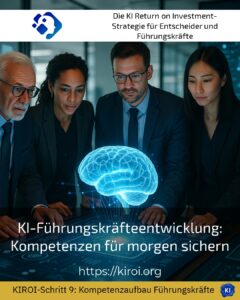
Leadership development plays a central role in preparing companies for the demands of digital transformation. In the accompanying work around innovative technologies, it is important to support leaders in their continuous development. Leadership development lays the foundation for fostering new competencies and understanding and utilising artificial intelligence as an opportunity.
Many managers approach consultants with questions about their own role in an increasingly digitalised working world. Often, it's about developing the skills that allow them to safely guide teams through change and successfully integrate technological innovations. Management development offers impetus and support to specifically unlock individual potential and shape seamless transitions into new working worlds.
Requirements for modern leaders in the age of digitalisation
Traditional leadership models are no longer sufficient on their own. Leadership development means strengthening competencies aimed at agility, willingness to learn, and digital affinity. This also includes a greater understanding of data-driven decision-making processes and the meaningful use of AI-powered tools.
In industry, for example, managers use AI tools to support the optimisation of production processes, product development, and customer interactions. Managers there often report increased efficiency through data-based insights, but at the same time continue to look for methods to deploy artificial intelligence responsibly and strategically.
In the service sector, digitalization is also changing the role of managers. They guide their teams in learning new digital skills and establishing a culture of openness towards AI technologies. Such programme developments require targeted planning and individual support.
AIROI BEST PRACTICE at company XYZ (name changed due to NDA contract)
In a manufacturing company, leadership development was systematically supplemented with AI training. Managers undertook practical training sessions where AI-powered tools for process optimisation were introduced and applied. This enabled them to better understand technological innovations and utilise them as opportunities, which increased their readiness for further digitalisation projects.
Key aspects of successful leadership development
Successful leadership development begins with a detailed needs analysis. It is important to ascertain which competencies are already present and which skills will be required in the future. This enables the creation of personalised development plans that address the individual strengths and challenges of the leaders.
Measures can be varied, ranging from workshops and digital learning formats to coaching sessions. Leadership development supports leaders in testing new skills in practice and working confidently with new tools and concepts. Reflection and regular feedback are essential to ensure continuous progress.
For example, in the logistics sector, managers use development training programmes to improve planning with AI-powered algorithms. In the energy sector, training helps to understand the integration of digital control systems and automated analyses. In the financial sector too, management development concepts focus on imparting a confident handling of AI-supported decision-making processes.
AIROI BEST PRACTICE at ABC (name changed due to NDA contract)
A development programme was implemented at an energy supply company, specifically introducing executives to AI topics. Through coaching and simulated application scenarios, they were able to practically test the use of new technologies. The executives report that this has made them more confident in communicating with technical teams and better able to support innovations effectively.
How leadership development supports change processes
Changes in the business environment require particularly stable leadership. Leadership development supports the establishment of agile and more resilient leadership cultures. It serves to strengthen leaders in their role as moderators of change and to manage conflicts constructively.
The development of emotional intelligence, the promotion of an innovation-friendly attitude and the strengthening of team leadership skills are therefore important building blocks. This is particularly true in the context of AI, as technical as well as ethical questions are also at the forefront here. Leadership development creates a platform for exchanging ideas and reflecting on such complex topics.
In the healthcare sector, for example, managers use special programmes to gain a better understanding of how to work with AI assistance systems in day-to-day clinical practice. In the IT sector, the development of modern leadership is increasingly characterised by the promotion of creativity and innovation. In retail, managers are empowered to successfully implement digitised customer experiences.
AIROI BEST PRACTICE at DEF (name changed due to NDA contract)
A retail company guided its leaders through a multi-stage coaching programme, which deepened their understanding of AI-powered customer analytics. This enabled leaders to respond more precisely to changes in customer behaviour and prepare their teams for new sales strategies. The leaders reported gaining confidence through the guidance to take innovative steps.
My analysis
Leadership development is proving to be more of a dynamic process than ever before, specifically supporting the competencies required to deal with artificial intelligence and digital transformation. Companies often report that targeted guidance and practical impetus enable leaders to confidently manage complex changes. It is important to continually refocus on individual development pathways and current requirements in order to achieve sustainable success.
Further links from the text above:
[1] Leadership Development: The HR Guide
[4] Leadership Development: Staff Potential
[5] Seminar for Modern Leadership with Artificial Intelligence
For more information and if you have any questions, please contact Contact us on or read further blog posts on the topic Artificial Intelligence Blog here.









 Deutsch
  English (UK)