
Culture transformation presents a significant challenge for many companies. This involves not just superficial adjustments, but a fundamental change in values, behaviours, and mindsets. Especially in the fourth step of the AIROI model, it becomes clear how essential careful guidance can be for the success of culture transformation. Companies that strategically design this process support their employees and managers in sustainably engaging with the new demands and opportunities.
The significance of the fourth step in cultural transformation
In the fourth step of AIROI's cultural transformation, the primary focus is on **implementing and embedding** the new culture within the organisation. The emphasis here is on the practical application of the defined values and behaviours. Companies often find in this phase that although initial enthusiasm is present, concrete routines, structures, and supportive systems are lacking to sustain the new culture long-term.
For instance, managers must be empowered to exemplify and actively promote the desired culture. A continuous dialogue between all hierarchical levels is also necessary. This often presents the challenge of breaking down existing silos and establishing cross-departmental collaboration.
A typical real-world example shows how an international IT company transitioned from a classic solo effort to a strong team player mentality in the fourth AIROI step. Targeted workshops and accompanying coaching established communication loops and feedback processes that create transparency while simultaneously strengthening personal responsibility.
Concrete recommendations for action in the implementation process
The cultural transformation requires that in the fourth step, not only processes are redesigned, but also the physical and social workspaces are adapted. In the sense of „outside-in“, for example, the redesign of offices and meeting rooms leads to more open communication and spontaneous collaboration becoming possible.
In this phase, a medium-sized manufacturing company communicated more intensively and created new forms of knowledge exchange through cross-departmental meetings. Likewise, management staff there began to place more trust in the teams' competencies, rather than practising micromanagement.
Furthermore, regular feedback rounds or retrospectives are established tools to ensure that the new cultural experience becomes noticeable in everyday life. Such instruments have also proven successful in a software company, which, through this practice, created a more open and solution-oriented working atmosphere.
BEST PRACTICE with one customer (name hidden due to NDA contract)
In the fourth step of the cultural transformation, a comprehensive qualification program was introduced. Employees participated in interactive workshops to actively experience new values and behaviours. In parallel, management supported the cultural change with regular feedback discussions and a transparent communication process. This created a sustainable awareness of the new collaboration, which is noticeably reflected in the day-to-day business.
How active dialogue and leadership culture support transformation
Leaders play a key role in cultural transformation. They are not only role models but also catalysts, who embody new values through their behaviour and effectively communicate external signals to the team. Equally important are visible successes in the transformation process, which are regularly communicated to maintain motivation and commitment.
An example of this is an international consulting firm that introduced a management audit in the fourth step. This systematically examined leadership behaviour and provided individual impetus on how managers can specifically fulfil their role as bearers of culture.
Furthermore, it has been observed in many organisations that only a combination of competency-oriented training and structural adjustments leads to successful outcomes. An innovative automotive company reported how the introduction of agile working methods and changed meeting formats fostered a new culture of collaboration that flexibly adapts to changing requirements.
Tips for sustainable support and embedding in everyday life
For the success of the cultural transformation in the fourth step, it is recommended:
- Regularly measuring and making cultural progress visible
- To involve all employees through participatory formats and to take their concerns seriously
- To establish communication rituals such as town halls, workshops, or off-sites to keep the dialogue lively.
- To design a change architecture in which necessary measures are coordinated in terms of time and content
This is how companies create positive dynamics that not only accompany change but anchor it permanently.
My analysis
Cultural transformation requires patience, clear objectives, and holistic support. Step four of the AIROI model, in particular, highlights the importance of concrete actions, active involvement, and visible leadership. Companies that integrate these elements are better able to embed change deeply into daily work. Practical insights confirm that successful cultural transformation improves collaboration and creates sustainable values that make a company future-proof.
Further links from the text above:
Successful culture transformation for businesses [1]
Corporate Culture: An Example of Values-Based Change [2]
Developing company culture: tips & examples [3]
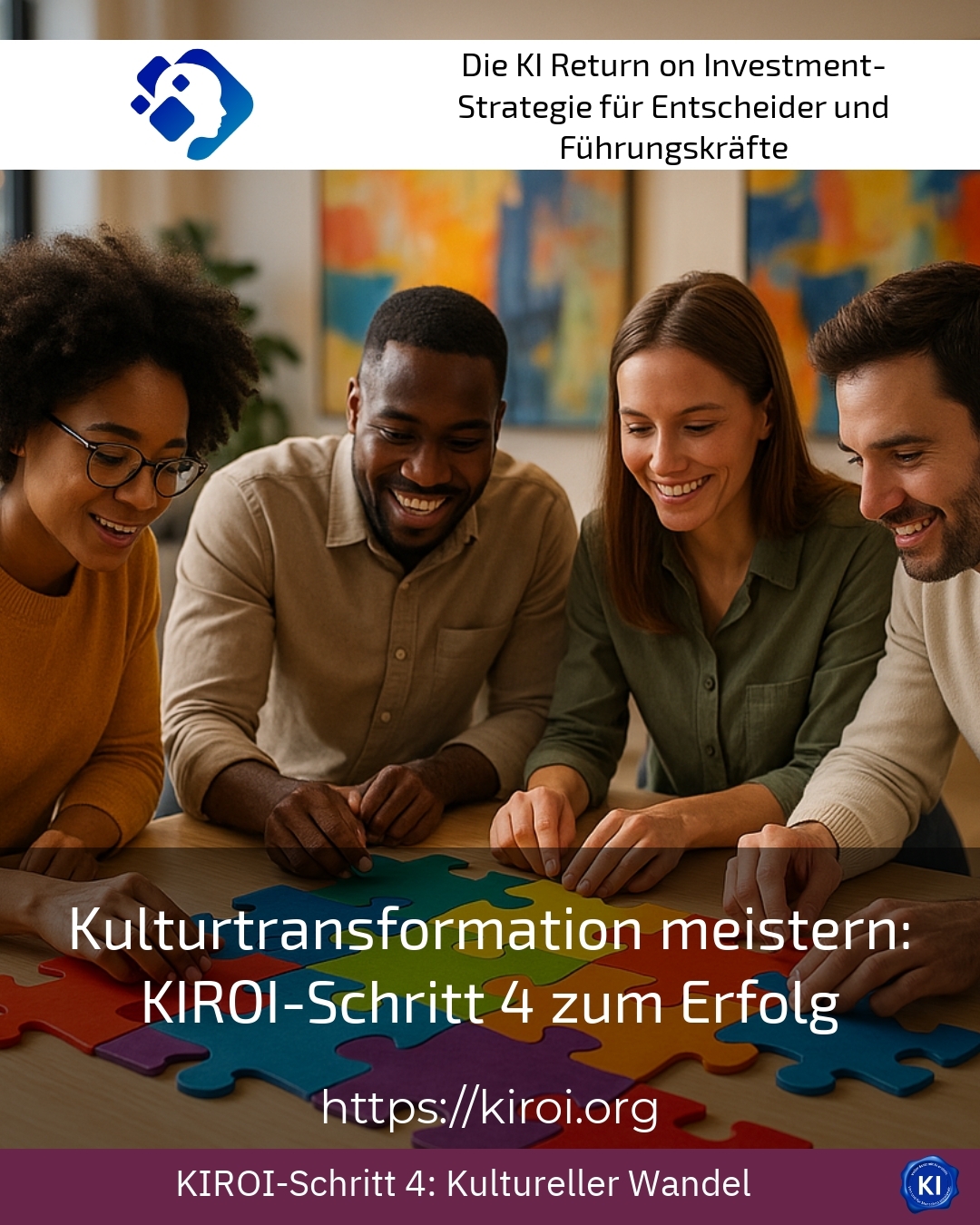
Mastering Culture Transformation: AIROI Step 4 for Success [12]
For more information and if you have any questions, please contact Contact us or read more blog posts on the topic Artificial intelligence here.








 Deutsch
  English (UK)