
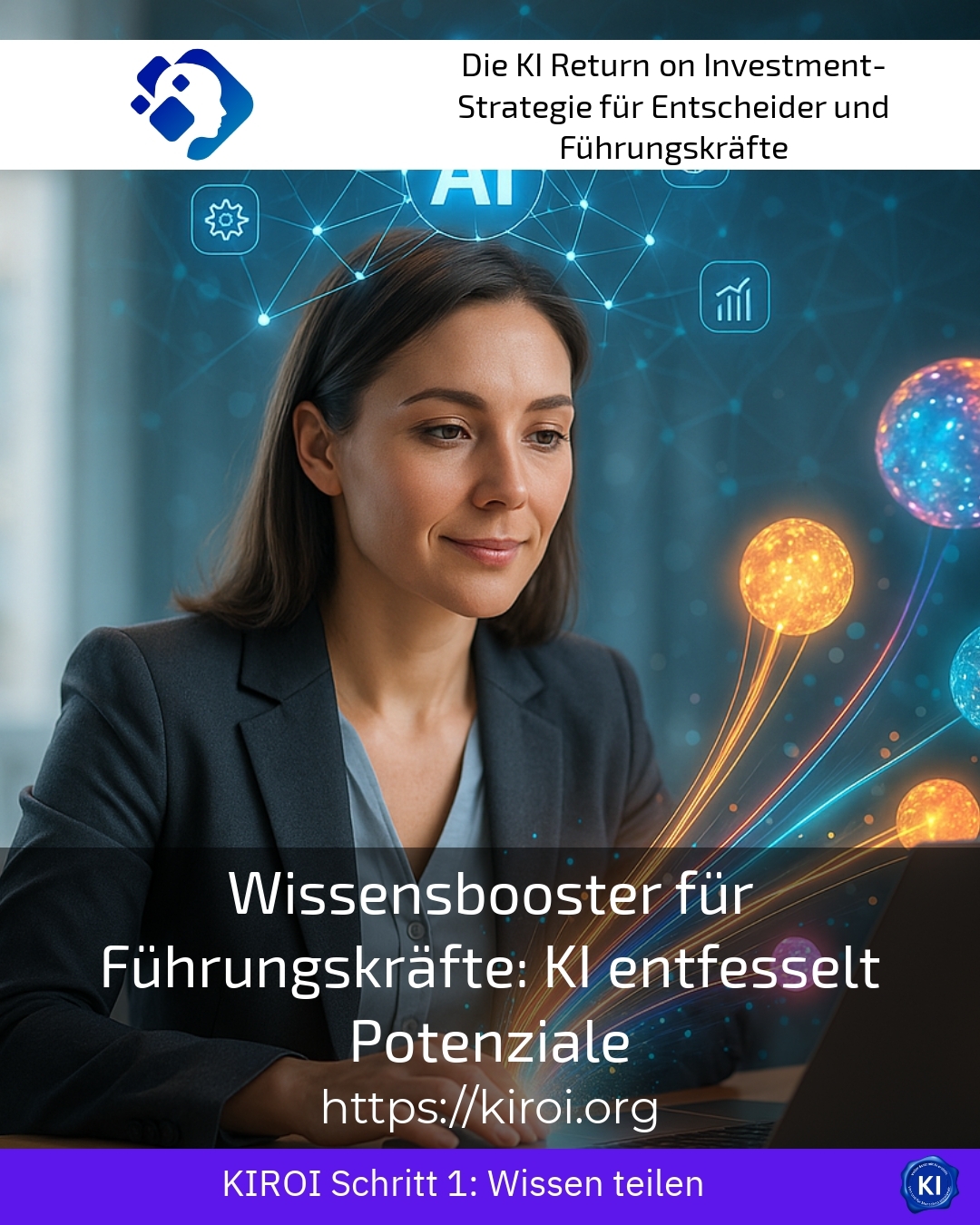
Imagine being able to start every single morning with a personal adviser who has already analysed all relevant market developments. This exact reality is being experienced today by more and more decision-makers in their everyday working lives. The Knowledge booster for leaders: AI unleashes potential in a way that seemed unthinkable only a few years ago. Intelligent systems trawl through vast amounts of data in seconds and deliver precise recommendations for action. This is long since no longer just about increasing efficiency or cutting costs. Rather, completely new opportunities for strategic decision-making and skills development are opening up. Those who recognise and seize these opportunities gain a decisive competitive edge.
Why the knowledge booster for leaders: AI unleashes potential and is becoming indispensable today
The demands placed on modern leaders have changed fundamentally over recent years. Complex decisions must be made more quickly, whilst at the same time the volume of available information is growing exponentially. Traditional methods of acquiring knowledge are increasingly reaching their natural limits. This is precisely where intelligent technologies come in, supporting decision-makers in a variety of ways. They filter relevant information from the daily flow of news and present it in an understandable manner. Furthermore, they identify patterns in business data that would remain hidden to the human eye.
For example, the managing director of a medium-sized mechanical engineering company uses intelligent analytics tools to monitor the market. The system automatically informs him about relevant patent applications by competitors. This enables him to react at an early stage and adapt his own development projects accordingly. By contrast, a human resources manager in the financial sector relies on automated learning paths for her professional development. The system identifies her knowledge gaps and suggests suitable content. The executive board member of a logistics company receives daily condensed industry reports from his digital assistant. As a result, he saves valuable time while remaining comprehensively informed.
Best practice with a AIROI customer
An established automotive supplier with several hundred employees was facing a particular challenge in the field of leadership development. The previous training programmes were only reaching the target audience insufficiently because the managers' time availability was severely limited. As part of our transruptions consultancy, we first analysed the specific learning needs of the individual management tiers. We then implemented an adaptive learning system that could tailor content individually to each participant. The system automatically recognised which competencies were already present and which areas still showed potential for development. The managers were now able to expand their knowledge in short learning units of ten to fifteen minutes. After just six months, participants reported a significantly improved quality of decision-making in their daily work. Particularly noteworthy is the integration of real-time data from the company into the learning environment. This allowed managers to understand and apply strategic concepts directly using current business figures. The combination of theoretical knowledge and practical application proved particularly effective for sustainable learning success.
Practical Areas of Application in Everyday Business
The potential applications of intelligent systems in executive development are remarkably diverse and extend far beyond simple automation. In the field of strategic planning, algorithms assist with scenario analysis and risk assessment for complex business decisions. In doing so, they process historical data, current market information and external influencing factors simultaneously. The results provide valuable impetus for informed decisions at the highest level.
A sales manager in the pharmaceutical industry uses intelligent forecasting models for sales planning. The system takes into account factors such as seasonal fluctuations, competitor activities and regulatory changes. A marketing director in the consumer goods sector uses automated text analysis to evaluate customer feedback from various channels. This allows her to identify trends and sentiments earlier than her competitors. The production manager of a chemical company optimises his manufacturing planning through predictive maintenance alerts. The intelligent systems detect potential machine failures before they actually occur and cause production downtime.
The knowledge booster for leaders: AI unleashes potential in people development
Particularly in the fields of talent development and succession planning, intelligent systems demonstrate their enormous potential for modern businesses. They identify promising up-and-coming talent based on objective performance data and development trajectories. At the same time, they suggest individually tailored development measures that address the strengths and areas for improvement of each individual. This data-driven approach usefully complements the human intuition of experienced HR professionals.
The HR Director of an international insurance group relies on intelligent matching systems for internal recruitment [1]. The system compares requirement profiles with existing competencies and suggests suitable candidates. An HR Director in the banking sector uses automated feedback analyses to improve her leadership programmes. This allows her to quickly identify which content is particularly valuable and what adjustments are necessary. The Managing Director of a technology company regularly receives reports on the skills development of his key personnel. This enables him to take early countermeasures if important skills are lacking within the company.
Best practice with a AIROI customer
A leading retail chain with over five hundred branches wanted to better prepare its branch managers for the challenges of the digitised working world. Previous classroom training sessions were complex and did not reach all participants with equal effectiveness. Together with the transruptions coaching team, we developed a hybrid learning concept with intelligent support. The branch managers were given access to a learning platform that continuously analysed their progress. The system automatically adapted the learning content to their respective prior knowledge and learning speed. The integration of real-time data from the individual branches into the case studies proved particularly valuable. Participants were thus able to simulate strategic decisions using their own business figures and comprehend their impacts. Following the introduction, participants reported a significantly increased understanding of business management interrelationships. The fluctuation rate among branch managers fell noticeably in the subsequent months. In addition, employee satisfaction in the participating branches improved measurably. This project impressively demonstrates how intelligent technologies can meaningfully complement and enhance traditional further training formats.
Strategic decision support at the highest level
At executive level, intelligent analytical tools are increasingly gaining in importance for the strategic orientation of entire companies. They assist in the evaluation of acquisition targets, the analysis of market trends and the assessment of geopolitical risks [2]. In doing so, they process information from countless sources and condense this into actionable insights. Human expertise remains indispensable for the final evaluation and decision-making.
The Chief Financial Officer of a listed industrial company uses intelligent systems to analyse investment alternatives. In addition to financial key figures, these also take sustainability factors and strategic fit into account. The CEO of an energy supplier receives daily briefings on regulatory developments in her target markets. This enables her to stay informed without having to spend hours studying specialist publications. A supervisory board member in the healthcare sector prepares for committee meetings with the help of automated summaries. The system filters the essential information from extensive documents and presents it clearly.
Challenges and opportunities in implementation
The introduction of intelligent systems into leadership processes requires careful planning and a clear strategic focus. Managers frequently come to us with questions that revolve around choosing the right technology. Others are preoccupied with concerns about acceptance issues within their teams or questions regarding data protection. These concerns are understandable and deserve serious consideration during the implementation process.
A managing director from the real estate sector reported initial resistance among his leadership team. However, this was overcome through a gradual rollout and transparent communication. The head of HR at a media company emphasised the importance of training for all involved. Acceptance of the new tools only increases once how they work is understood. The IT director of a retail group recommends starting with clearly defined pilot projects [3]. This allows experience to be gathered before larger investments are made.
Knowledge booster for leaders: AI unleashes potential through continuous learning
The greatest strength of intelligent systems lies in their ability to continuously improve and adapt to new requirements. The longer they are used, the better they understand the specific needs of their users. They learn from feedback and adjust their recommendations accordingly. This dynamic development fundamentally distinguishes them from static knowledge management solutions of earlier generations.
The marketing director of a fashion company uses a system that has learned her preferences for market reports. It now knows precisely which information is relevant to her and which is not. The production director of a food manufacturer particularly appreciates the automatic prioritisation of incoming reports. The system recognises urgent matters and highlights them accordingly. A sales director in the telecommunications sector receives daily tailored competitor analyses. These are automatically updated as soon as relevant new information becomes available.
Best practice with a AIROI customer
An internationally active special machine builder wanted to support its managers in expanding into Asian markets. The cultural and legal peculiarities of these markets presented a significant knowledge hurdle. As part of the transruption support, we developed an intelligent knowledge system specifically for these requirements. The system aggregated information from local sources, translated it automatically and prepared it in a context-sensitive manner. This enabled managers to grasp relevant developments in their target markets at a glance. The integration of cultural guidance into business communication proved particularly valuable. For example, the system suggested suitable phrasing for negotiations with local partners. It took cultural customs into account and avoided potential gaffes. After a year, the managers reported significantly improved business relationships in the target markets. The success rate in contract negotiations increased measurably. At the same time, the time spent preparing for trips abroad was reduced considerably. This example illustrates the transformative potential of intelligent systems for international business operations.
My AIROI Analysis
The integration of intelligent systems into leadership development marks a significant turning point in modern corporate management. Technology has now reached a level of maturity that enables practical benefits for everyday leadership. At the same time, human skills such as empathy, creativity and ethical judgement remain indispensable for successful leadership. The intelligent systems complement and enhance these abilities rather than replacing them.
From my observation of numerous implementation projects, several key success factors can be identified. Firstly, successful introduction requires a clear strategic vision and support from top-level management. Secondly, the systems must be adapted to the specific needs of the respective company and its managers. Thirdly, a culture of continuous learning and openness to new ways of working is needed.
Transruption guidance has proven to be a valuable approach in this context, because it considers technological and human aspects equally. We support companies in selecting the right technologies and implementing them sustainably. At the same time, we accompany managers in developing new competencies for the digitised working world. This holistic approach often leads to better results than purely technology-driven initiatives.
The future belongs to leaders who use intelligent tools with confidence without neglecting their human qualities. Finding and maintaining this balance is the central leadership task of our time. Technological possibilities will continue to evolve and open up new opportunities. Those who lay the foundations today will be able to reap the rewards tomorrow.
Further links from the text above:
[1] McKinsey: AI in talent management
[2] Harvard Business Review: Artificial Intelligence
[3] Gartner: Artificial Intelligence Insights
For more information and if you have any questions, please contact Contact us or read more blog posts on the topic Artificial intelligence here.






 Deutsch
  English (UK)