
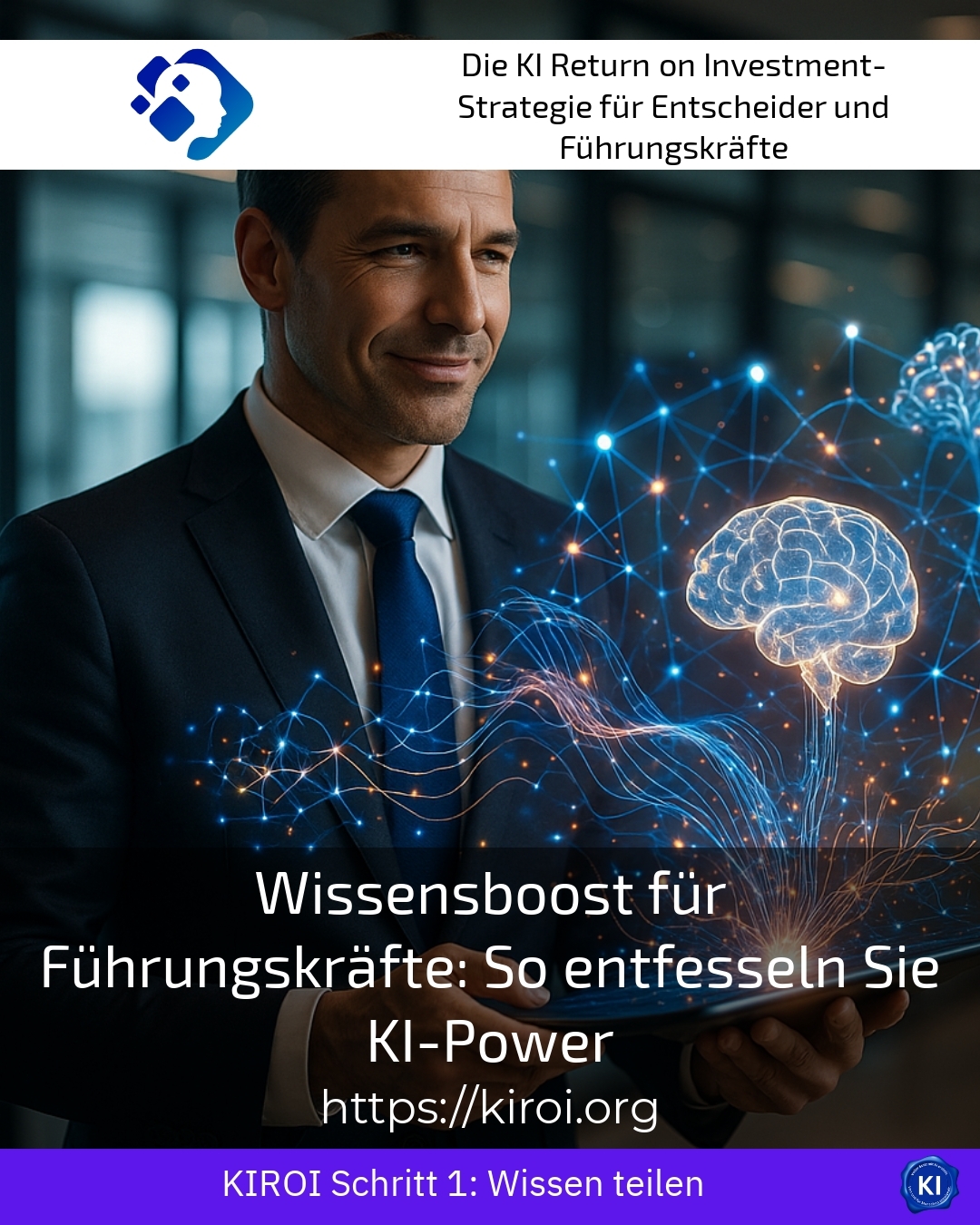
Imagine being able to start every morning with a digital sparring partner that provides you with precise analyses and speeds up decision-making. Knowledge boost for leaders It is no longer just a futuristic concept; it is now a tangible reality. However, many decision-makers face the challenge of integrating these technologies meaningfully into their everyday lives. That is why they come to me with questions about strategic implementation and cultural change. In this article, you will learn how to use intelligent systems profitably and avoid common pitfalls along the way.
Why modern technologies enable the knowledge boost for executives
The business world is changing at an astonishing pace. Leaders today must make decisions that would have required weeks of analysis in the past. Intelligent systems support this in many ways. They analyze large amounts of data in seconds and recognize patterns that the human eye misses. At the same time, they enable personalized learning paths for each leader. This combination of speed and precision makes them indispensable tools.
In the manufacturing industry, for example, production managers are already using predictive analytics. These systems predict machine breakdowns and optimize maintenance cycles. This saves companies significant costs and prevents unplanned downtime. Another example can be found in retail, where store managers receive real-time sales forecasts. These predictions take into account weather data, local events, and historical sales figures. This allows inventory to be optimized and waste to be reduced.
Impressive applications are also being seen in the healthcare sector. Clinic directors are using intelligent systems for resource planning. The algorithms analyze patient flows and predict peak times. In this way, staff shortages can be proactively prevented. Often, clients report significantly improved employee satisfaction after the introduction of such solutions.
Strategic integration as the key to success
The mere acquisition of intelligent tools does not guarantee success. Rather, it comes down to the thoughtful integration into existing processes. Many leaders underestimate the necessary cultural change. They focus exclusively on technical aspects and neglect the human component. It is precisely the acceptance within the team that determines success or failure.
In the banking sector, branch managers have recognized this and are opting for a phased implementation. Initially, simple automations were implemented for routine tasks. Only after successful adoption did more complex applications such as credit risk analyses follow. This gradual approach significantly reduces resistance. In the logistics sector, on the other hand, freight forwarders started with route optimization. The immediate visible savings convinced even skeptical team members.
The insurance industry offers a third illustrative example. Department heads implemented intelligent claims assessment. The system analyzes submitted documents and generates initial assessments. This allows claims handlers to focus on complex cases. According to internal reports, processing time has decreased by up to forty percent.
Best practice with a AIROI customer
A medium-sized company in the food industry approached us with a specific challenge. The management wanted to optimize its production planning and at the same time reduce food waste. As part of the transruptive coaching, we supported the leadership team over several months. First, we analyzed the existing processes together and identified optimization potential. Subsequently, we developed a customized strategy for the implementation of intelligent forecasting systems. The system was gradually introduced and was positively received by the employees. Today, the production managers use real-time data to control their processes. The waste was reduced by more than thirty percent. Particularly gratifying was the increased motivation within the team. The employees felt supported by the new tools rather than replaced. This example impressively demonstrates how important human accompaniment is in the context of technological transformations.
Implementing the knowledge boost for executives in practice
Many decision-makers come to me with the desire for concrete recommendations for action. They want to understand how they can personally benefit from intelligent systems. This is not just about increasing efficiency, but also about strategic foresight. The ability to make data-driven decisions becomes a crucial competitive advantage. At the same time, leaders must learn to recognize the limitations of these technologies.
In the automotive industry, plant managers are using intelligent quality control. Image recognition systems reliably identify even the smallest paint defects. This significantly reduces the error rate during deliveries. In the pharmaceutical sector, analysis tools support research planning. They search through scientific publications and identify promising approaches. Research managers report on accelerated innovation cycles and more efficient resource utilization.
The energy sector is also demonstrating innovative applications. Network managers optimize power distribution using intelligent forecasts. The systems simultaneously take into account consumption patterns, weather data, and regenerative inputs. In this way, peak loads can be better balanced. Supply reliability increases, while operational costs decrease.
Common challenges and how to overcome them
When introducing intelligent systems, similar obstacles regularly arise. Data privacy concerns often top the list. Leaders must take these concerns seriously and communicate transparently. Another issue concerns the qualifications of employees: training and further education are essential investments for sustainable success.
In the education sector, school principals have found creative solutions to these challenges. They carried out pilot projects with interested teachers. The positive experiences of these pioneers subsequently convinced hesitant colleagues as well. In the construction industry, project managers, however, relied on intensive training weeks. The construction managers learned to effectively use digital planning tools. The initial skepticism quickly gave way to enthusiasm over the time gained.
The media industry also faces specific challenges. Chief editors are concerned about journalistic quality and authenticity. Therefore, they primarily use intelligent systems for research and fact-checking. The creative work is deliberately left in human hands. This differentiation has proven to be a successful strategy [1].
Best practice with a AIROI customer
A technology company with an international focus sought support in transforming its leadership culture. The management team recognized that technical implementation alone was not sufficient for sustainable success. As part of the transruptive coaching, we developed a comprehensive concept for cultural change together. We conducted workshops with the entire middle management over a period of six months. We placed special emphasis on the emotional aspects of the change. Many management members initially expressed concerns about losing control and feeling insignificant. We took these concerns seriously and worked on them constructively. Today, the managers see themselves as creators of the digital transformation. They use intelligent tools confidently and delegate routine tasks to automated systems. They invest the gained time in strategic planning and employee management. The company records significantly higher employee satisfaction and lower turnover in key positions.
Sustainable competence development through intelligent systems
The Knowledge boost for leaders It is not limited to operational applications. Rather, intelligent systems open up entirely new possibilities for personal development. Adaptive learning platforms adapt to the individual’s level of knowledge. They identify knowledge gaps and suggest appropriate learning content. In this way, continuous training becomes more efficient and targeted.
In the tourism industry, hotel managers use such platforms extensively. They stay up-to-date regarding guest preferences and market trends. The systems analyze reviews and identify potential for improvement. In the telecommunications sector, on the other hand, team leaders train their employees using intelligent simulations. Complex customer conversations can thus be practiced risk-free [2].
The agricultural sector shows another fascinating application. Farm managers use satellite imagery and soil analysis combined. The systems recommend optimal planting times and irrigation strategies. This data-based approach increases yields while simultaneously conserving resources. Clients often report amazing efficiency gains after implementation.
The role of human accompaniment in boosting knowledge for leaders
Technology alone does not solve problems. It provides tools whose more meaningful use requires expertise and experience. This is where transruptive coaching comes in and supports executives in complex projects. We provide guidance for strategic direction and support in practical implementation, always taking into account the individual circumstances of each company.
In mechanical engineering, for example, we work closely with plant managers: they face the challenge of digitizing traditional manufacturing processes. Together, we develop roadmaps that balance technical and human factors. In the chemical industry, we support laboratory managers in integrating automated analytical methods. The focus is on complementing human expertise, not replacing it.
The fashion industry presents itself as another exciting field of application. Design leaders use intelligent trend analyses to plan collections. The systems search social media to identify emerging styles. These insights inspire the creative process without dominating it [3].
My AIROI Analysis
The intensive focus on this topic area clearly shows that we are at a crucial turning point. Intelligent systems have the potential to fundamentally change leadership and significantly enrich it. At the same time, in my consulting practice, I observe that success depends significantly on the human component. Technical excellence alone rarely leads to sustainable results.
I experience the transformation especially vividly among executives who initially showed skepticism. After a facilitated introduction phase, they often develop the greatest enthusiasm for the new opportunities. They realize that intelligent tools can strengthen their strengths and compensate for weaknesses. The role of the leader shifts from the operational manager to the strategic designer.
AIROI My analysis underscores the importance of a holistic approach to implementation. Companies that focus exclusively on technical aspects often achieve disappointing results. Successful transformations take into account corporate culture, employee competencies, and process structures equally. The guidance of experienced partners such as transruptions coaching can make the crucial difference in this regard.
In summary, it can be said that intelligent technologies offer enormous opportunities. However, unlocking these potential requires more than technical expertise. It requires leadership, a willingness to change, and the ability to bring people along on this journey. Those who accept this challenge are rewarded with increased competitiveness and happier teams.
Further links from the text above:
[1] McKinsey Digital Insights on Corporate Transformation
[2] Gartner Research on intelligent technologies in companies
[3] World Economic Forum on Future Technologies
For more information and if you have any questions, please contact Contact us or read more blog posts on the topic Artificial intelligence here.











 Deutsch
 English (UK)