
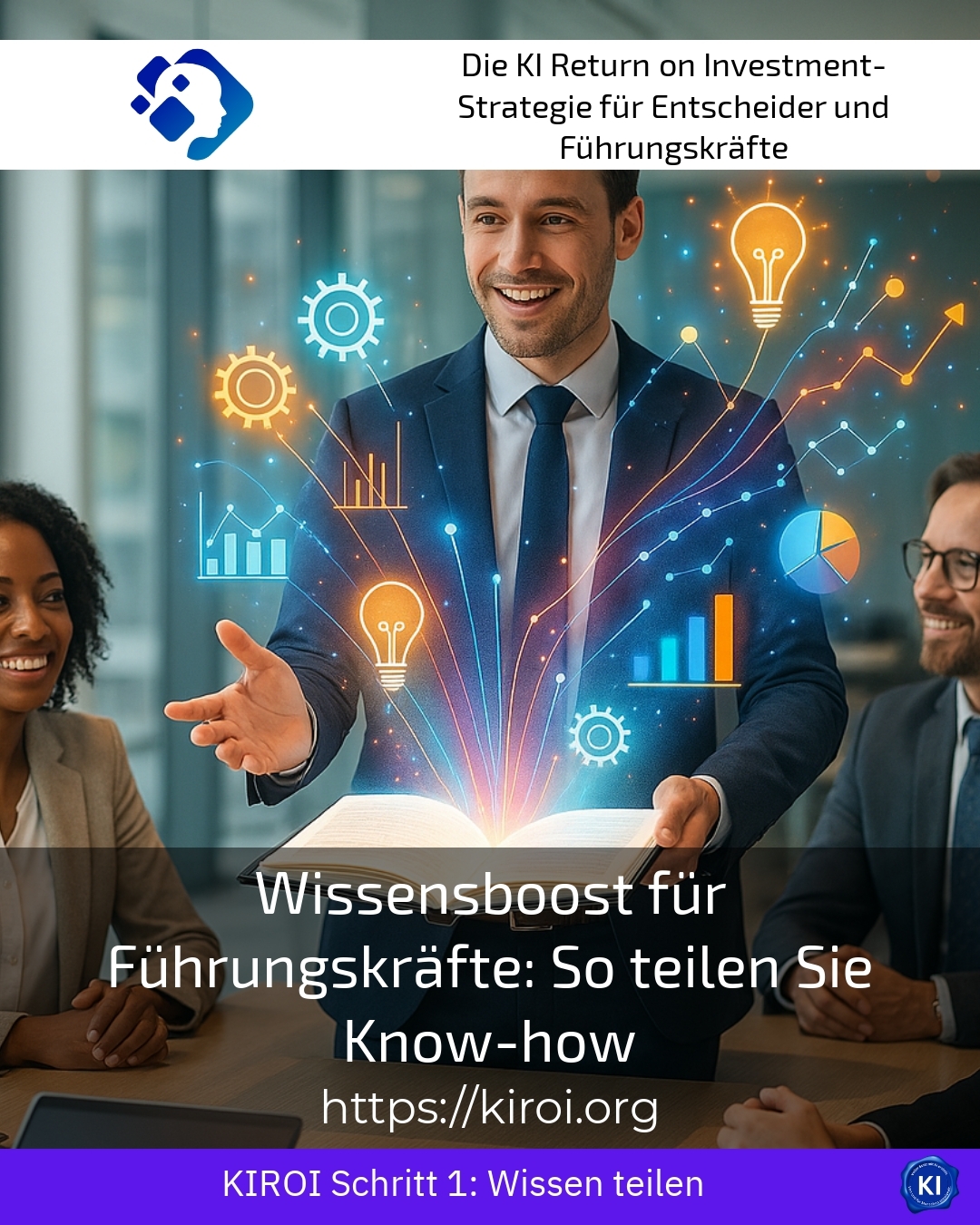
Have you ever wondered why some companies perform significantly better than their direct competitors despite identical resources and comparable market conditions? The answer often lies in an area that is fatally neglected in many organizations: the systematic Knowledge boost for leaders, This enables valuable know-how to be effectively shared and embedded in the company on a sustainable basis. In an era where information has become the most valuable asset, the ability to pass on expertise determines the success or failure of entire business models. Leadership is faced with the complex challenge of preparing their implicit knowledge in a way that it becomes accessible and applicable to employees at all levels of the hierarchy.
Why a knowledge boost for leaders is indispensable today
The working world is changing at a speed that seemed unthinkable just a few years ago. Companies report rising turnover rates. Valuable knowledge is being lost. New employees require longer onboarding periods. These developments illustrate how important structured knowledge transfer has become. Leaders bear a special responsibility in this regard. They possess years of accumulated knowledge. This knowledge often remains locked in their minds. This is damaging to the entire organization in a lasting way.
In the manufacturing industry, this problem is particularly evident. An experienced production manager knows every machine in his or her facility. He or she knows exactly which noises indicate wear and tear. However, this knowledge does not exist in writing anywhere. Similarly, in the healthcare sector. Chief physicians possess diagnostic intuition. This intuition is difficult to capture in manuals. Similarly, in the financial sector, we observe similar phenomena. Experienced analysts instinctively recognize market patterns. Younger colleagues, however, rely exclusively on algorithms.
Best practice with a AIROI customer
A medium-sized mechanical engineering company from southern Germany faced a critical situation, as five of its most experienced engineers were set to retire within two years. The management realized that these employees would leave the company with an enormous wealth of knowledge. As part of a transruptive coaching program, we developed a structured program for knowledge retention together. The experienced engineers were initially supported in identifying and articulating their implicit knowledge. Subsequently, we established so-called tandem partnerships between long-standing experts and emerging young talent. These tandems worked closely together over a period of eighteen months. Regular reflection sessions supported the transfer process. Additionally, we documented critical processes in an internal wiki system. The results were impressive: Knowledge retention could be significantly increased. The onboarding time for new employees was reduced by about a third. The young professionals reported a significantly increased sense of competence.
Methods for a sustainable boost in knowledge for leaders
The transfer of leadership knowledge requires thoughtful methods. Not every technique is suitable for every situation. Therefore, leaders should know about different approaches. Mentoring programs have proven themselves in many industries. In retail, large chains rely on structured sponsorship systems. New branch managers are accompanied by experienced colleagues. In the logistics industry, companies are increasingly using digital knowledge platforms. Dispatchers document their decision-making processes there. This creates valuable case collections for training purposes.
The pharmaceutical industry is demonstrating further interesting approaches. So-called communities of practice have emerged here. Executives from various departments regularly exchange ideas. They discuss challenges and share solutions. In the construction industry, on the other hand, practical demonstrations are used. Experienced construction managers take junior workers to critical meetings. They explain their approach directly on-site. This form of learning by example often has particularly lasting effects.
Storytelling as a tool for boosting knowledge
Stories convey knowledge in a unique way. They appeal to emotions and thus stay better in memory. Managers can use this method purposefully. In the insurance industry, experienced sales managers talk about difficult customer conversations. They describe how they overcame objections. Younger colleagues learn a tremendous amount from these testimonials. The tourism industry also uses storytelling intensively. Hotel managers report on crisis situations and their handling. These narratives convey practical knowledge in a very effective way.
In the field of renewable energy, we observe similar practices. Project managers document the progress of complex installations. They describe obstacles and creative solutions. These documentation are then discussed in team meetings. This benefits the entire company from individual experiences. The automotive supply industry has even institutionalized this approach. There are formal lessons-learned processes after every major project.
Digital tools to support knowledge transfer
Technology can significantly facilitate knowledge sharing. However, it never replaces personal contact. Executives should consider digital tools as a supplement. In the telecommunications industry, video tutorials have proven effective. Executives record short explanatory videos that can be accessed by employees at any time. The food industry relies on digital knowledge databases. Quality managers document their inspection procedures there. This gives new employees faster access to important information.
The energy sector is experimenting with virtual reality. Technicians can perform complex maintenance tasks in simulated conditions. Experienced colleagues have developed these simulations. Their knowledge thus flows into the training environment. In the media industry, executives use podcast formats. There they discuss current challenges and solutions. Employees listen to these podcasts during their commute. This way, knowledge dissemination is integrated into everyday life.
Best practice with a AIROI customer
A retail company with several hundred branches across Germany was looking for ways to multiply the knowledge of its best branch managers. The challenge was that these executives were active in different locations and had little opportunity for direct exchange. As part of our support, we developed a hybrid concept that combined digital and analog elements. First, we conducted detailed interviews with the most successful branch managers. We asked about their daily routines, their leadership practices, and their problem-solving strategies. We recorded these conversations and prepared them in a didactic manner. This resulted in short learning modules of approximately ten minutes each. Additionally, we organized quarterly presence meetings for all branch managers. At these meetings, participants worked on concrete case studies. The combination of digital learning modules and personal interaction proved to be extremely effective. Employee satisfaction in the stores increased measurably. Customer satisfaction levels also improved significantly. The company reported a noticeably more positive corporate culture.
Overcoming barriers for knowledge boost for executives
Many executives hesitate to share their knowledge. The reasons for this are varied. Some fear being replaced. Others see time constraints as the biggest obstacle. Transruptive coaching can provide valuable insights in this regard. It helps to identify and address these blocks. In the chemical industry, we often encounter the argument of complexity. Executives believe their knowledge is too specialized for sharing. The guidance of experienced coaches helps to structure complex knowledge.
In the aviation industry, strict safety regulations exist. These can hinder the exchange of knowledge. Nevertheless, innovative companies find ways to disseminate knowledge. They use anonymized case studies and simulations. The textile industry struggles with high turnover. Knowledge must be transferred there especially quickly. Experienced production managers therefore develop compact onboarding programs. In the real estate industry, we observe generational conflicts. Younger executives prefer digital formats. Older colleagues rely on personal conversations. Successful companies skillfully combine both approaches.
The role of corporate culture in knowledge transfer
Knowledge sharing thrives only in a supportive environment. The corporate culture plays a crucial role in this. Leaders must actively promote knowledge sharing. In the consulting industry, this is part of the basic philosophy. There, it is expected that findings are documented and shared. The sports equipment industry relies on open office concepts. These promote spontaneous knowledge exchange between departments. In software development, code reviews have become established. Experienced developers pass on their knowledge to colleagues.
The banking industry faces special cultural challenges. Traditionally, there is a certain degree of secrecy there. However, modern institutions are actively working to change this culture. They reward employees who share their knowledge. In the restaurant industry, we are observing interesting developments. Top chefs are passing on their recipes to up-and-coming talent. They understand that shared knowledge drives the entire industry forward. The advertising industry thrives on creative exchange. Regular brainstorming sessions take place there. Experienced creative directors share their idea-generation techniques.
My AIROI Analysis
The systematic transfer of leadership knowledge represents one of the most important success factors for future-oriented organizations, because companies that neglect this aspect risk losing valuable expertise and thus their competitiveness [1]. My experience from numerous mentoring projects shows that successful knowledge transfer initiatives always combine three elements: a supportive corporate culture, appropriate methods, and dedicated leadership personalities. I repeatedly observe that the personal factor must not be underestimated. Technology alone cannot solve knowledge problems. It can only support and facilitate processes.
What particularly impressed me are those leaders who understand knowledge sharing as part of their leadership identity. They understand that true greatness lies not in hoarding knowledge but in sharing it [2]. This realization often marks a turning point in coaching processes. When leaders begin to perceive knowledge sharing as an enrichment rather than a threat, new possibilities open up. Collaboration improves noticeably. Teams become more autonomous and innovative [3]. Therefore, I recommend that all organizations prioritize the topic of knowledge transfer strategically. The investment in structured programs pays off in the long term. It strengthens the company’s resilience and ensures its future viability.
Further links from the text above:
[1] Harvard Business Review – Knowledge Management
[2] McKinsey – Insights on People and Organisational Performance
[3] Forbes – Leadership Section
For more information and if you have any questions, please contact Contact us or read more blog posts on the topic Artificial intelligence here.







 Deutsch
 English (UK)