
Have you ever wondered why some decision-makers achieve brilliant results with intelligent software solutions, while others fail despite significant investment?
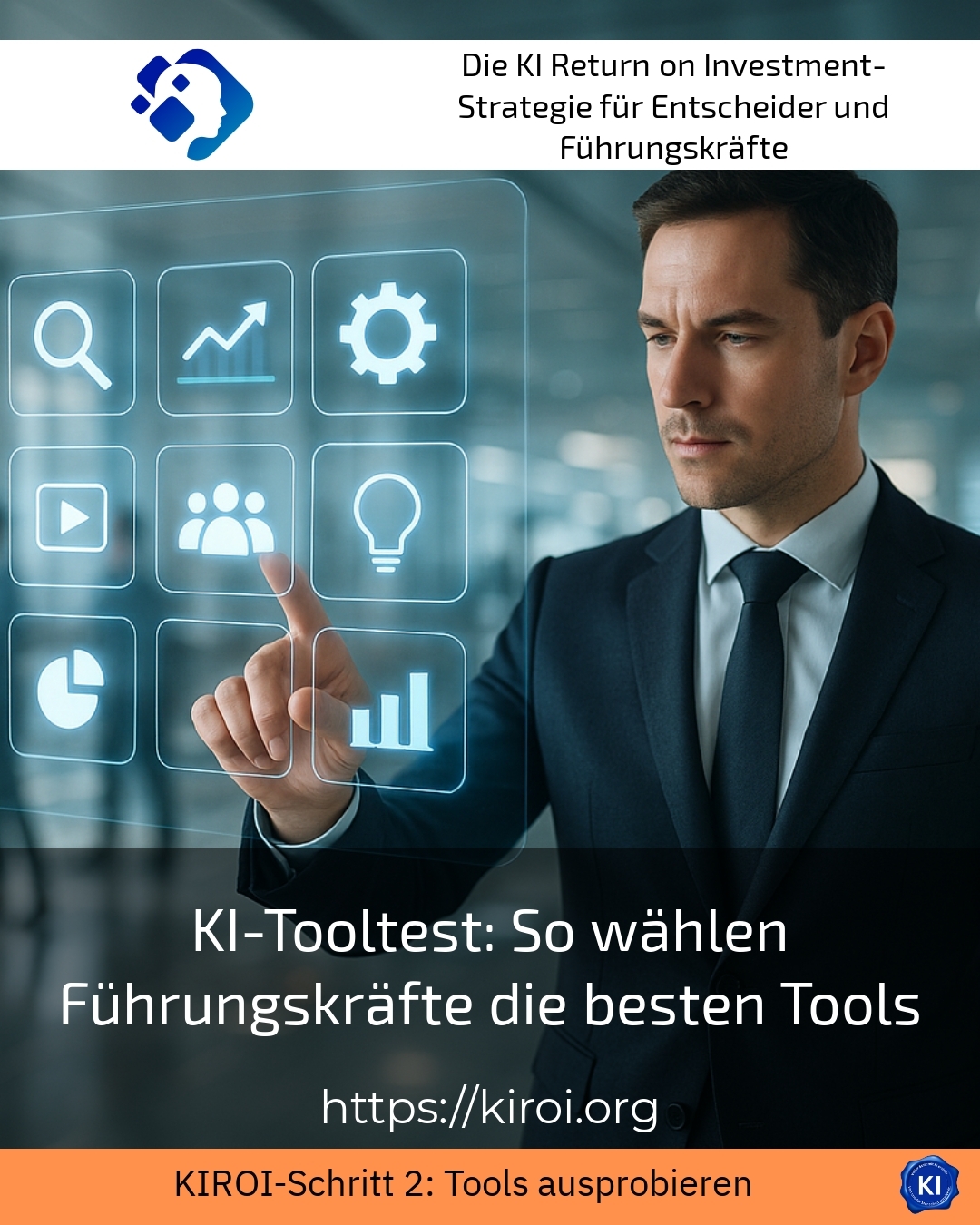
Choosing the right digital tools presents leaders with enormous challenges. A structured approach is essential to ensure success. AI Tool Test This can help identify the right solutions. The variety on the market seems overwhelming. At the same time, the pressure to optimize processes is growing. Therefore, many decision-makers report uncertainty when evaluating. In this article, you will learn how to proceed systematically and which criteria are truly crucial.
Warum ein strukturierter KI-Tooltest unverzichtbar geworden ist
The digital transformation is fundamentally changing business models. Executives face the challenge of selecting the right applications from among thousands of available options. Several factors play a crucial role in this process. Integration into existing systems must function smoothly. Furthermore, employees must be able to accept and use the new tools.
A systematic approach begins with the precise definition of the requirements. Which processes are to be supported? Who will use the application on a daily basis? What is the technical infrastructure like? These questions form the foundation of any successful evaluation. This way, you avoid costly misjudgments from the outset.
In the manufacturing industry, for example, companies rely on predictive maintenance systems. These analyze machine data and detect failures early on. A automotive supplier was able to reduce unplanned downtime as a result. Logistics companies use intelligent route planning for more efficient delivery routes. Retailers implement demand forecasts to optimize inventory levels.
Best practice with a AIROI customer A medium-sized manufacturing company faced the challenge of modernizing its quality control. The management had already contacted several suppliers, but felt overwhelmed by the various promises. As part of a transruptive coaching process, we developed a structured evaluation process together. First, we defined clear evaluation criteria based on the company’s actual requirements. Subsequently, we tested three different solutions under realistic conditions in production. The employees were involved from the very beginning in the selection process, which significantly increased their subsequent acceptance. After six weeks of intensive evaluation, the decision was made in favor of a solution that was both technically and economically convincing. Today, the company reports a reduction in the error rate and an increased employee satisfaction. The structured approach has proven to be an investment that has paid off multiple times.
Key criteria for AI tool testing for executives
Evaluating intelligent software solutions requires a multidimensional approach. Technical capabilities alone are not enough. Leaders must also consider organizational and strategic aspects. Clients often report difficulty in keeping all relevant factors in mind.
Technical integration and data security
Seamless integration with existing IT systems forms the foundation for successful implementations. Interfaces must be compatible and data must be transmitted securely. Especially in the healthcare sector, strict data protection requirements apply [1]. Financial service providers must comply with regulatory requirements. Authorities ensure compliance with public standards.
A hospital evaluated various systems for analyzing medical imaging data. The solution had to operate in compliance with the GDPR and integrate with the hospital information system. A bank tested fraud detection applications taking regulatory requirements into account. An insurance company tested damage assessment tools with a focus on data security.
User-friendliness and acceptance within the team
The best technical solution remains ineffective if employees reject it. Therefore, usability assessment is part of every serious evaluation process. Intuitive user interfaces significantly facilitate implementation. Training time and learning curve significantly affect the overall costs.
In the legal sector, law firms rely on intelligent document analysis. The acceptance among legal professionals depends heavily on the quality of the user interface. Marketing departments use tools for content creation and campaign optimization. Human resources departments implement systems for applicant analysis with a focus on fairness [2].
The practical process of an AI tool test in everyday business life
A structured evaluation process follows proven phases. Preparation begins with the stakeholder analysis and requirements definition. Subsequently, market research and the selection of suitable candidates take place. The actual testing phase involves pilot projects under realistic conditions.
Executives should adopt an interdisciplinary approach from the outset. IT experts assess technical aspects. Functional departments examine the practical applicability. Management keeps strategic goals and budgets in mind. This creates a well-founded basis for decision-making.
An energy provider tested systems for network load forecasting in a three-month pilot project. A pharmaceutical company evaluated tools to accelerate drug research. A telecommunications provider tested solutions for automated customer support using virtual assistants [3].
Best practice with a AIROI customer A retail company with several hundred stores was looking for a solution to optimize personnel planning. The previous systems were unable to sufficiently account for seasonal fluctuations and local peculiarities. As part of our support, we initially defined measurable success criteria for evaluation. We identified five providers that were generally suitable and aligned with the company culture. For each candidate, we developed a standardized test case based on historical data. The pilot phase took place in three selected stores with different characteristics. Employees and store managers continuously provided feedback on the practicality of the proposed plans. After eight weeks, a thorough evaluation matrix was available, combining technical performance and practical acceptance. The final decision also considered long-term partnership potential with the provider. Today the company is successfully working with the chosen solution and plans to expand it to other areas.
Avoid pitfalls with professional guidance
Many evaluation projects fail due to avoidable errors. Too short timeframes lead to hasty decisions. Unclear responsibilities cause delays and conflicts. A lack of involvement of the later users significantly reduces acceptance.
Transruptions coaching can provide valuable insights in such projects. An external perspective helps to identify blind spots. Experienced mentors know typical stumbling blocks and effective countermeasures. This significantly increases the likelihood of successful implementation.
A media company underestimated the training effort required to implement an editorial system. A construction company neglected the mobile usability when selecting a project management solution. A tourism group overlooked important integration requirements with its existing booking system.
Properly evaluate economic aspects of tool selection
The cost-benefit analysis is one of the most demanding tasks in evaluation. Direct license costs only represent a part of the overall picture. Implementation costs, training, and ongoing maintenance must be taken into account. Indirect effects such as productivity increases also deserve attention.
Executives should understand and compare different pricing models. Monthly subscriptions offer flexibility. One-time license purchases can be more cost-effective in the long run. Usage-based models are suitable for fluctuating demand. The choice depends on individual company circumstances [4].
A tax consulting firm calculated the return on investment for automated billing. A machine builder evaluated predictive maintenance solutions based on avoided downtime costs. A food manufacturer quantified the benefits of optimized production planning through reduced scrap rates.
Long-term strategies for sustainable digital decisions
The selection of individual tools should be embedded within a broader digital strategy. Isolated decisions often lead to siloed solutions and interface problems. A holistic approach takes into account future requirements and developments. In this way, scalable and future-proof architectures are created.
Collaboration with vendors should be understood as a partnership. Regular exchange enables continuous improvements. Feedback loops help adapt the solution to changing requirements. Long-term relationships build trust and stability.
A chemical company developed a roadmap for the gradual digitalization of its research department. A hotel chain planned the integration of various guest experience systems over several years. A logistics service provider pursued a modular strategy for intelligent route optimization.
My AIROI Analysis
The systematic evaluation of intelligent software solutions is developing into a core competence of modern management. Decision-makers who approach things in a structured way provide their organizations with significant competitive advantages. AI Tool Test It forms the central instrument for informed decision-making.
My observations from numerous mentoring projects show clear patterns of success. Companies that employ interdisciplinary teams make better decisions. The early involvement of later users demonstrably increases acceptance. Realistic pilot projects provide more reliable insights than theoretical comparisons.
At the same time, I recognize recurring challenges. Many executives underestimate the time required for thorough evaluations. Budget pressure leads to hasty decisions with long-term consequences. The complexity of vendor promises significantly complicates objective comparisons.
For future projects, I recommend a phased approach with clear milestones. External guidance can bring valuable perspectives and uncover blind spots. The investment in a thorough selection process more than pays off through avoided misjudgments and successful implementations.
Further links from the text above:
[1] Federal Data Protection Commissioner – Information on data protection
[2] Anti-discrimination office – Fairness in automated decision-making processes
[3] Bitkom – Industry association of the German information and telecommunications industry
[4] Federal Ministry for Economic Affairs and Climate Protection – Digitalization Promotion
For more information and if you have any questions, please contact Contact us or read more blog posts on the topic Artificial intelligence here.









 Deutsch
 English (UK)