
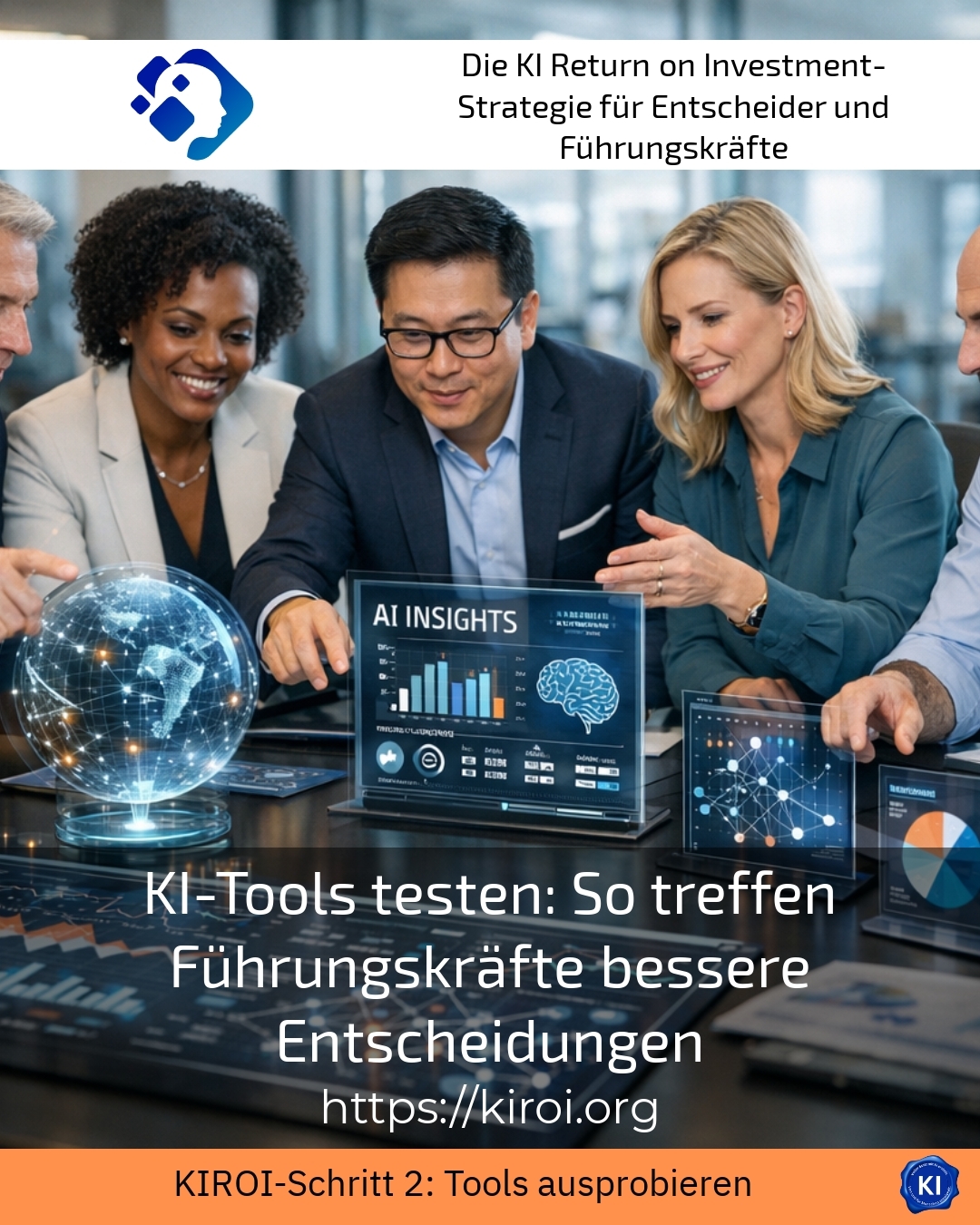
Have you ever wondered why some leaders triumph when introducing new technologies, while others invest millions in systems that no one uses? The answer often lies not in the technology itself, but in the way decision-makers evaluate and assess it before implementation. Testing AI tools It’s about much more than just trying out software. It’s a strategic process that determines whether digital innovations create measurable value or remain as expensive mistakes in the company’s history. In an era where artificial intelligence permeates almost every business sector, the ability to systematically evaluate is becoming a core competency of modern corporate management.
Why systematic testing of AI tools has become indispensable
The rapid development in the field of artificial intelligence has produced an almost unmanageable market of applications. Executives face the challenge of choosing the appropriate solution from among thousands of options. It is no longer sufficient to rely on marketing promises or be dazzled by impressive demonstrations. A structured approach to evaluating digital tools protects against costly misinvestments and ensures competitiveness. This trend is particularly evident in the field of corporate advisory services. Consultants now use intelligent systems for market analyses and trend forecasts. Others rely on automated document review in due diligence processes. The creation of strategy documents is also significantly accelerated through machine support.
The complexity of these decisions is further increased by the fact that many providers promise similar functionalities. However, the actual performance differs significantly. A consulting company that wants to introduce a system for automated analysis of business reports, for example, finds dozens of seemingly suitable solutions. Only a systematic testing process reveals the real strengths and weaknesses. Some systems excel in English-language documents, but fail in German specialist texts. Others deliver precise results in standardized formats, but fail with individual presentation formats. Such nuances determine the success or failure of an implementation.
Best practice with a AIROI customer
A mid-sized management consulting firm in southern Germany faced the decision to implement an intelligent system for competitive analysis. The management team had initially selected three providers based on product presentations. In the context of an accompanied evaluation phase, we jointly developed a structured testing procedure with clearly defined criteria. The team defined specific use cases from day-to-day operations as test scenarios. Each system was confronted with identical tasks over a period of four weeks. The results significantly surprised all involved parties. The system considered to be the favorite turned out to be significantly inferior when analyzing German-language professional publications. A previously less-noticed provider, however, consistently delivered high-quality results in industry-specific questions. Through this systematic approach, the company avoided a potential investment of an estimated 180,000 euros. The solution currently in use is actively used by the consultants and has increased efficiency in research processes by approximately 40 percent.
The five dimensions of testing AI tools for executives
A comprehensive evaluation concept takes into account several levels of evaluation that go far beyond mere functionality. The first dimension concerns the technical performance in the specific context of application. This involves precision, speed, and reliability of the results under real-world conditions. The second dimension encompasses integration into existing system landscapes and workflows. Even the most powerful system fails if it does not seamlessly integrate into existing processes. Strategy consulting, for example, often works with specialized databases and proprietary analysis tools. A new system must be able to interact with these components. Equally important is compatibility with common collaboration platforms and presentation software.
The third dimension addresses acceptance by actual users within the company. Executives often underestimate the impact of usability on implementation success. A system may be technically sophisticated, but it is not used if the operation appears too complex. The fourth dimension relates to aspects of data security and regulatory compliance. Consulting firms process highly sensitive information from their clients. Compliance with confidentiality agreements and data protection policies is non-negotiable. Finally, the fifth dimension considers the economic aspects in their entirety. This includes not only license costs but also implementation effort, training requirements, and ongoing maintenance.
Practical methods for meaningful evaluations
The reliability of a testing methodology depends largely on its methodological quality. A proven approach begins with the definition of concrete use cases from actual business operations. These scenarios should cover different levels of complexity and requirements profiles. For example, an auditing firm could define test cases for balance sheet analyses, risk assessments, and compliance audits. A strategy consulting firm might focus on market entry analyses, competitive profiles, and scenario development. The testing scenarios must reflect realistic data volumes and quality levels. Idealized test data leads to biased results that are not reproducible in practice.
Another methodological component is the inclusion of different user groups in the evaluation process. The perspective of an experienced partner differs fundamentally from that of a junior consultant. Both perspectives provide valuable insights into the practical applicability of a system. Equally important is the documentation of all observations during the testing phase. Spontaneous impressions and informal feedback often contain crucial clues. The systematic recording of this information enables informed decision-making based on reliable data.
Best practice with a AIROI customer
An internationally operating consulting firm with a focus on digital transformation was looking for a solution to automate the creation of status reports for complex transformation projects. The existing practice required significant manual effort to combine information from various source systems. Together we developed a multi-stage evaluation process that included both quantitative and qualitative evaluation criteria. The testing phase spanned three ongoing client projects with different characteristics. Project managers and team members documented their experiences in structured feedback forms. Additionally, we captured objective metrics such as processing times and error rates. The analysis of the collected data revealed interesting patterns regarding the suitability of different systems for different project types. The company ultimately decided on a combination of two solutions, which are used depending on the complexity of the project. This differentiated strategy would not have been discernible without the structured testing process.
Common pitfalls when testing AI tools and how to avoid them
The experience from numerous accompanying projects reveals recurring sources of error in the evaluation of digital tools. A particularly common mistake is overestimating the scope of functionality compared to actual usability. Management personnel are easily distracted by impressive feature lists without questioning which functions are actually needed. A system with a hundred analysis options is of little use if the ten relevant ones fail to convince. Focusing on the specific needs protects against this trap. Another common mistake is the too short testing period. Many systems only show their full potential after a certain period of onboarding. Others reveal weaknesses only during more intensive use over extended periods of time.
Neglecting edge scenarios represents another critical stumbling block. Test cases often only represent standard situations, while problem cases are ignored. However, unusual scenarios regularly occur, especially in the consulting industry. A system for contract analysis may work excellently with standard agreements. However, significant deficiencies may emerge with complex international contractual arrangements containing unusual clauses. Conscious integration of boundary cases into the test design significantly increases the reliability. Similarly, isolated consideration without consideration of the system environment is problematic. Performance under laboratory conditions often differs significantly from that in productive use with real data volumes and user numbers.
The role of corporate culture in successful evaluations
The success of evaluation projects depends largely on cultural factors within the company. An open culture of error allows for honest feedback during the testing phase. Employees must feel safe to report negative experiences without consequences. In hierarchical organizations, there is a risk of embellished feedback. Leaders should explicitly encourage critical evaluation and demonstrate openness to negative findings themselves. The inclusion of skeptical voices enriches the evaluation process. People with critical perspectives identify weaknesses that enthusiasts overlook. A balanced evaluation team combines different perspectives and approaches to technology.
The temporal prioritization of the evaluation project also sends important cultural signals. Executives who actively participate in testing emphasize the strategic importance. Providing sufficient resources for careful evaluation demonstrates appreciation for sound decision-making processes. Conversely, time pressure often leads to superficial evaluations with correspondingly uncertain results. Investing in a thorough evaluation process pays off through better decisions and successful implementations.
Best practice with a AIROI customer
A boutique consulting firm in the field of organizational development had already experienced two failed attempts to implement intelligent analysis tools. The partners approached us with the request for guidance for a third attempt. The analysis of the previous projects revealed an interesting pattern that we often observe. The evaluation phases were each too short and superficial, and critical voices within the team went unheeded. We initially established a structured feedback process with anonymous feedback options. The testing phase was extended to three months, with different project types being tested. Particular attention was paid to the integration of skeptical team members into the evaluation. Their critical perspective proved extremely valuable in identifying potential problems. The system ultimately selected is now actively used by all consultants, and according to their own assessment, acceptance stands at almost one hundred percent. The key to success was not in the technology selection, but in the modified evaluation process.
My AIROI Analysis
The systematic evaluation of intelligent systems is increasingly becoming a strategic core competency for executives in knowledge-intensive industries. My experience from supporting numerous evaluation projects shows a consistent pattern that I observe again and again. Companies that invest in structured testing processes make significantly better technology decisions than those with intuitive selection methods. The initial investment in time and resources is amortized many times over through avoided misinvestments and successful implementations. What is particularly remarkable is the importance of cultural factors, which are often underestimated. Technical evaluation criteria alone are not sufficient to predict implementation success.
The consulting industry exemplifies sectors where intelligent systems hold significant potential for transformation. At the same time, the specific requirements of this industry demand particular care in selection. Confidentiality, precision, and adaptability to complex issues are non-negotiable. A structured evaluation process identifies those solutions that truly meet these requirements. I also observe that the quality of the evaluation directly correlates with the commitment of the leadership level. When partners and managers take the process seriously and actively contribute, the probability of success increases significantly. The guidance provided by experienced coaches can help identify blind spots and avoid methodological pitfalls. Transruptive coaching offers a valuable framework for guiding such transformation projects. Ultimately, it is not the technology itself that determines success, but the quality of the decision-making process that led to its selection.
Further links from the text above:
[1] McKinsey Digital: The State of AI
[2] Gartner: AI Insights and Research
[3] Harvard Business Review: AI and Machine Learning
[4] BVDW: Artificial Intelligence in the Business Context
For more information and if you have any questions, please contact Contact us or read more blog posts on the topic Artificial intelligence here.










 Deutsch
 English (UK)