
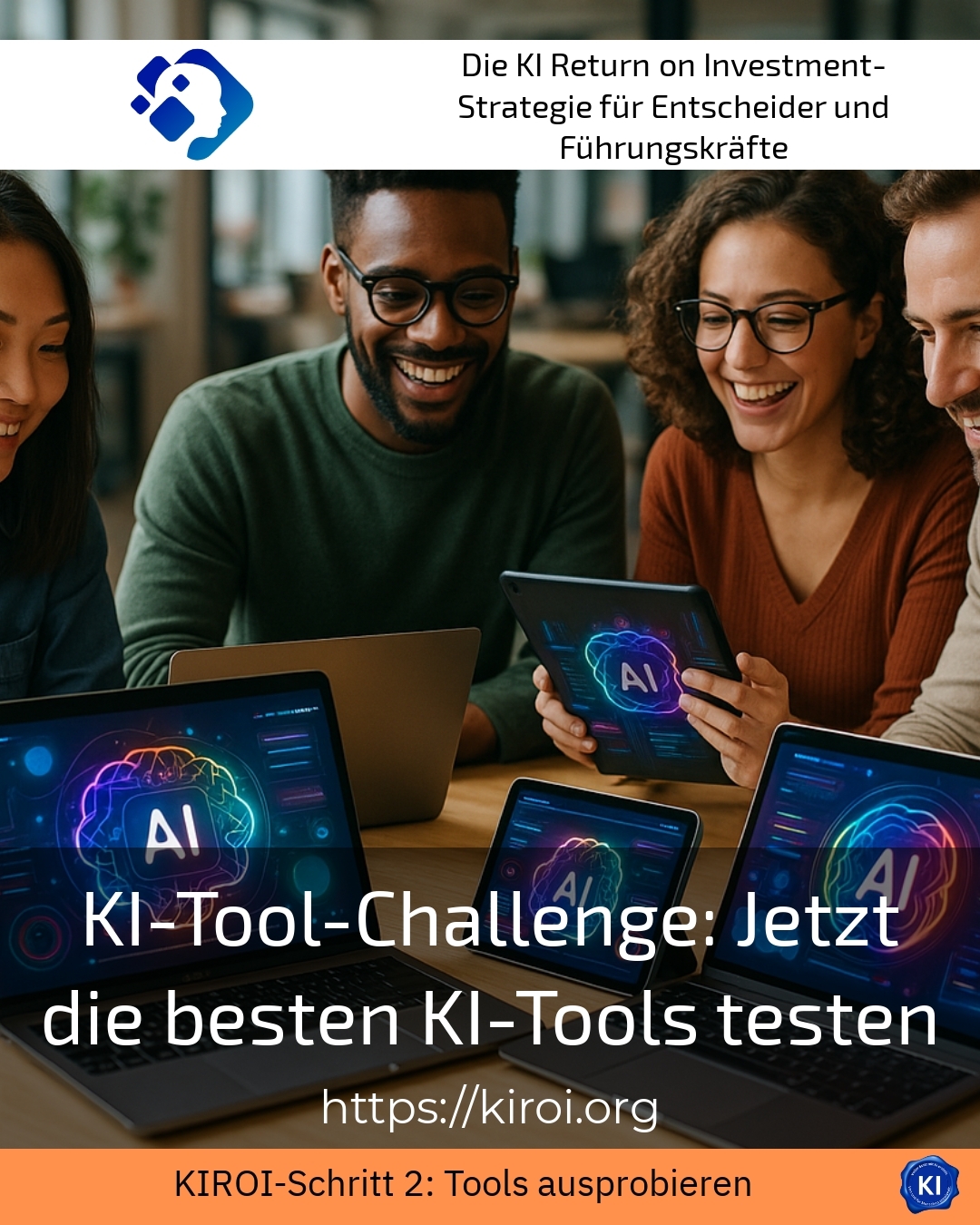
Digital transformation is fundamentally changing the way we work. Every day, smart technologies open up new opportunities. Many companies are faced with a crucial question: which tools actually meet their requirements? The AI Tool Challenge: Test the best AI tools now offers a structured approach. It enables you to systematically evaluate various solutions. This is not about blind trial and error. Instead, the focus is on a well-founded analysis. This allows you to make better decisions for your company.
Why systematic evaluation is more important than ever today
The market for intelligent applications is growing rapidly. New solutions come onto the market every day. This variety can quickly become overwhelming. Therefore, decision-makers need clear criteria for their selection. First, you should define your specific challenges. Then you can identify suitable tools in a targeted manner. A structured comparison saves time and resources. Furthermore, you avoid costly misjudgements.
Many leaders report similar experiences. They invest in technology without a clear strategy. This frequently leads to frustration and disappointment. Employees feel overwhelmed by new systems. The hoped-for efficiency gains fail to materialise. Therefore, transruptions coaching assists with such projects. It guides companies through systematic evaluation. Individual needs are at the heart of this process.
A medium-sized manufacturing company faced precisely this challenge. The executive board wanted to optimise processes. Several vendors presented their solutions. Yet the decision was difficult. Only through systematic testing did it become clear which solution fit. A retail company had similar experiences. It evaluated various chatbot systems for customer service. The results surprised everyone involved. The supposedly best product performed poorly. An unknown provider, on the other hand, was completely convincing.
Using the AI tool challenge as a strategic instrument
Systematic testing requires a well-thought-out approach. First, define clear success criteria. These should be measurable and relevant. Then select suitable candidates for comparison. A pilot project on a manageable scale minimises risks. This allows you to gain valuable experience without making major investments.
The AI Tool Challenge: Test the best AI tools now follows this principle. It structures the evaluation process into transparent steps. This gives everyone involved clarity about possibilities. At the same time, the limitations of the technology become apparent. This transparency is crucial for sustainable implementations.
Best practice with a AIROI customer
An internationally active logistics service provider was faced with a complex decision. The company wanted to optimise its route planning through intelligent systems. Several providers presented promising solutions with impressive features. However, the management felt uncertain about the selection. Therefore, they decided on a structured evaluation over eight weeks. First, the project team defined clear success criteria together with all stakeholders. These included cost savings, time efficiency and user-friendliness for the dispatchers. Three selected systems were deployed in parallel in a test region. The team documented the results daily in standardised logs. After four weeks, clear differences emerged. One system stood out due to its intuitive operation and high acceptance among employees. The cost savings were at an estimated fifteen percent. The second system offered more features, but the familiarisation period took longer. The third system was eliminated early on from the comparison due to technical problems. The structured approach enabled a well-founded decision without time pressure. Today, the company successfully uses the chosen solution in all regions. The dispatchers report significantly reduced planning effort and higher satisfaction.
Practical steps for your own challenge
The first step is to take stock of the situation. Which processes are suitable for intelligent support? Where are the biggest pain points in day-to-day operations? These questions help to narrow down the focus. One insurance company, for example, identified claims processing as a key area. The manual checking of documents was very time-consuming. There was enormous potential for optimisation hidden here.
In the second step, you research available solutions. Industry associations often provide helpful overviews [1]. Trade media also regularly report on new developments. Recommendations from industry peers are particularly valuable. An engineering company found a specialised solution this way. This was designed for the analysis of technical drawings. No general provider would have met these requirements.
The third step involves developing the criteria. What must the solution be able to do? Which functions would be desirable but not essential? How important is integration with existing systems? One healthcare provider, for example, prioritised data protection and compliance. These criteria ruled out several international providers from the outset.
Typical challenges and how to overcome them
Many companies struggle with unrealistic expectations. Vendor marketing promises often raise exaggerated hopes. The reality often looks more sober. That is why practical testing is so crucial. It is the only way to recognise what really works.
Another hurdle is internal resistance. Staff fear for their jobs. They actively or passively block the introduction of new technologies. Early involvement and transparent communication can help here. Show how the new tools can ease the workload. Emphasise their role as a support rather than a replacement.
A financial services provider experienced this at first hand. The introduction of an intelligent analysis system initially failed. The analysts did not feel involved. The mood only changed after detailed workshops. The employees recognised the benefits of the new tools. Today, they report increased quality of work. A retail company took a different approach. It let the employees suggest test candidates themselves. This involvement created a high level of acceptance right from the start.
Successfully implementing your AI tool challenge
Successful implementation requires sufficient time. Plan for realistic testing phases of at least four weeks. Shorter periods often yield distorted results. Different user groups should also be involved. Their feedback is essential for the final evaluation.
Document all experiences carefully. Standardised evaluation forms make it easier to compare results later on. Regular feedback sessions keep everyone involved informed. This transparency builds trust in the process.
Best practice with a AIROI customer
A medium-sized publishing house was looking for solutions for text analysis and content creation. The aim was to relieve the editorial team of time-consuming research tasks. The company opted for a structured AI Tool Challenge, in order to identify the best solutions. Over a period of six weeks, various editorial teams tested a total of four different systems. Each team carried out identical tasks using the tool assigned to them. The results were evaluated in terms of quality, time savings and user satisfaction. The differing perceptions amongst the teams were particularly interesting. The experienced journalists preferred a system with extensive research functions. Their younger colleagues, on the other hand, valued the intuitive interface offered by another provider. These findings led to a nuanced decision by senior management. The company implemented two different systems for different areas of application. The research solution now supports the investigative editorial team with complex topics. The more user-friendly system assists with day-to-day news production and quick articles. This bespoke solution would not have been developed without the systematic evaluation. The editor-in-chief reports a significant increase in productivity whilst maintaining the same level of quality.
Long-term perspectives and continuous optimisation
The technology landscape is constantly evolving. What is state-of-the-art today may be outdated tomorrow. That is why continuous monitoring is important. Keep an eye on new developments. Plan regular reviews of the solutions you use.
One automotive supplier has institutionalised this process. Every year, the company carries out a reassessment, comparing existing systems with the latest alternatives. This ensures that the company remains technologically competitive. A pharmaceutical company goes even further. It has set up an internal centre of excellence. This continuously monitors relevant developments in the market. Promising innovations are evaluated immediately.
Transruptions coaching supports companies through these ongoing processes. It provides impetus for strategic decisions. The focus is always on practical benefits. Technology for technology’s sake is never the goal. Instead, the aim is to create genuine value for your company.
Industry experts recommend an iterative approach [2]. Start with small pilot projects. Learn from your experiences. Scale up successful implementations step by step. This approach minimises risks and maximises learning outcomes.
My AIROI Analysis
After closely monitoring numerous projects, clear patterns have emerged. Successful companies differ significantly from those that are less successful. The decisive factor is rarely the technology itself. Rather, it is the approach that makes the difference. Those who evaluate matters in a structured way make better decisions. Those who involve staff at an early stage achieve greater acceptance. Those who set realistic expectations avoid disappointment.
The AI Tool Challenge: Test the best AI tools now provides a tried-and-tested framework. It provides a sensible structure for complex decision-making processes. At the same time, it allows sufficient flexibility for individual adjustments. Its practical focus is particularly important. Theoretical comparisons can never replace real-world experience with the systems.
My recommendation is based on having accompanied numerous such projects. Invest sufficient time in the preparation. Define measurable criteria before testing begins. Involve various stakeholders in the process. Document all experiences systematically and completely. Take your time making the final decision.
The future belongs to companies that use technology wisely. This means neither blind enthusiasm nor fundamental rejection. Instead, it requires well-founded evaluation and strategic thinking. With this approach, intelligent tools become genuine competitive advantages. They support people effectively in their work. They automate repetitive tasks reliably. They create space for creative and value-adding activities. In this way, we actively and consciously shape the future of work.
Further links from the text above:
[1] Bitkom – Artificial Intelligence in Business
[2] McKinsey – Insights into AI and analytics
For more information and if you have any questions, please contact Contact us or read more blog posts on the topic Artificial intelligence here.









 Deutsch
 English (UK)