
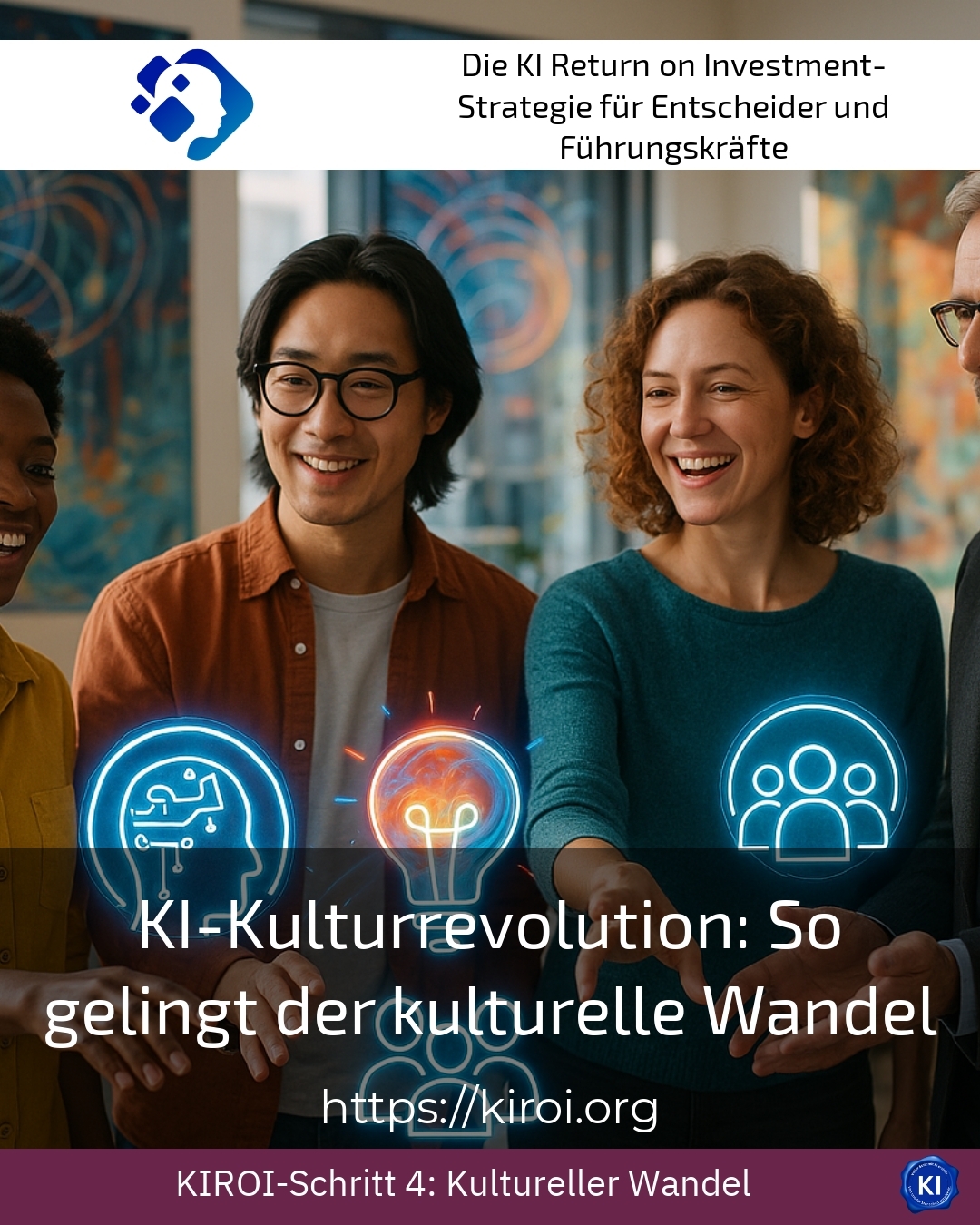
Digital transformation is fundamentally changing businesses. However, technology alone is not enough. True change takes place in the minds of people. The AI Culture Revolution presents organisations with entirely new challenges. Leaders must understand that intelligent systems can only be successfully implemented if the entire workforce supports this change and actively helps shape it. Many companies do not fail because of the technology itself, but due to a lack of acceptance and a lack of preparation among their teams. This article outlines how organisations can successfully master cultural change and which concrete steps help in the process.
Why the AI cultural revolution requires more than just technology
Intelligent systems are fundamentally transforming work processes. They automate routine tasks and create space for creative activities. At the same time, they generate uncertainty among many employees. This ambivalence characterises the current situation in numerous organisations. Staff are wondering whether their jobs are at risk. Leaders are grappling with how to prepare their teams for the changes. Corporate culture remains at the heart of all considerations. For without an open culture that is willing to learn, even the best technological solutions will fail [1].
For example, a financial services provider from southern Germany introduced an automated credit assessment system. The technology worked perfectly and considerably sped up processing times. Nevertheless, many case handlers rejected the system. They felt bypassed and feared for their expertise. Only intensive discussions and targeted training led to gradual acceptance. A mechanical engineering company experienced similar resistance when introducing predictive maintenance systems. The experienced technicians trusted their intuition more than the algorithms. A medium-sized logistics firm also struggled with reservations about automated route planning. These examples illustrate that the human factor is decisive.
The role of leaders in change
Leaders must lead by example. They should use the new tools themselves and share their experiences. This authenticity builds trust among employees. At the same time, they must create spaces for open dialogue. Fears and concerns deserve to be heard and answered seriously. Transruptions coaching accompanies leaders in this demanding task and provides valuable impulses for shaping change. Clients often report initial overwhelm in the face of the many changes. Structured guidance can support and offer orientation here.
Best practice with a AIROI customer A long-established trading company with multiple locations was faced with the challenge of introducing automated warehouse management systems. The management recognised early on that technical implementation alone would not be sufficient. Therefore, they opted for comprehensive cultural support through transruptions coaching. In several workshops, managers and employees jointly developed a vision for future collaboration. Specific fears were addressed and potential solutions developed. The warehouse staff received comprehensive training and were able to actively participate in the system configuration. This involvement significantly strengthened their sense of self-efficacy. After six months, a markedly changed climate was evident. Initial scepticism had given way to constructive curiosity. The employees realised that automation made their work easier rather than threatening it. The company recorded not only increases in efficiency, but also improved employee satisfaction. This success would not have been possible without the intensive cultural work.
Strategies for a successful AI cultural revolution in businesses
Cultural change requires a well-thought-out strategy. Companies should first analyse the current state of their culture. How open are the teams to change? What experience already exists with digital tools? This stocktake forms the basis for further steps. Subsequently, it is recommended to define clear goals and milestones [2]. A pharmaceutical company successfully used this approach when introducing analysis systems for research data. The scientists were involved from the very beginning and were able to contribute their expertise. An energy supplier chose a similar participatory approach when implementing smart grid control. The on-site technicians were trained as ambassadors for change. An insurance group also relied on the early involvement of its clerks when introducing automated claims processing.
Communication as the key to success
Transparent communication forms the foundation of every successful change. Employees must understand why changes are necessary. They need clear information about planned measures and their impacts. In doing so, companies should use various communication channels. Regular town hall meetings enable direct dialogue with the management board. Internal newsletters inform about progress and successes. Digital platforms provide space for questions and discussions. An automotive supplier, for example, set up a special forum for exchanging views on new technologies. Employees were able to share their experiences there and learn from one another. A media company used podcasts to report on the digital transformation. These accessible formats also reached skeptical employees.
Transruption coaching supports companies in developing bespoke communication strategies. Clients often report that initially they lacked the right words. How does one explain complex technological changes comprehensibly? How does one take fears seriously without amplifying them? These questions preoccupy many leaders. Professional guidance can provide valuable impetus here and offer concrete phrasing aids [3].
Skill development as the basis of the AI cultural revolution
Qualification and further training play a central role. Employees must be able to understand the new tools and use them proficiently. This requires comprehensive training programmes at various levels. Introductory courses impart fundamental knowledge about how intelligent systems work. Advanced training deepens specific application skills. Management programmes focus on strategic aspects and change management. For example, a retail group developed a modular learning programme for all hierarchy levels. Employees were able to determine their own learning pace and received certificates for completed modules. A construction company cooperated with a university for practical training formats. The combination of theoretical knowledge and practical application proved to be particularly effective. A healthcare provider also invested significantly in the further training of its specialists.
Best practice with a AIROI customer A medium-sized manufacturing company with around three hundred employees wanted to introduce intelligent quality control systems. The workforce consisted predominantly of experienced skilled workers, some of whom had been with the company for decades. The management feared significant resistance to the new technology. In collaboration with transruptions coaching, an innovative concept was developed. The most experienced employees were trained as internal experts. They received intensive training and were involved in system configuration. Their many years of experience flowed directly into the parameterisation of the algorithms. This approach had several positive effects. The skilled workers felt valued rather than replaced. Their expertise was made visible and recognised. At the same time, a network of internal multipliers was created. These colleagues were able to address skeptical employees on an equal footing. They spoke the same language and shared similar experiences. The change was thus made more tangible and less threatening. The production error rate dropped significantly after the introduction. Employee satisfaction remained stable despite the considerable changes.
Creating spaces for experimentation and fostering a culture of failure
Innovation requires the courage to experiment. Companies should create protected spaces in which new approaches can be tried out. Pilot projects make it possible to gather experience without major risk. For example, a telecommunications company set up an internal innovation lab. There, teams could test new technologies and explore their potentials. A chemical corporation established so-called sandbox environments for digital experiments. Employees were allowed to learn there without fear of negative consequences. A tourism company held regular hackathons. These intensive workshops promoted creative thinking and cross-team collaboration [4].
A constructive error culture significantly supports the learning process. Mistakes should not be punished, but understood as opportunities for learning. This attitude requires a fundamental shift in many organisations. Traditional corporate cultures tend to sanction mistakes. This leads to risk aversion and inhibits innovation. Modern approaches, on the other hand, emphasise the value of failure as a source of learning. transruptions coaching accompanies companies in the development of such a culture. Clients frequently report initial difficulties with this cultural shift. Old patterns are deeply rooted and cannot be changed overnight. Patient and continuous work on the corporate culture is required.
My AIROI Analysis
Accompanying numerous companies through cultural transformation processes has provided important insights. Technological change is only sustainably successful when people are put at the centre. Companies regularly underestimate the effort required for cultural change. They invest massively in hardware and software, but neglect the human component. This leads to disappointing results and wasted resources. The AI Culture Revolution requires a holistic approach that equally considers technical and cultural aspects.
Successful companies are characterised by several common features. They communicate transparently and early on about planned changes. They actively involve employees in design processes. They invest consistently in qualification and skills development. They create spaces for experimentation and promote a constructive culture of failure. And they make use of professional guidance from experienced coaches and consultants. Transruptions coaching has proven to be a valuable support in this regard. It provides orientation in complex change processes and strengthens the ability of leaders to take action. Experience shows that cultural change takes time. Quick wins are rare, but sustainable changes are certainly achievable. Companies that follow this path consistently will benefit in the long term.
Further links from the text above:
[1] McKinsey Digital: Unlocking Success in Digital Transformations
[2] Harvard Business Review: Organizational Transformation
[3] Gartner: Artificial Intelligence Insights
[4] World Economic Forum: Artificial Intelligence and Robotics
For more information and if you have any questions, please contact Contact us or read more blog posts on the topic Artificial intelligence here.







 Deutsch
  English (UK)