
Will financial professionals soon become obsolete – or are they undergoing their biggest transformation right now?
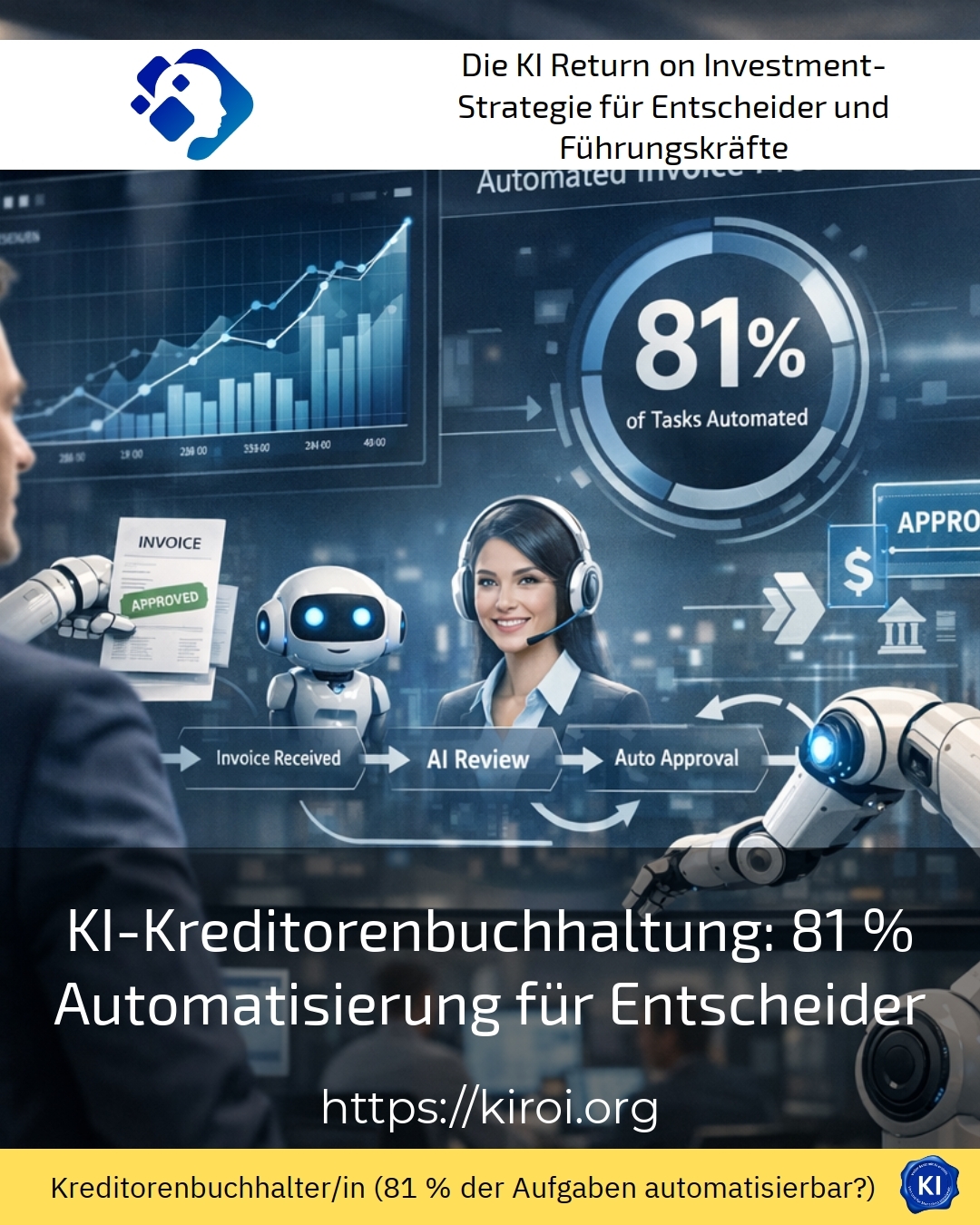
This question concerns decision-makers in companies of all sizes. Digitalization is fundamentally changing work processes. Especially in the field of AI credit card billing Dramatic shifts are evident. According to the Job Future Report of the Institute for Employment Research, the automation potential stands at an astonishing 81 percent [1]. This figure should send any financial manager into a panic. However, it does not mean the end of human expertise. Rather, it opens up opportunities for more strategic activities. The transformation does not only affect large corporations. Medium-sized companies also benefit from intelligent solutions. At the same time, new requirements are emerging for skilled workers. Professional coaching is becoming increasingly important in this context.
The reality behind the 81 percent automation potential
The Job Futureometer systematically analyzes the substitutability of professional fields [1]. It examines individual activities for their potential for automation. Notable insights emerge for the financial sector. Routine tasks such as invoice processing are at the forefront. The verification of payment deadlines is already often automated today. Debits can be precisely performed by learning algorithms. Even debt collection and payment processing are increasingly being digitized. This development affects both commercial enterprises and production companies. Logistics companies with high invoice volumes feel the change particularly strongly. Energy providers are already largely automating their mass processes. Insurance companies are using intelligent systems for claims settlement. Banks are continuously optimizing their internal billing processes.
The AI credit card billing This fundamentally changes established processes. Inbound invoices are automatically read and categorized. The system independently detects deviations from orders. Release workflows start without manual intervention. Integration with ERP systems is seamless. Employees focus on exceptions and special cases. However, this shift requires new skills. Analytical thinking gains importance. Process understanding becomes more important than data entry. Collaboration between humans and machines must be learned.
Best practice with a AIROI customer
A medium-sized machine manufacturer with about four hundred employees faced significant challenges in its financial accounting because the volume of invoices continuously increased and processing times lengthened, while experienced staff members were retiring and successors were difficult to find. The transruptions coaching accompanied the company in analyzing its processes and, together with the team, identified the greatest optimization potential. In particular, the collection of international supplier invoices was identified as time-consuming. Within eight months, the company implemented an intelligent solution that automatically classifies detailed documents and extracts relevant data, reducing the processing time for invoices from an average of twelve days to three days. The freed up capacity was used by the team for more strategic tasks such as supplier evaluations and payment conditions negotiations, which led to savings in the six-digit range. Particularly important was the continuous support of the employees, because fears of job loss were openly addressed and turned into development opportunities.
Industry-specific applications of AI credit scoring
Various industries use intelligent financial systems differently. In retail, with its thousands of supplier relationships, automated processes offer enormous potential. Seasonal fluctuations in billings are effortlessly managed. The restaurant industry benefits from the quick processing of numerous small amounts. Hotels automate their complex billing with various service providers. The construction industry traditionally struggles with cluttered sub-invoices and additional charges. Here, learning systems help with the correct assignment. Engineering firms manage project-related costs more efficiently. Advertising agencies keep track of their freelance billing.
The pharmaceutical industry places special demands on compliance and documentation. Intelligent solutions ensure seamless traceability. In healthcare, automated processes facilitate billing with health insurance companies. Nursing facilities significantly reduce their administrative workload. The education sector uses digital systems for the billing of funding. Municipal administrations are gradually modernizing their budgeting processes. Cultural institutions simplify their artist fees and license billing. This diversity demonstrates the wide applicability of modern technologies.
How decision-makers successfully implement transformation
The introduction of automated financial processes requires strategic planning. First, an honest assessment of the current situation is recommended. Which processes consume particularly many resources? Where do errors or delays occur regularly? These questions form the basis for informed decisions. Automotive suppliers, for example, analyze their just-in-time billing processes. Textile companies examine their seasonal peak loads. Food retailers focus on perishable goods and short payment cycles.
Employee involvement plays a crucial role in success. Clients often report initial skepticism within their teams. These concerns deserve serious attention. Transruptive coaching supports companies in addressing these challenges. It provides guidance for respectful communication. Fears are transformed into constructive energy. Training concepts are developed in collaboration with the affected parties. This transforms transformation into a collective project.
Best practice with a AIROI customer
A logistics company with locations across Europe struggled with heterogeneous accounting systems and different process standards because acquisitions over the years had created a patchwork of software solutions that made consolidation difficult and hindered transparency. The transruptions coaching supported the development of a unified vision, with representatives from all the country’s companies actively involved to take into account local specifics and create acceptance. The gradual harmonization of processes took eighteen months, with the most profitable companies being migrated first and serving as pilots for the other locations. Today, the company processes more than one hundred thousand incoming invoices monthly with an automation rate of over seventy percent, while the error rate has decreased by more than ninety percent. The former concerns of the regional companies have completely disappeared because they now benefit from standardized reports and faster closing of accounts.
Technological foundations and their practical significance
Modern automation solutions are based on various technology components. Optical character recognition forms the foundation for document capture. Machine learning enables continuous improvements in recognition rates. Natural language processing interprets unstructured text information. Process automation seamlessly connects different systems. These technologies work in the background; users ideally notice little of it.
For the AI credit card billing This means concrete benefits in everyday life. Invoices from various formats are processed uniformly. The system increasingly reliably recognizes handwritten notes on documents. Foreign-language documents are no longer an obstacle. The integration with banking systems enables automatic reconciliation of payments. Cheque procedures are scheduled optimally. The system proactively prevents double payments. These functionalities significantly relieve workload for professionals.
Challenges and realistic expectations
Despite all progress, there are limits to automation. Complex contract agreements still require human interpretation. Disputes with suppliers require diplomatic skill. Unusual business events require experienced assessments. The chemical industry handles complex hazardous waste billing. The aviation industry handles complex leasing agreements. Media companies juggle multifaceted licensing models. These specialized cases require human expertise.
The implementation itself also brings challenges. Data quality in legacy systems is often poor. Maintenance of master data was neglected for years. Process documentation is often completely lacking. These legacy issues must be cleared before automation. Transruptions coaching accompanies companies through this demanding phase. It helps develop realistic timelines. It supports management in managing expectations. This results in sustainable solutions instead of short-term bluffs.
The middle class faces particular hurdles in digitalization. Limited IT resources make complex projects difficult. Staff shortages also severely affect accounting. Cloud solutions offer attractive alternatives here. They significantly reduce the internal implementation effort. At the same time, questions arise regarding data security and compliance. These concerns merit careful examination.
Best practice with a AIROI customer
A family-run wholesaler of sanitary products with three generations of tradition hesitated for a long time to digitize its accounting because the senior manager expressed concerns regarding data security and the long-time accountant did not want to fundamentally change her working style. The transruptive coaching enabled a cross-generational dialogue in which both the experience of the established forces and the innovation readiness of the younger generation gained appreciation. Together, a step-by-step approach was developed that initially only automated the accounting process and left all other steps in the proven responsibility of the experienced team, thereby allowing trust in the new technology to grow. After six months of successful use, the experienced accountant herself requested an extension of the automation because she wanted to use the time gained for more demanding tasks such as controlling reports, which brought her a noticeably greater sense of satisfaction. Today, the senior manager continues to recommend the solution at industry meetings and proudly reports on the successful combination of tradition and innovation.
Future prospects for financial professionals
The 81 percent automation potential does not mean the end of the professional career. Rather, the activity profile is fundamentally changing. Office workers become process managers. Accountants develop into data analysts. Controllers gain strategic importance through better data quality. This development opens up attractive career paths.
The AI credit card billing creates new specialization opportunities. Experts in system configuration are sought. Process optimizers design efficient workflows. Training specialists impart digital skills. Change managers guide organizational transformations. These roles hardly existed a few years ago. Today, they are sought-after positions in modern companies.
Continuing education becomes increasingly important for professionals. Fundamental technological understanding becomes a key skill. Analytical skills complement classic accounting knowledge. Communication skills support collaboration between departments. Companies benefit from investing in their employees. Loyal and competent teams are created through development perspectives.
My AIROI Analysis
The transformation in the financial sector is advancing relentlessly and is fundamentally changing established structures. The automation potential of 81 percent, as determined by the Job Future report, reflects a reality that companies must face. Decision-makers face the task of reconciling technological possibilities with human needs. This balance is not achieved automatically; it requires conscious design and professional guidance.
The presented practical examples clearly show that successful transformation means more than just implementing technology. People are at the center of every change process. Their fears deserve respect, their potential should be nurtured. Transruptions coaching offers just such support for demanding projects. It helps companies find their individual paths.
The various industries demonstrate diverse applications for intelligent systems. From retail to industry to the service sector, organizations benefit from automated processes. At the same time, there remain limits that require human expertise. This combination of machine efficiency and human judgment produces optimal results. The future belongs to companies that intelligently combine both elements.
For decision-makers, this provides a clear roadmap for action. The analysis of existing processes forms the starting point. Employee involvement ensures acceptance and success. The gradual introduction minimizes risks. Continuous development ensures competitiveness. Those who adhere to these principles actively and successfully shape the transformation.
Further links from the text above:
[1] Job-Futuromat of the Institute for Employment Research
For more information and if you have any questions, please contact Contact us or read more blog posts on the topic Artificial intelligence here.









 Deutsch
 English (UK)