
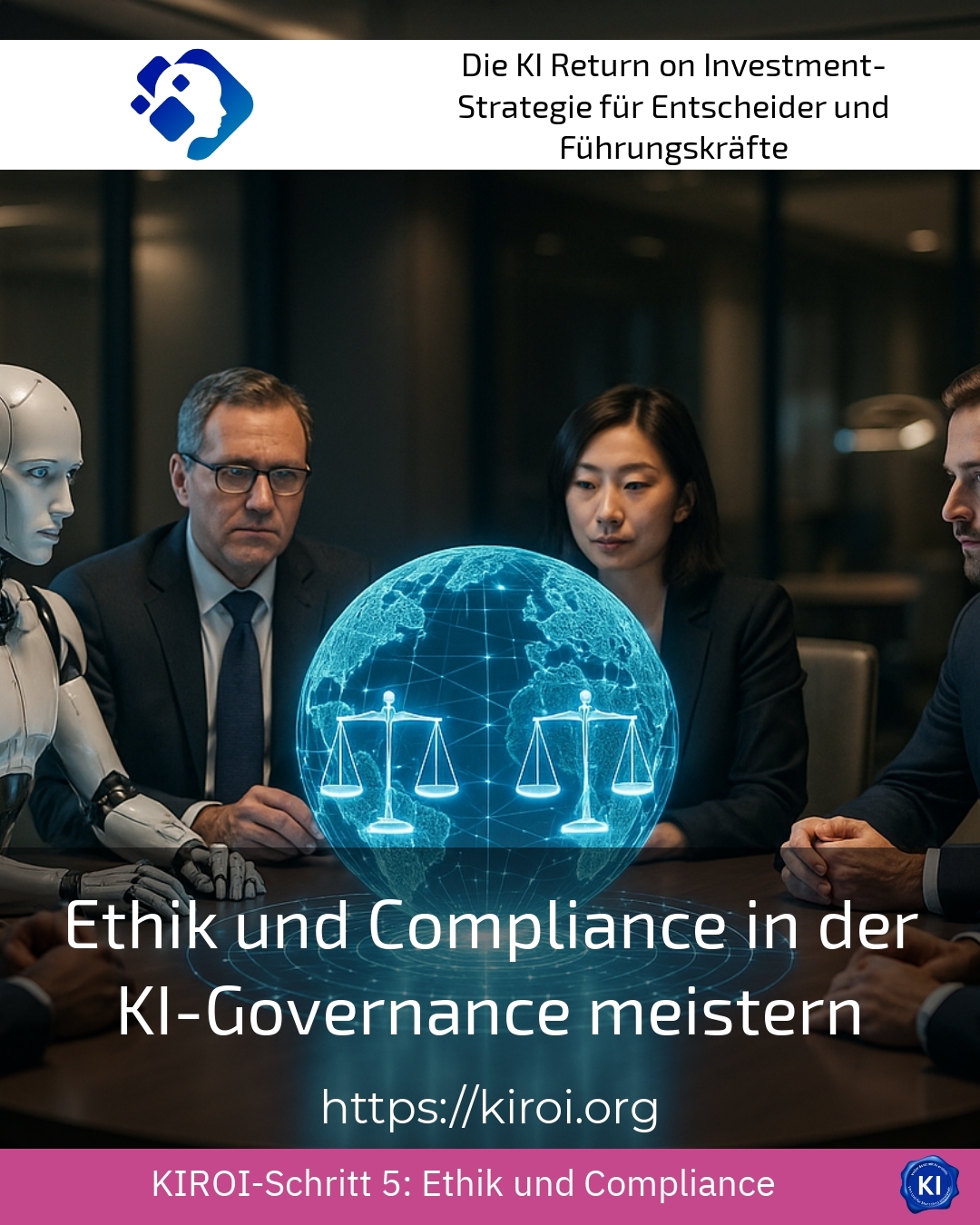
Imagine your intelligent systems making decisions that affect millions of people – and nobody knows exactly why. This is precisely where the crucial journey begins, where companies tackle the issue Mastering Ethics and Compliance in AI Governance to build trust and avoid legal pitfalls. The rapid development of automated decision-making processes poses fundamental questions for organisations worldwide: How do we ensure fairness when algorithms make judgements? How do we ensure transparency when even developers cannot always understand the results? These challenges demand well-thought-out governance structures that go far beyond technical solutions and must permeate the entire company.
The fundamental pillars of responsible technology governance
Responsible technology governance is based on several supporting pillars. These pillars connect legal requirements with moral principles. Transparency forms the foundation of any credible strategy. Companies must be able to plausibly document how their systems arrive at results. They also need clear responsibilities at all hierarchical levels. Accountability must not disappear in anonymous structures.
A leading car manufacturer recently implemented a comprehensive audit system for its autonomous driving assistance systems. This system logs every decision made by the vehicle in critical situations, allowing engineers to retroactively analyse why the system braked or swerved. This transparency builds trust with both customers and regulatory bodies.
Financial institutions face similar challenges in lending. Automated scoring models must be able to explain their assessments. Otherwise, banks risk discrimination lawsuits and reputational damage. For this reason, institutions are investing heavily in so-called Explainable AI solutions.
The importance of ethical governance is also clearly evident in the healthcare sector. Diagnostic systems must provide understandable recommendations. Doctors require justifications before making treatment decisions. Ultimately, the responsibility remains with humans.
Best practice with a AIROI customer
An international insurance group turned to the transruptions coaching team because its automated claims processing system was increasingly triggering critical media reports. Customers complained about seemingly arbitrary rejections of their claims, and the supervisory authority announced an audit. With guidance from our AIROI model, we first analysed the system's existing decision paths and identified several areas where traceability was lacking. Together, we developed a three-stage transparency concept that generates automated justifications for each decision and presents them in customer-friendly language. Additionally, we established an escalation procedure where complex cases are automatically forwarded to human claims handlers. Implementation was completed within six months, and since then, the teams have reported significantly reduced complaints. The supervisory authority explicitly praised the company's proactive approach.
Mastering Ethics and Compliance in AI Governance through Structured Processes
Structured processes form the backbone of any successful governance strategy. Without clear procedures, ethical principles remain empty words. That's why we recommend a systematic approach. This begins with defining company-wide values and principles. This is then followed by translating these principles into concrete instructions for action.
Retail is a prime example of what such processes can look like. Large retail chains use predictive systems for staffing and pricing. These systems must ensure fair working conditions. At the same time, pricing algorithms must not disadvantage vulnerable customer groups. One leading discount retailer therefore introduced regular fairness audits of its systems.
In the telecommunications industry, companies face unique challenges. Network management systems decide on bandwidth distribution and service quality. These decisions must be made in a non-discriminatory manner. Therefore, providers are increasingly implementing neutrality checks in their algorithms.
The energy industry uses intelligent systems for grid control and consumption forecasting, creating sensitive data pools on the behaviour of millions of households. Protecting this information requires robust compliance structures. Several energy suppliers have therefore established specialised ethics boards.
Risk-based assessment models for responsible innovation
Risk-based assessment models help companies to deploy their resources in a targeted manner. Not every system requires the same intensity of monitoring. High-risk applications deserve special attention. Systems with low damage potential require correspondingly less control.
A logistics company classified its automated systems using a traffic light scheme. Route optimisation received the green category with standard monitoring. Staff selection algorithms landed in the red category with intensive scrutiny. This differentiation enabled efficient resource allocation.
Pharmaceutical companies face particularly high demands in risk assessment. Drug development systems can save or endanger lives. Therefore, they are subject to the strictest testing protocols. Every recommendation from the system goes through several validation loops.
In the education sector, institutions are utilising adaptive learning systems for personalised lesson design. These systems have a significant impact on the educational paths of young people. Therefore, evaluation must consider long-term consequences. Several universities have established ethics committees specifically for digital learning environments.
Cultural Transformation as the Key to Sustainable Success
Technical solutions alone are not enough for sustainable change. Companies must establish a culture of responsibility. This culture ideally permeates all levels of the hierarchy. Leaders embody the values and promote critical thinking. Employees receive training on ethical issues.
The media industry impressively demonstrates the importance of cultural factors. News agencies use automated systems for content moderation. These systems must balance freedom of expression with duties of care. Without an appropriate corporate culture, even sophisticated technical solutions will fail.
Recruitment agencies are increasingly using automated screening processes for applications. These processes can reinforce or reduce unconscious biases. Company culture determines which direction the system takes. Leading providers are therefore investing in diversity training for their technical teams.
Public administration also faces transformation tasks. Authorities are implementing digital assistants for citizen inquiries. These must function in a non-discriminatory and accessible manner. The cultural embedding of inclusion principles is decisive for success.
Best practice with a AIROI customer
A medium-sized mechanical engineering company from southern Germany sought guidance in implementing predictive maintenance systems for its production facilities. Management recognised early on that technical implementation alone would not be sufficient to unlock the potential of the new technology. As part of the transruption coaching, we jointly developed a comprehensive cultural programme that involved all employees in the transformation process. We organised workshops where skilled workers could voice their concerns and contribute suggestions for improvement. This participatory approach created acceptance and generated valuable practical insights. The technicians identified several scenarios where the system underestimated human expertise. These findings were directly incorporated into the system configuration and significantly improved prediction quality. Following the successful implementation, employees report increased job satisfaction and reduced stress due to unplanned machine downtimes.
Mastering ethics and compliance in AI governance requires continuous adaptation
Governance structures must never remain static. Technological development is advancing rapidly. Regulatory requirements are constantly changing. Societal expectations are also evolving. Companies therefore need agile adaptation mechanisms.
The fintech industry illustrates this dynamic particularly clearly. New regulations often arise faster than implementation cycles can keep up. Start-ups must constantly readjust their compliance structures. Established firms are investing in flexible governance platforms.
E-commerce companies regularly adapt their recommendation systems to new data protection requirements. The balance between personalisation and privacy is constantly shifting. Successful retailers therefore establish continuous monitoring processes.
In the transport sector, autonomous systems are developing rapidly. Each new functionality requires revised safety concepts. Fleet operators must update their governance frameworks accordingly.
My AIROI Analysis
The systematic examination of responsible technology governance clearly shows that companies must adopt a holistic approach. Technical solutions are only one part of the overall strategy. Cultural transformation and organisational embedding ultimately determine sustainable success. The topic Mastering Ethics and Compliance in AI Governance remains an ongoing task that requires continuous attention.
Particularly striking is the cross-industry relevance of these challenges. From car manufacturers to financial service providers, organisations are grappling with similar fundamental questions. While the specific solutions vary depending on the context, the underlying principles remain consistent.
Companies that invest early in robust governance structures gain significant competitive advantages. They win the trust of customers and regulators. At the same time, they reduce the risks of costly compliance breaches. Guidance from experienced professionals can significantly accelerate this process.
Clients often report initial overwhelm due to the complexity of the subject area. Structured methodologies such as the AIROI model provide valuable impetus here. They support organisations in setting priorities and making progress measurable. This aid to orientation significantly eases the initial steps and establishes the foundations for long-term excellence [1].
Further links from the text above:
[1] EU Artificial Intelligence Act – European Parliament
For more information and if you have any questions, please contact Contact us or read more blog posts on the topic Artificial intelligence here.










 Deutsch
  English (UK)