
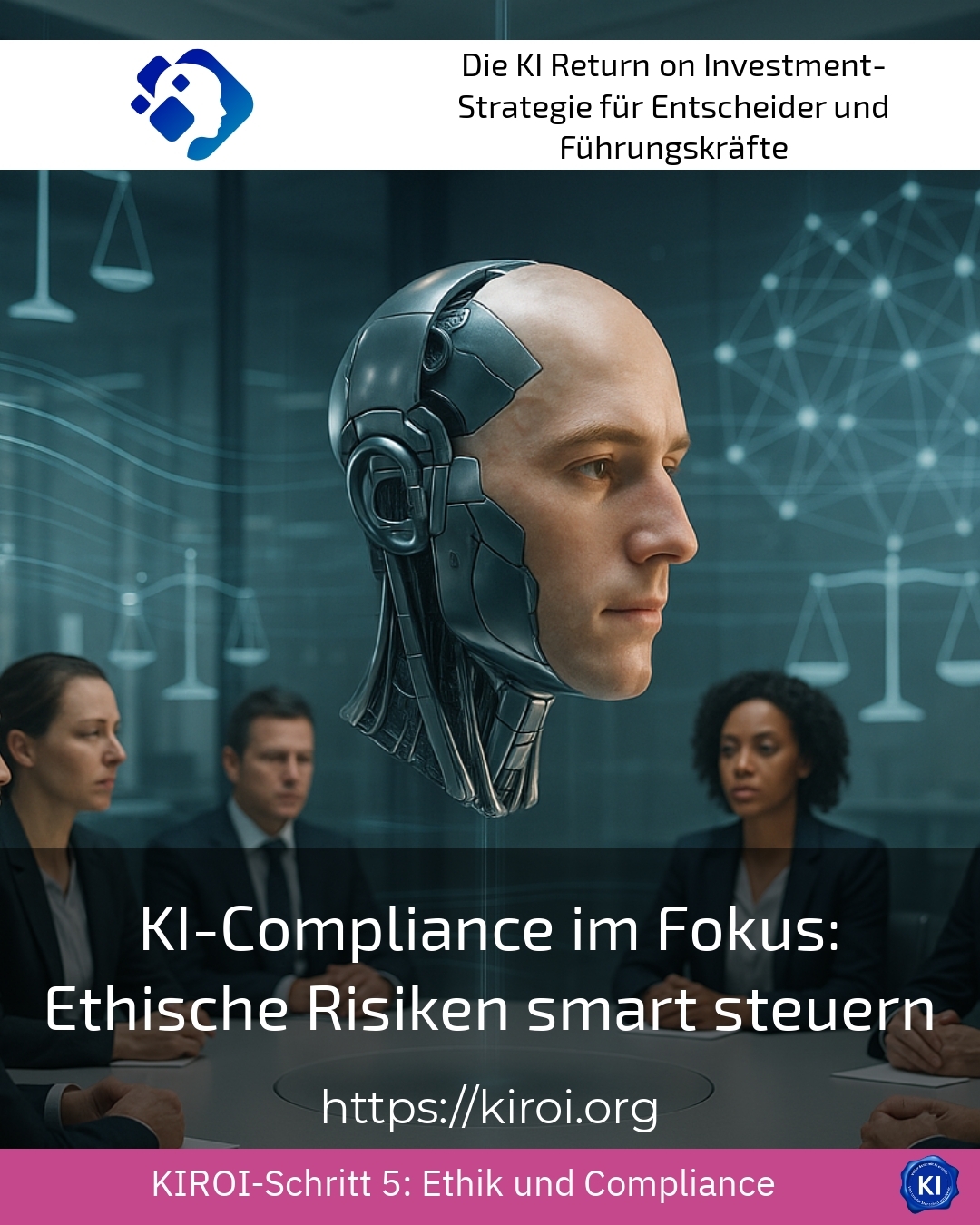
Imagine your algorithm-driven systems make thousands of decisions daily that affect the lives of your customers and employees, yet no one in your organisation can say with absolute certainty whether these decisions are fair, transparent, and legally sound. This situation describes the reality for numerous organisations that employ intelligent technologies without having established a well-thought-out framework for responsible governance. AI compliance in focus: Smartly managing ethical risks This makes it the central challenge of our time, as the consequences of inadequate governance range from damage to reputation and legal sanctions to the loss of customer trust. In a world where automated processes are increasingly influencing business decisions, leaders need pragmatic approaches to identify potential pitfalls early and address them proactively.
The new reality of intelligent decision systems
Modern businesses are increasingly relying on data-driven automation. These systems analyse application documents and select candidates. They assess creditworthiness and calculate insurance premiums. At the same time, they personalise marketing messages and optimize supply chains. The speed and efficiency of these processes far surpass human capabilities. Nevertheless, this development harbours significant risks, as algorithmic biases can unconsciously reproduce discriminatory patterns without those responsible intending or even noticing.
For example, a financial services provider implemented an automated scoring system. This system disproportionately rejected applicants from certain postcode areas. The cause lay in historical data that reflected social inequalities. A recruitment agency experienced similar challenges. Their screening algorithm systematically favoured male applicants. The training data stemmed from decades of male-dominated hiring practices. These examples illustrate why ethical governance has become indispensable.
Furthermore, the healthcare sector exhibits particular sensitivity. Diagnostic support systems can generate erroneous recommendations if not adequately validated. One hospital had to completely overhaul its triage system. The system had systematically prioritised patients with certain demographic characteristics lower. Such incidents underscore the urgency of comprehensive control mechanisms.
AI Compliance in Focus: Smartly Managing Ethical Risks with Structured Frameworks
Establishing robust governance structures requires a systematic approach. Initially, organisations must conduct a full inventory of their algorithmic applications. Many companies significantly underestimate the number of systems deployed. A mid-sized bank identified over seventy different applications with automated decision-making components during an internal audit, despite management originally assuming there were no more than twenty.
Following the inventory, risk categorisation takes place. Not all applications require the same level of control. A chatbot for simple customer inquiries carries different risks than a credit decision system. The European regulatory landscape already distinguishes between risk classes. This categorisation helps companies prioritise their resources.
A telecommunications provider developed a three-stage assessment model. The first stage covers applications with no direct customer impact. The second stage involves systems with a moderate influence on customer experiences. The third stage captures all decisions with significant legal or financial consequences. This model allows for targeted resource allocation and proportionate controls.
Best practice with a KIROI customer
An international insurance company faced the challenge of making its automated pricing systems regulatorily compliant and ethically sound, without jeopardising competitiveness. Transruptions coaching intensively supported the project team over an eight-month period in developing a tailor-made governance framework. Initially, we carried out a comprehensive analysis of all existing algorithms, paying particular attention to potential discrimination risks. Together with the data scientists and compliance officers, we developed an audit protocol that provides for regular checks for algorithmic bias. The company also implemented an escalation procedure for borderline decisions, involving human experts. The results were remarkably positive, as customer complaints regarding unfair treatment reduced significantly. At the same time, acceptance by regulatory authorities improved considerably. The project team reports that the structured support through KIROI methods significantly contributed to the successful implementation. Today, the framework is considered an internal reference model for further digitalisation projects within the company.
Transparency as a cornerstone of responsible technology use
Trust arises from comprehensibility. Affected individuals want to understand why decisions were made one way and not another. This expectation applies equally to customers, employees, and business partners. Consequently, an automotive supplier introduced so-called decision logs. These document the key factors that led to an automated recommendation.
The practical implementation of transparency requires technical and organisational measures. So-called explainability tools make algorithmic decision-making processes visible [1]. They show which data points were particularly weighted. An e-commerce company is already successfully using such tools. Customer service staff can now plausibly explain price adjustments and product recommendations.
Furthermore, advanced organisations are establishing appeal routes for algorithmic decisions. A retail bank set up a dedicated review process. Customers can challenge automated lending decisions. Trained employees then analyse the underlying factors. This facility measurably increases customer trust.
Practical Implementation Strategies for Medium-sized Organisations
Many medium-sized companies feel overwhelmed by the complexity of the subject. They neither have dedicated teams nor specialised expertise. Nevertheless, pragmatic approaches can enable significant progress. The key lies in a step-by-step process and external support.
A mechanical engineering company started with a pilot project. It chose its predictive maintenance system as the testbed. The team documented all data sources and decision logic. It then reviewed potential biases. The outcome was a positive surprise: the systematic analysis uncovered optimisation potential, which simultaneously improved forecast quality.
A logistics service provider chose a different starting point. It initially focused on training. All managers completed an awareness programme. This programme provided basic knowledge of algorithmic risks. Subsequently, the managers independently identified critical applications in their respective areas. This bottom-up strategy fostered acceptance and commitment.
A retail company integrated ethical criteria into its procurement process. New software solutions must now undergo a standardised questionnaire. This questionnaire captures transparency features and audit possibilities. Suppliers who do not meet these requirements are critically questioned. This preventive measure prevents problematic system introductions from the outset.
AI compliance in focus: Smartly managing ethical risks through continuous monitoring
One-off checks are not sufficient. Algorithmic systems continuously change through new data and adjustments. An initially fair system can develop problematic patterns over time. Therefore, forward-thinking organisations establish permanent monitoring mechanisms.
An energy supplier implemented a dashboard for algorithmic health indicators. This dashboard displays deviations from defined fairness metrics in real-time. Responsible parties receive automatic notifications upon critical threshold breaches. This proactive monitoring allows for rapid interventions.
A pharmaceutical company conducts quarterly audits of its research support systems. External experts review the quality of decisions based on defined criteria. The results are incorporated into improvement measures. This cycle ensures continuous optimisation.
A property group is adopting a participatory approach. Tenants can provide feedback on automated decisions. This feedback is systematically analysed. Frequently mentioned points of criticism trigger in-depth analyses. This involvement of those affected increases the legitimacy of the entire system.
Best practice with a KIROI customer
A medium-sized manufacturing company with an international customer base approached us due to uncertainties regarding its automated quality control systems. The systems classified products as defective or saleable, but the decision criteria were difficult for even technical staff to comprehend. Transruption coaching supported the company in bringing transparency to these black-box systems without compromising production efficiency. Together with the quality management team, we developed a protocol for tracing all classification decisions. Particularly interesting was the discovery that the system evaluated certain suppliers more strictly than others, despite comparable objective quality. This insight led to a recalibration of the algorithm and fairer supplier relationships. The company today reports improved collaboration with its suppliers and reduced complaint costs. The KIROI methodology helped to holistically address both technical and organisational aspects and to involve all stakeholders.
Regulatory developments and their practical implications
European legislation is increasingly setting binding standards [2]. Companies must prepare for comprehensive documentation obligations. High-risk applications are subject to particularly stringent requirements. Preparation for these regulations requires strategic planning.
A recruitment agency used the regulatory announcements as a catalyst for internal improvements. The company began documenting its candidate management systems early on. This proactive stance now provides a competitive advantage as rivals are forced to catch up under time pressure.
A fintech company opted for a conservative interpretation of expected requirements. It treats all customer-related algorithms as high-risk. This strategy requires higher investment but minimises regulatory uncertainties. Management argues that building trust justifies the additional expenditure.
An industrial company established an internal ethics committee. This committee evaluates new technology projects before their approval. It is made up of representatives from various departments. This diverse composition ensures different perspectives. The committee meets monthly and publishes recommendations.
Cultural change as a success factor for sustainable governance
Technical measures alone do not guarantee success. The corporate culture must support ethical reflection. Employees must feel safe to voice concerns. Managers must lead by example.
A consulting firm integrated ethical considerations into its project methodology. Each project team must explicitly discuss potential negative impacts. These discussions are documented and evaluated at the end of the project. The methodology makes consultants more aware of possible problem areas.
A media conglomerate has introduced an anonymous reporting platform. Employees can confidentially communicate ethical concerns about algorithmic systems. A specialised team reviews all reports. Valid tips lead to investigations and, where appropriate, adjustments.
A technology company rewards proactive risk identification. Employees who report potential problems early receive recognition. This positive reinforcement encourages attentiveness and a sense of responsibility. The company reports increased engagement.
My KIROI Analysis
The confrontation with AI compliance in focus: Smartly managing ethical risks reveals a fundamental transformation in corporate responsibility that goes far beyond traditional compliance requirements, demanding new competencies and mindsets. In my consulting practice, I regularly experience organisations initially underestimating the complexity and then being surprised by the multi-faceted nature of the requirements, which is why a systematic approach is indispensable. The KIROI methodology offers a proven framework here, integrating technical, organisational, and cultural dimensions while simultaneously ensuring pragmatic implementability.
Particularly noteworthy is the development that ethical excellence is increasingly becoming a competitive advantage, as customers, employees, and investors actively demand and reward responsible conduct. Companies that establish robust governance structures early on benefit not only from regulatory security but also from increased trust from all stakeholders. Transruption coaching supports organisations in seeing this transformation as an opportunity and systematically shaping it, always taking into account individual starting situations and industry-specific particularities.
My experience shows that success is significantly dependent on the involvement of all relevant stakeholders, as algorithmic responsibility cannot be delegated to individual departments but requires company-wide commitment. The combination of technical expertise, ethical sensitivity, and organisational implementation competence forms the foundation for sustainable solutions. Organisations that invest today are creating the basis for long-term competitiveness in an increasingly regulated and ethically sensitive business world.
Further links from the text above:
[1] IBM AI Ethics and Explainability Resources
[2] EU Regulatory Framework for Artificial Intelligence
For more information and if you have any questions, please contact Contact us or read more blog posts on the topic Artificial intelligence here.











 Deutsch
  English (UK)