
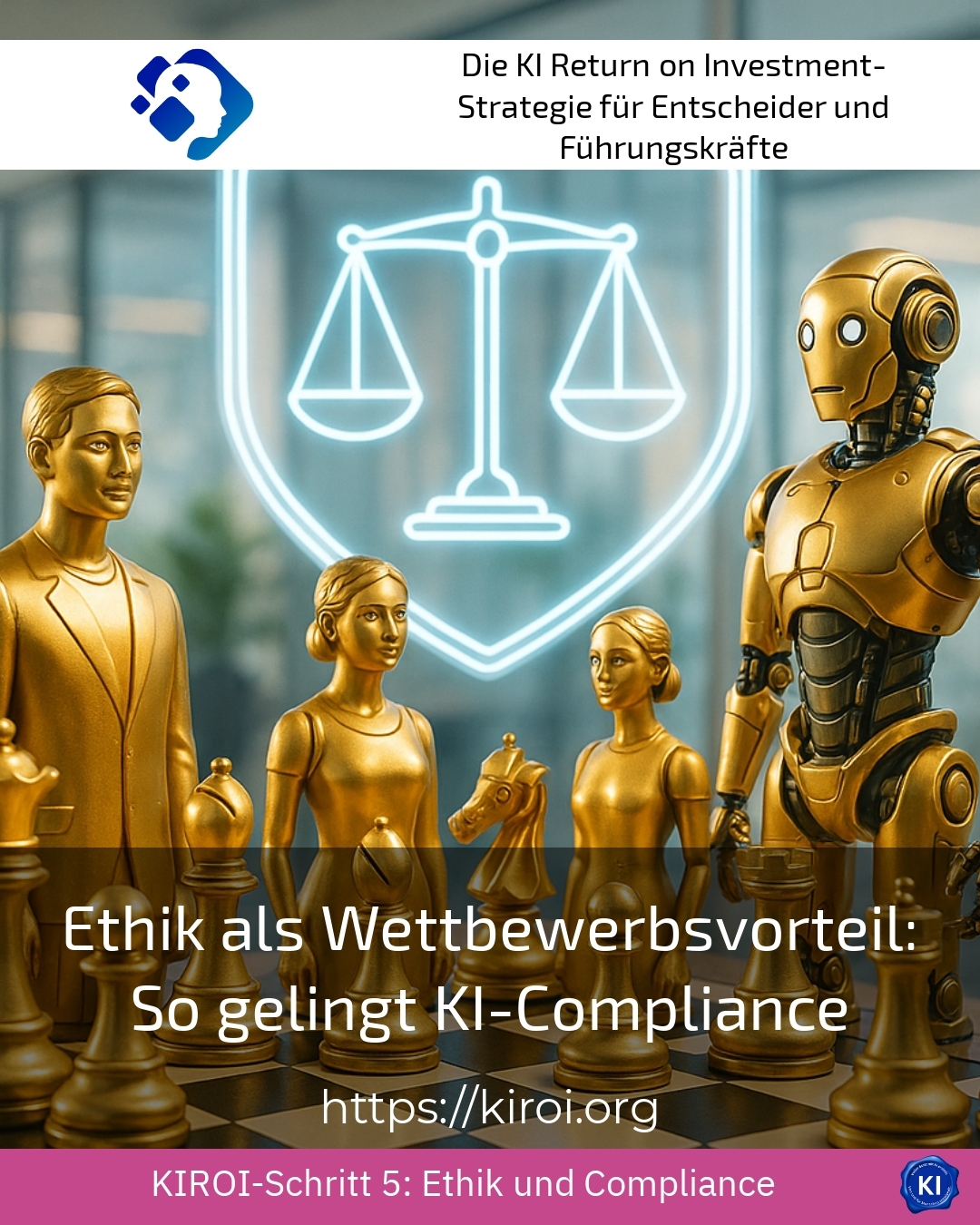
Imagine your company losing the trust of thousands of customers overnight – not due to faulty products, but because an algorithmic system made questionable decisions. In an era where intelligent systems are permeating almost every business sector, it becomes AI Compliance is the decisive differentiator for future-oriented organisations. The question is no longer whether companies should comply with regulatory requirements, but how they can embed ethical principles in a way that creates genuine competitive advantages. This article shows you why responsible use of technology means far more than mere fulfilment of duty and how you can actively shape this change.
Why ethical use of technology is indispensable today
The implementation of intelligent systems is fundamentally changing business models. At the same time, society's expectations for transparent and fair decision-making processes are growing. Customers, employees, and business partners are increasingly questioning the criteria by which automated systems operate. Companies therefore face the challenge of combining technological innovation with social responsibility.
Regulatory frameworks such as the European AI Act set binding standards for the use of algorithmic systems [1]. These requirements do not only concern technology companies but every organisation that uses or develops intelligent solutions. Those who establish appropriate structures early on gain a strategic advantage over competitors who only react under pressure.
This is particularly evident in the financial sector, where algorithmic credit decisions have now become standard. Institutions that transparently document their decision-making logic demonstrably gain more customer trust. A similar trend is observed in the healthcare sector, where diagnostic support systems only gain acceptance with comprehensible recommendations. In human resources too, the fairness of selection processes determines employer attractiveness.
Understanding the Strategic Dimension of AI Compliance
Many decision-makers initially view compliance as a cost factor and a bureaucratic hurdle. However, this perspective is too narrow. Companies that proactively integrate ethical standards often report positive side effects across various business areas. A systematic examination of decision-making logic frequently leads to improved data quality and more efficient processes.
In the insurance sector, it is a prime example of how transparency requirements can positively influence product development. Rating models whose logic is understandable to customers achieve higher closing rates. Complaint rates fall because policyholders accept decisions better. Regulatory authorities appreciate cooperative approaches with faster approval processes.
Opportunities can also be found in retail through responsible technology deployment. Personalised recommendation systems that operate without manipulative elements strengthen long-term customer relationships. Pricing algorithms that do not exhibit discriminatory patterns protect against reputational damage. Warehouse optimisation that considers sustainability aspects appeals to environmentally conscious target groups.
Best practice with a KIROI customer
A medium-sized company in the mechanical engineering sector faced the challenge of optimising its maintenance processes using predictive systems, without ignoring customer data protection concerns. Transruptions coaching supported the organisation over several months in developing an ethical framework for the use of technology. Initially, we jointly analysed which data were actually required and which information appeared dispensable. We then developed transparent communication formats that clearly explained to customers how their machine data would be processed. The results significantly exceeded initial expectations: the acceptance rate for the new service model was over eighty percent, whereas comparable industry projects often fail due to customer resistance. The structured dialogue with sales employees, who can now convincingly argue why data sharing is in the customer's interest, proved particularly valuable. The company has since successfully positioned itself as a pioneer for trustworthy digitalisation in its market segment.
Concrete steps for successful AI compliance
The path to an ethically sound technology strategy begins with an honest stocktake. What algorithmic systems does your organisation already use, consciously or unconsciously? Many companies underestimate the prevalence of automated decision-making in their processes. Only a systematic inventory creates the basis for targeted improvements.
In the next step, it is recommended to classify the risks of all identified applications. The European regulatory framework distinguishes between different levels of risk with correspondingly graduated requirements [2]. Systems that directly affect people require particularly careful examination. Supporting tools for internal processes are subject to less stringent specifications.
The automotive industry impressively demonstrates how complex supply chains multiply ethical challenges. Suppliers who themselves employ algorithmic quality controls must be able to prove their reliability. Vehicle manufacturers are increasingly demanding corresponding certifications from their partners. Workshops require traceable diagnoses to advise customers appropriately.
Cultural change as the foundation of sustainable compliance
Technical solutions and documented processes alone do not guarantee the ethical use of technology. The attitude of the people who develop and use these systems remains crucial. Companies with a strong culture of responsibility identify potential problems earlier and resolve them more quickly.
Leaders play a key role in establishing appropriate values. If management takes ethical issues seriously and discusses them openly, employees will follow suit. Training programmes impart the necessary knowledge about the risks and opportunities of algorithmic systems. Regular reflection sessions promote critical dialogue about current applications.
The importance of cultural factors is particularly evident in the media sector. Newsrooms that use algorithmic recommendation systems must preserve journalistic principles. Advertisers expect transparent placement logics without manipulative practices. Readers trust media brands that disclose their technological methods.
Best practice with a KIROI customer
An energy supplier wanted to introduce intelligent consumption analyses to offer customers more personalised tariffs while simultaneously managing peak loads more effectively. Management recognised early on that this project would create sensitive behavioural profiles, which is why they brought in transruption coaching for strategic support. Together, we identified which information was truly business-critical and where anonymisation techniques offered sufficient protection. We discussed in particular detail how dynamic pricing could be implemented in a socially responsible manner without disadvantaging low-income households. The result was a tariff model that rewards flexibility but guarantees basic supply at stable conditions. Customer surveys showed high satisfaction ratings because people perceived the system as fair and retained control over their data. The supplier is now actively using this positive resonance in its brand communication, successfully differentiating itself from competitors with less transparent practices.
Practical tools for daily AI compliance
The implementation of ethical principles requires concrete tools and methods. Impact assessments help to systematically analyse the effects of planned systems. Documentation standards ensure that decision-making logic remains comprehensible. Monitoring mechanisms oversee ongoing applications for unwanted effects.
In the logistics sector, such tools prove their worth in route optimisation and staff planning. Dispatchers can understand why certain routes have been compiled. Drivers are more likely to accept instructions if their basis is transparent. Customers benefit from more reliable delivery forecasts.
In the education sector too, structured approaches are gaining importance. Learning platforms that analyse individual progress must comply with pedagogical principles. Teachers require understandable explanations for algorithmic recommendations. Parents expect comprehensible assessment criteria for their children.
The pharmaceutical industry demonstrates how regulatory experience facilitates compliance building. Companies with established approval processes transfer proven documentation practices to new technology areas [3]. Clinical trials provide templates for systematic efficacy evidence of algorithmic diagnostic support. Quality management systems integrate ethical review steps into existing workflows.
From the compulsory programme to the optional extras: ethics as a hallmark
Companies that view compliance merely as a necessary evil are missing out on significant potential. The responsible use of technology is an excellent way to differentiate oneself in competitive markets. When products are comparable, customers increasingly choose suppliers they can trust.
The banking sector vividly illustrates this connection. Institutions that communicate their lending criteria transparently attract customer groups who are sceptical of traditional providers. Robo-advisors whose investment logic is comprehensible achieve higher conversion rates among informed savers. Fraud detection that minimises false alarms noticeably improves the customer experience.
Similar patterns are apparent in the tourism sector for booking platforms and recommendation systems. Travellers appreciate personalised suggestions that respect their preferences without feeling manipulative. Hotel review algorithms, whose workings are transparent, enjoy greater credibility. Dynamic pricing is accepted when it follows understandable rules.
My KIROI Analysis
Engaging with the ethical aspects of algorithmic systems reveals a fundamental truth: technological progress and societal responsibility are not opposites, but rather complement each other in diverse ways. Companies that establish appropriate structures early on benefit from increased trust among all relevant stakeholders, whereas reactive approaches often require costly revisions and can cause reputational damage.
My experience from numerous accompanying projects shows that success depends significantly on the attitude of the leadership. Where management takes ethical issues seriously and resources them, vibrant compliance cultures develop that go beyond formal requirements. Integration into existing processes then succeeds organically, without being perceived as an additional burden.
Particularly noteworthy is the dynamic that structured reflection on the use of technology in organisations triggers. Teams begin to question fundamental assumptions and identify potential for improvement that extends far beyond the original compliance focus. The quality of data increases, processes become more efficient, and collaboration between technical and business areas improves noticeably.
For the coming years, I expect a further tightening of regulatory requirements alongside growing societal expectations. Companies that invest now will be able to seize this development as an opportunity, while laggards will be under considerable pressure. The decision is yours, and I recommend not to wait.
Further links from the text above:
[1] European Commission – Regulatory Framework for Artificial Intelligence
[2] AI Act Explorer – Comprehensive Documentation on the European AI Act
[3] European Medicines Agency – Guidelines on New Technologies
For more information and if you have any questions, please contact Contact us or read more blog posts on the topic Artificial intelligence here.











 Deutsch
  English (UK)