
Digital transformation is changing our working world at a breathtaking pace, and anyone who doesn't keep up risks losing touch. Companies are facing a crucial challenge because they have to prepare their workforce for completely new requirements. The AI Skills Boost: Getting Employees Ready for the Future is no longer an option, but a strategic necessity. Yet how can one manage to empower teams while simultaneously alleviating anxieties? Which concrete steps lead to success, and how do organisations avoid typical pitfalls? These questions occupy leaders across industries, and the answers are more complex than initially assumed.
Understanding the initial situation and recognising potentials
Many organisations find themselves in a situation of upheaval. They feel the pressure to implement new technologies. At the same time, the necessary know-how is often lacking among the workforce. Managers frequently report uncertainty within the team. Some employees fear being replaced. Others, however, see opportunities for their careers. This ambivalence shapes everyday working life in many companies. The first step is to analyse the current skills landscape. Where do the individual departments stand technologically? Which skills are already present, and which need to be developed? This stocktaking forms the foundation for all further measures.
In the manufacturing economy, for example, it is becoming apparent that machine operators increasingly need to understand digital interfaces. Logistics companies are experiencing how automated warehouse systems place new demands on personnel. In the healthcare sector, intelligent systems support diagnostics. Banks and insurance companies rely on automated processes in customer service. Craft businesses use digital planning tools for order processing. All these examples illustrate that practically no industry remains untouched.
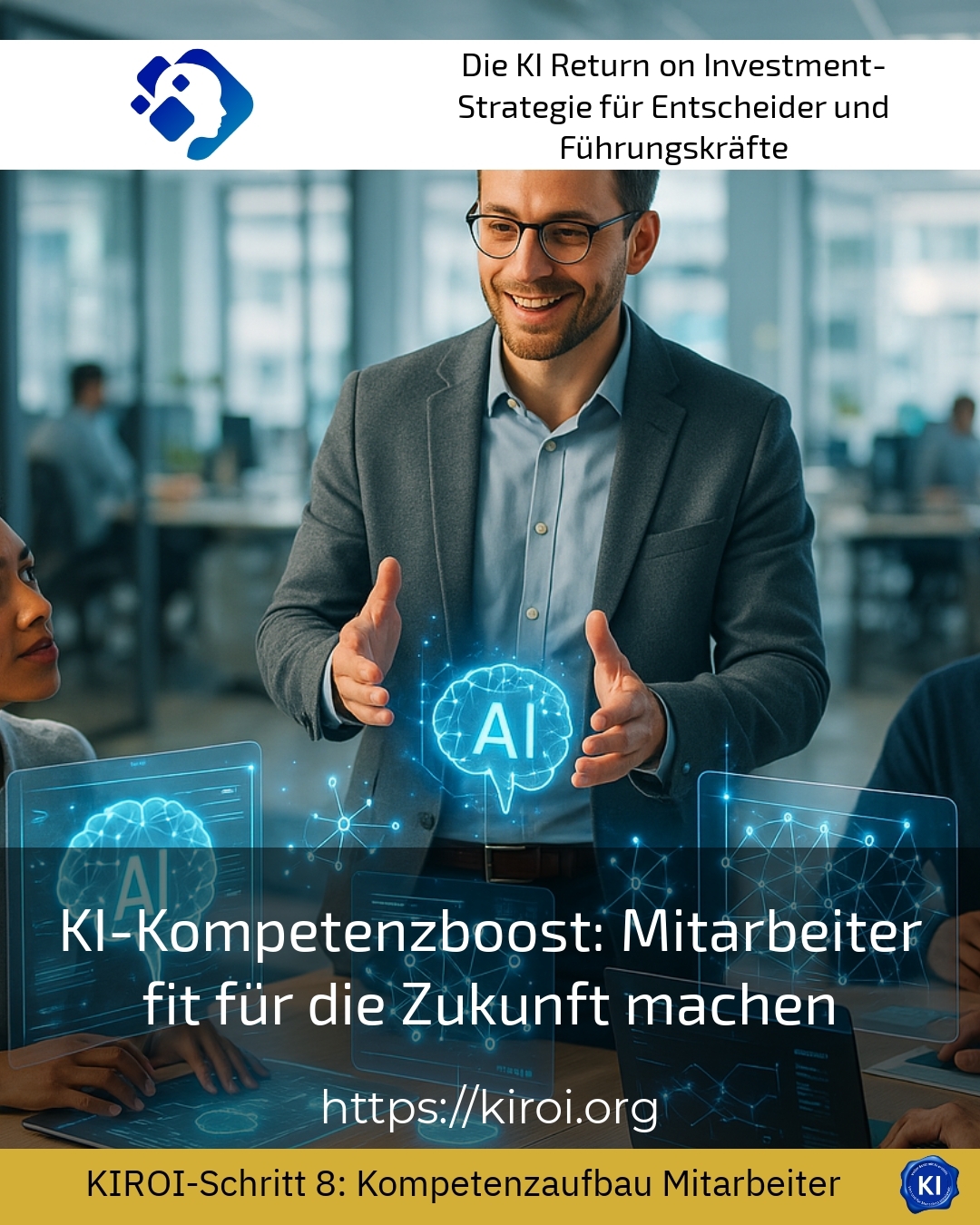
Strategic decisions for the AI skills boost: making employees fit for the future
A well-thought-out strategy begins with clear objectives and realistic timetables. Organisations should define which competencies they want to build and to what extent. In doing so, it is advisable to distinguish between basic knowledge and expert skills. Not every employee needs to become a technical specialist. A fundamental understanding, on the other hand, should be imparted across the board. The finance department, for example, benefits from automated analysis tools. Human resources departments can make application processes more efficient. Marketing teams use data-driven insights for their campaigns. These diverse areas of application require different training approaches [1].
The involvement of all hierarchical levels plays a central role in success. Leaders must lead by example and demonstrate a willingness to learn themselves. Middle management acts as a link between strategy and operational implementation. Teams need sufficient time and resources for their further development. External support can provide valuable impetus and uncover blind spots.
Best practice with a AIROI customer
A medium-sized metal processing company faced the challenge of introducing its experienced workforce to new digital production systems. The management initially feared resistance because many employees had been working with tried-and-tested methods for decades. As part of the transruptions coaching support, a phased concept was developed based on dialogue and gradual introduction. First, we jointly identified the tech-savvy team members who could act as internal multipliers. They received intensive training and became contact persons for their colleagues. Parallel to this, regular information events were held where fears could be openly discussed. The managers learned how to conduct motivating conversations and take individual learning needs into account. After six months, there was a clear improvement in acceptance, and productivity increased measurably. It was particularly pleasing that older employees also actively asked for further learning opportunities and were largely able to put aside their initial concerns.
Practical learning formats and their effectiveness
The selection of suitable learning formats is a decisive factor in the success of any training initiative. Traditional classroom training offers the advantage of direct exchange between participants. E-learning modules, on the other hand, enable flexible learning at one's own pace. Blended learning concepts combine both approaches into an effective whole. Workshops with practical exercises promote the direct application of what has been learned. Peer learning groups create a safe environment for mutual support.
For example, short, regular training sessions have proven effective in retail. Care homes use simulation-based training for new documentation systems. Architectural practices rely on project-based learning when introducing new planning software. Skilled trades businesses organise knowledge exchanges between different trades. Catering businesses train their staff directly on the digital till system. These industry-specific approaches take the respective working realities into account and enable practical learning.
Identifying and constructively addressing resistance
Change processes almost inevitably provoke resistance, and this should by no means be evaluated solely as negative. Skepticism can point to real problems that would otherwise be overlooked. Employees' concerns deserve serious attention and should not be dismissed. Clients frequently report anxieties regarding their professional future. Some fear they will not be up to the new demands. Others worry about the quality of their work if the transition is too rapid.
Transruptions-Coaching offers valuable guidance during transformation here. Through targeted conversations, hidden concerns can be brought to light. Individual support helps to overcome personal learning hurdles. Team workshops strengthen cohesion in times of change. Experience shows that open communication can significantly reduce resistance [2]. People need to feel heard and taken seriously.
In the insurance industry, for example, we are experiencing experienced administrative staff feeling threatened by automated systems. Master craftspeople are wondering whether traditional expertise will still be in demand. Doctors are discussing the role of human expertise alongside intelligent diagnostic tools. Teachers are reflecting on their status in view of digital learning platforms. These topics are regularly brought up in consulting sessions.
Best practice with a AIROI customer
A multi-site tax consultancy wanted to modernise its workflows and was met with considerable resistance. In particular, the experienced tax advisors feared that their years of built-up expertise would lose value. The younger team members, on the other hand, were pushing for faster changes and showed little understanding of their older colleagues' concerns. This tension led to conflicts and a strained working atmosphere. As part of the support provided by transruptions Coaching, we organised cross-generational dialogue sessions where both sides could share their perspectives. It turned out that the experienced staff possessed valuable process knowledge that was indispensable for successful implementation. The younger team members contributed technical know-how while learning from their colleagues' expertise. This combination proved extremely fruitful, and the firm was able to successfully shape its transformation. The key lay in valuing all competencies and building genuine collaboration between the generations.
Sustainable embedding in day-to-day business operations
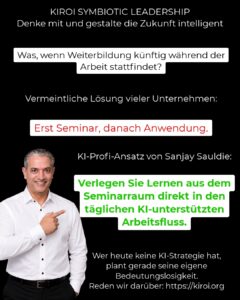
One-off training measures are rarely sufficient to bring about lasting change. New competencies must be continuously nurtured and further developed. Organisations should create structures that enable and encourage ongoing learning. Regular refreshers help to consolidate and expand what has been learned. Internal knowledge bases support quick access to relevant information. Mentoring programmes promote the exchange between experienced and new employees.
In the automotive industry, some companies have established their own learning academies. Hospitals set up special training rooms for new medical equipment. Municipal administrations create posts for digital guides in their departments. Chambers of trades and crafts offer sector-specific further training programmes. Hotel chains develop standardised training concepts for their locations. These different approaches show just how diverse the possibilities for embedding are [3].
Measuring success and continuous improvement in the AI skills boost: making employees fit for the future
The effectiveness of training measures should be regularly reviewed and evaluated. Quantitative key figures such as participation rates provide initial indications of acceptance. Qualitative feedback provides valuable insights into the actual use of what has been learned. Managers can observe how working methods and results change. Employee surveys capture the subjective assessment of their own skills development.
For example, retailers measure the utilisation rate of their digital merchandise management systems. Logistics companies analyse error rates before and after training measures. Medical practices compare documentation quality at various points in time. Construction companies evaluate the acceptance of digital construction site planning among their teams. Energy suppliers examine efficiency gains in their service areas. These concrete measurements enable evidence-based decisions regarding further investments.
The insights gained are ideally incorporated into the further development of the training programmes. What is working well, and where is there room for improvement? Which formats are particularly appreciated, and which are less well received? These feedback loops are essential for long-term success. They enable continuous adaptation to changing needs and new technological developments.
The role of leaders as enablers
Leaders play a key role in the successful skills development of their teams. They set priorities and create the framework for learning. Their own attitude has a decisive influence on employees' motivation. Leaders who are themselves willing to learn inspire their teams by setting an example. However, they must also be empowered to fulfil this role.
In manufacturing plants, shift supervisors often take on the role of learning facilitators. Retail branch managers coach their teams on how to use new till systems. Ward managers in hospitals support their nursing staff with digital documentation tasks. Project managers in engineering offices guide their teams through the introduction of new planning tools. Managing directors of small businesses are often themselves the driving force behind modernisations. These different leadership roles each require tailored support services.
Transruptions-Coaching offers targeted guidance for leaders in transformation processes. Individual coaching sessions help to reflect on and develop one's own role. Leadership training programmes impart concrete tools for guiding learning processes. Peer counselling groups enable the exchange of views with like-minded individuals from other organisations. These support formats strengthen the capacity to act in complex situations.
My AIROI Analysis
Empowering employees for the digital future is one of the most pressing tasks of our time. Organisations that invest in this early and consistently secure their long-term competitiveness. Technological capabilities are evolving continuously, and with them, the requirements for human skills are also changing. The aim is not to replace people with machines, but to enable them to use new tools effectively.
Experience from numerous accompaniment projects shows that successful transformation always means cultural change as well. Technical training alone is not enough if the underlying mindset is not right. Organisations need a learning culture that views mistakes as opportunities for development. They require leaders who encourage and support their teams. And they must create structures that enable and value continuous learning.
The AI skills boost: making employees fit for the future is ultimately an investment in people and their potential. This investment pays off when it is strategically planned and consistently implemented. Guidance from experienced partners can provide valuable impetus and help avoid typical pitfalls. Organisations that take this path often report positive side effects such as increased employee satisfaction and improved collaboration. The future belongs to those who are willing to learn continuously and develop further.
Further links from the text above:
[1] Bitkom – Digital training in companies
[2] Haufe – Change Management and People Management
[3] BMWK – Digitalisation in the Economy
For more information and if you have any questions, please contact Contact us or read more blog posts on the topic Artificial intelligence here.






 Deutsch
 English (UK)