
Warum die Nutzung eines Keyword-Recherche-Tools für Projekte so wichtig ist
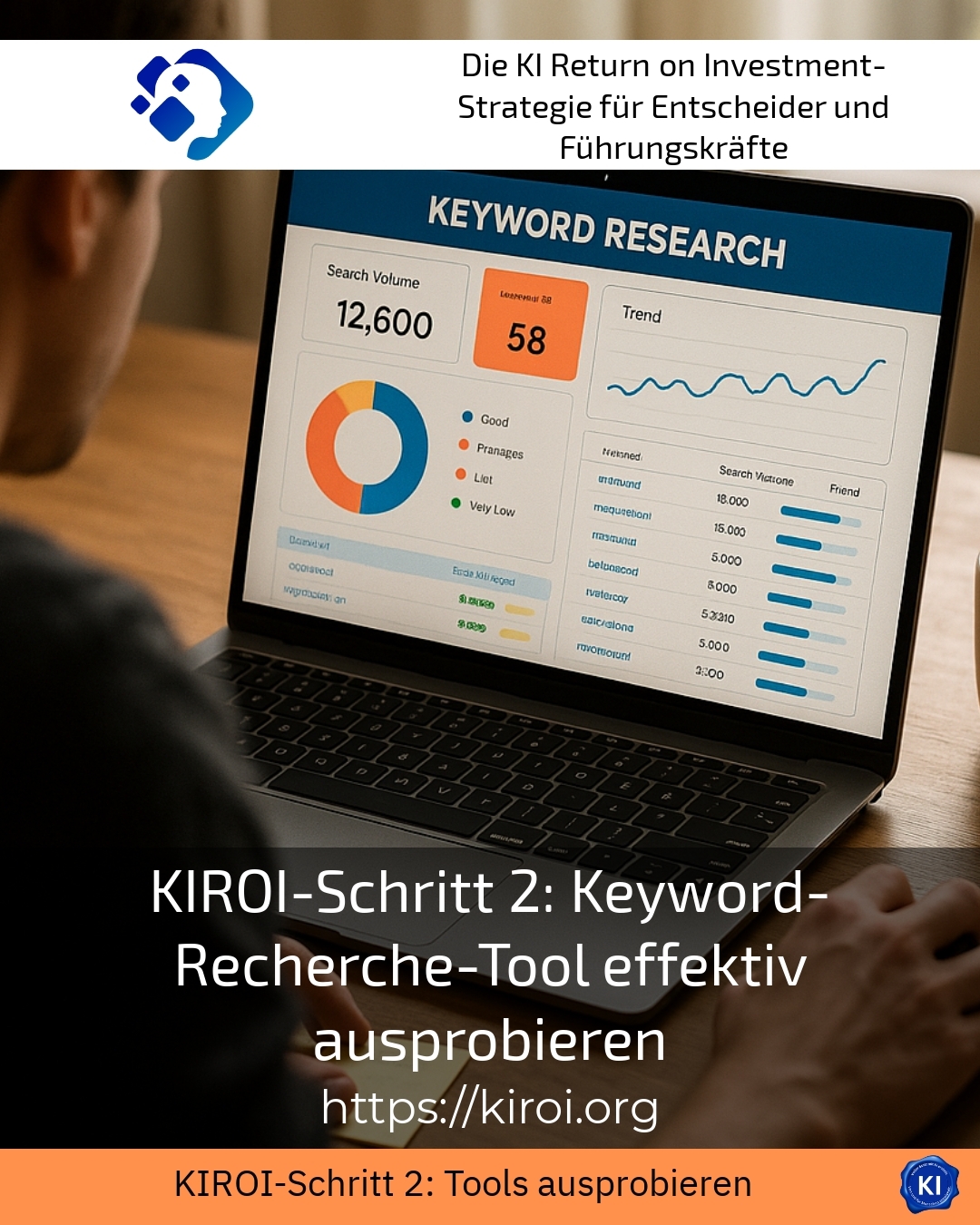
Many people starting out with online marketing and content development come to me with one central concern: they want to figure out how to find the right terms their target audience is searching for online. This is precisely where a keyword research tool comes in. It helps to systematically identify and evaluate search terms. This creates a solid foundation for strategically aligning content and making it more visible. It's not about a quick magic bullet, but about supporting the entire process – from analysis to implementation.
The real strength of a keyword research tool in everyday work
The challenge in using such a tool often lies in filtering out relevant information from the variety of options and data. In coaching sessions, I observe that many project managers are initially overwhelmed by the sheer volume of data. Therefore, I guide them to consciously try out different tools and define their own priorities. It is important not to view the keyword data obtained in isolation, but always in conjunction with their own content strategy and marketing goals.
Clients also frequently report that by jointly using a keyword research tool, they receive impulses for targeted content creation. In particular, the identification of long-tail keywords – that is, longer, more specific search phrases with lower competition – is also described as helpful.
KIROI BEST PRACTICE at ABC (name changed due to NDA contract) A software company tested various keyword research tools to increase the visibility of several informational pages. The coaching supported the selection of particularly suitable terms based on search volume and competition. The application of the selected keywords led to better alignment of content with different stages of the customer journey.
How to Test a Keyword Research Tool Effectively
The best way to get started is by testing various free and paid tools in parallel. Free tools such as Google Keyword Planner or Moz Keyword Explorer offer initial insights into search volume and similar terms. They help you to explore the market and find new ideas. Other tools, like Semrush or Ubersuggest, allow for a deeper analysis of competition and concrete ranking opportunities.
The combination of search volume, competition, and relevance to your target audience determines which keywords should really be used. The interpretation of the results plays a major role in this, which is usually not entirely straightforward. That's why this aspect is also given special importance in KIROI coaching.
KIROI Best Practices at Company LMN (Name changed due to NDA) A regional service provider used coaching to specifically employ keyword tools for the localisation of their online presence. The combination of search volume and competition data was jointly developed and refined, which facilitated the selection of local keywords with low competition. This led to a significant improvement in visibility within regional search results.
What to look out for when using a keyword research tool
From my experience and client feedback, I know that the quality of keyword data can vary. Not every tool shows all important factors, and interpretations are often necessary. Well-guided coaching helps to avoid typical mistakes and integrate the tool experience into the project context.
Furthermore, one should remain patient, as working with a keyword research tool is an ongoing process. Trends and user behaviour change frequently, so it should be regularly checked whether the keyword strategy still fits. Using the tool does not replace creativity and experience, but it provides valuable impulses and supports data-based decisions.
KIROI BEST PRACTICE at company XYZ (name changed due to NDA contract) Various keyword tools were tested during coaching at a medium-sized trading company to find new search terms for optimising existing product pages. The support provided helped to select the right keywords and to better understand user behaviour. The result was targeted content planning that sustainably supported the market positioning process.
My analysis
The targeted use of a keyword research tool is a valuable building block in digital project management. Its effectiveness increases when the tool is not used in isolation, but always in conjunction with professional support, such as KIROI coaching. This creates a sustainable process that offers practical support rather than making unrealistic promises. Experience shows that clients particularly benefit from the competent interpretation of data and individual tips for implementation.
So, anyone working with a keyword research tool should take advantage of the wide range of possibilities, but critically question the results and interpret them appropriately within their own project context. This way, working with such a tool leads to valuable impulses for content development, marketing, and online visibility.
Further links from the text above:
[1] The 4 best free keyword research tools
[3] A step-by-step guide to keyword research
[6] KIROI Step 2: Trying out keyword research tools purposefully
For more information and if you have any questions, please contact Contact us on the topic or read more blog posts on the topic Artificial Intelligence Blog here.











 Deutsch
  English (UK)