
Why do brilliant ideas in companies so often fail due to invisible barriers before they can ever unleash their full potential?
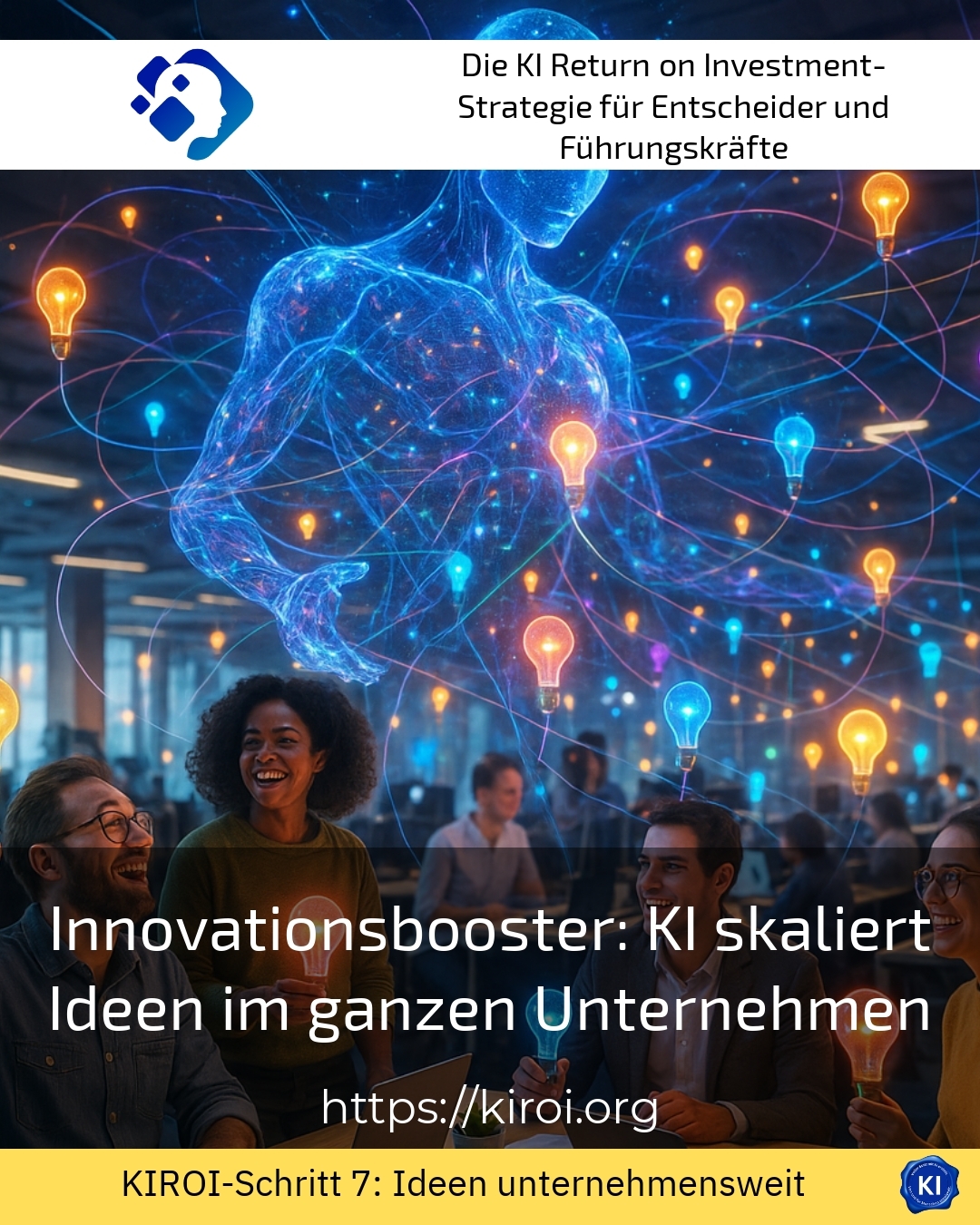
This question has occupied leaders and innovation managers for decades. This is because in almost every company, creative concepts lie dormant in the minds of individual employees. However, they frequently fade because structures, hierarchies and a lack of resources prevent their dissemination. This is where a fundamental shift comes in: Innovation booster: AI scales ideas throughout the company and is thereby changing the way organisations handle creative impulses. The intelligent technology acts as a catalyst in this process. It connects isolated departments and makes knowledge accessible that was previously hidden in silos. This paradigm shift affects all industries and company sizes equally.
The silent death of ideas in traditional structures
Before we talk about solutions, we need to understand the problem. Traditional corporate structures are set up like labyrinths. For example, a good idea is conceived in the logistics department of a medium-sized manufacturing company. The employee shares it with their direct line manager. The latter may or may not pass it on. The idea passes through various hierarchical levels and loses momentum in the process. Clients frequently report precisely such experiences during accompanying consultancy processes.
This phenomenon is particularly evident in retail. A branch manager observes a change in customer behaviour. He develops an innovative service approach that could improve the shopping experience. However, the information reaches company headquarters heavily filtered or not at all. In the automotive supply industry, suggestions for optimisation are generated on the production lines every day. Yet they peter out in bureaucratic suggestion schemes that nobody takes seriously anymore. In financial institutions, too, advisors regularly experience how customer feedback is not systematically evaluated.
Why traditional idea management systems are reaching their limits
Traditional employee suggestion schemes are based on linear processes. They cannot reflect the complexity of modern organisations. A suggestion is submitted, reviewed and either implemented or rejected. However, this binary thinking prevents the creative further development of basic ideas. It fails to take into account that an idea from an insurance company's IT department might only become truly valuable through additions from the sales department.
In the chemicals sector we are observing similar patterns. Research teams are working on related problems without knowing about each other. Pharmaceutical companies are investing millions in parallel developments. Mechanical engineering companies are developing solutions that already exist elsewhere in the group. This inefficiency not only costs money, but also valuable time in the competition.
How intelligent systems become innovation boosters
Modern technologies are fundamentally changing this dynamic. Innovation booster: AI scales ideas throughout the company, by recognising patterns and establishing connections. For example, an intelligent system can link a suggestion for improvement from the maintenance department of an energy supplier with a similar approach from grid planning. It recognises semantic relationships that would remain hidden from human coordinators.
The potential is demonstrated particularly impressively in the consumer goods industry. An algorithm simultaneously analyses customer feedback from various sales channels. It identifies recurring requests and complaints. It then links these insights with internal development projects. This is how products that actually meet market needs are created. In the textile industry, design impulses from social media analyses can be incorporated directly into collection development. Telecommunications providers use similar approaches for service optimisation.
Best practice with a AIROI customer
A medium-sized enterprise in the metalworking industry was facing a classic challenge. The company operated several production sites in different regions. At each location, the teams independently developed solutions for recurring manufacturing problems. There was no systematic networking of these local innovations. As part of a transruption coaching programme, we initially analysed the existing communication flows. This revealed significant untapped potential. The company subsequently introduced an intelligent system for networking ideas. This system now continuously records suggestions for improvement from all locations. It identifies thematic overlaps and automatically suggests collaborations. Within a few months, three cross-site project teams were formed in this way. These teams worked together on solutions that would previously have been developed in isolation. Productivity in certain manufacturing areas increased measurably. Particularly noteworthy was the change in corporate culture. Employees felt heard and taken seriously. The number of suggestions submitted tripled within a year. The company reports a noticeably increased readiness to innovate at all levels.
The technological basis of the innovation booster
The functioning of these systems is based on several technology layers. First, they capture information from a wide variety of sources. Emails, project reports, meeting minutes and customer enquiries are incorporated into the analysis. Natural language processing enables the understanding of context and meaning. Machine learning identifies patterns and connections across departmental boundaries [1].
In the construction industry, for example, such systems support project optimisation. They recognise when similar challenges arise on different construction sites. They suggest proven solutions from past projects. Logistics companies use comparable approaches for route optimisation. In the process, the empirical data of individual drivers is incorporated into company-wide improvements. In healthcare, treatment outcomes can be systematically evaluated in order to identify best practices [2].
Cultural transformation as a prerequisite
However, technology alone is not enough. Innovation booster: AI scales ideas throughout the company only successful if the corporate culture supports this change. Employees must be willing to share their knowledge. Leaders must recognise that good ideas can emerge anywhere. We closely accompany this cultural transformation in our coaching processes.
This challenge is exemplified in the hotel industry. Experienced employees possess enormous implicit knowledge. They know instinctively what guests want. Explicitating this knowledge and making it digitally available requires trust. We encounter similar situations in the trades. Master craftsmen have built up expertise over decades. They sometimes fear becoming replaceable through the sharing of knowledge. This is where accompanying measures come in that convey security [3].
Understanding and constructively addressing resistance
Change processes naturally generate resistance. This is not negative per se. It can point to legitimate concerns. In the media sector, for example, creatives worry about their originality. They fear that algorithmic systems could level out their unique ideas. In research institutions, there are reservations regarding intellectual property. Who owns an idea that has emerged from the combination of several contributions?
These questions deserve serious engagement. transruptions coaching offers impulses for constructive dialogue here. We support companies in developing fair recognition systems. This creates frameworks that promote innovation and acknowledge individual performance. In the advertising industry, some agencies have already established exemplary models. They combine collaborative idea development with transparent authorship documentation.
Practical implementation steps
The introduction of intelligent innovation systems ideally follows a structured process. First, an inventory of existing idea streams is conducted. Where do innovation impulses originate? How are they currently processed? What barriers exist? This analysis forms the basis for all further steps. In the food industry, for example, it encompasses product development, quality assurance and consumer service alike.
We then work together with the companies to define pilot areas. For example, a mechanical engineering company might begin by networking service and development. A retail company might start by integrating branch feedback into product range planning. A software firm connects customer support with product development. These manageable beginnings enable learning experiences without excessive risk [4].
Best practice with a AIROI customer
A consultancy services company was looking for ways to make better use of its internal expertise. The consultants worked predominantly on client sites on a project basis. Their experiential knowledge remained largely isolated within individual heads. New employees had to painstakingly rebuild knowledge from scratch. We supported the company in introducing a knowledge-based system. This system records project experiences in a structured way and makes them searchable. An intelligent component automatically suggests relevant internal experts for new project enquiries. It also identifies similar past projects with transferable insights. The rollout required intensive persuasion work among the consultants. Many initially feared extra effort with no discernible benefit. Through targeted workshops and one-to-one discussions, we were able to address these concerns. The company developed an incentive system for knowledge sharing. Today, employees report noticeable time savings during project acquisition. According to the management, the quality of proposals has improved significantly. The onboarding of new team members is now also more efficient.
Measurable successes and continuous optimisation
The effectiveness of innovation initiatives must be measurable. This is not just about quantitative key performance indicators. Qualitative indicators such as employee satisfaction and innovation culture also play an important role. In the insurance industry, for example, processing times for claims can be measured. At the same time, we record how many suggestions for improvement are submitted. In the catering industry, guest reviews can serve as an indicator. However, the creativity of menu development also reflects innovative strength [5].
Innovation booster: AI scales ideas throughout the company only sustainable if regular reviews take place. Systems must continuously learn and adapt. User feedback is incorporated into optimisations. In the sporting goods industry, this can be seen, for example, in the seasonal adjustment of trend analyses. In the banking sector, regulatory changes require permanent updates.
My AIROI Analysis
The systematic scaling of ideas within organisations marks a fundamental shift in innovation management. My observations from numerous accompaniment projects show clear patterns. Companies that combine technological opportunities with cultural transformation achieve the most sustainable results. The mere implementation of software solutions, on the other hand, rarely leads to the desired success. The human factor remains decisive.
I find the democratisation of innovation that I am observing particularly remarkable. Good ideas are no longer tied to hierarchical levels or department affiliations. They can come from anywhere within the company and take effect anywhere. This development is also fundamentally changing the understanding of leadership. Managers are becoming enablers rather than gatekeepers of innovation. They create spaces for creativity and ensure fair framework conditions.
At the same time, I would urge caution against exaggerated expectations. Intelligent systems are tools, not cure-alls. They can support and enhance human creativity, but they cannot replace it. The best results occur where humans and technology work together productively. Companies that master this balancing act will enjoy significant advantages in the competition of the future. Investing in the relevant skills and infrastructure is therefore worthwhile for organisations of all sizes and sectors.
Further links from the text above:
[1] McKinsey: The economic potential of generative AI
[2] Harvard Business Review: Insights on Innovation Management
[3] Gartner: Artificial Intelligence Research and Insights
[4] BCG: Artificial intelligence in business
[5] Fraunhofer: AI research and applications
For more information and if you have any questions, please contact Contact us or read more blog posts on the topic Artificial intelligence here.










 Deutsch
  English (UK)