
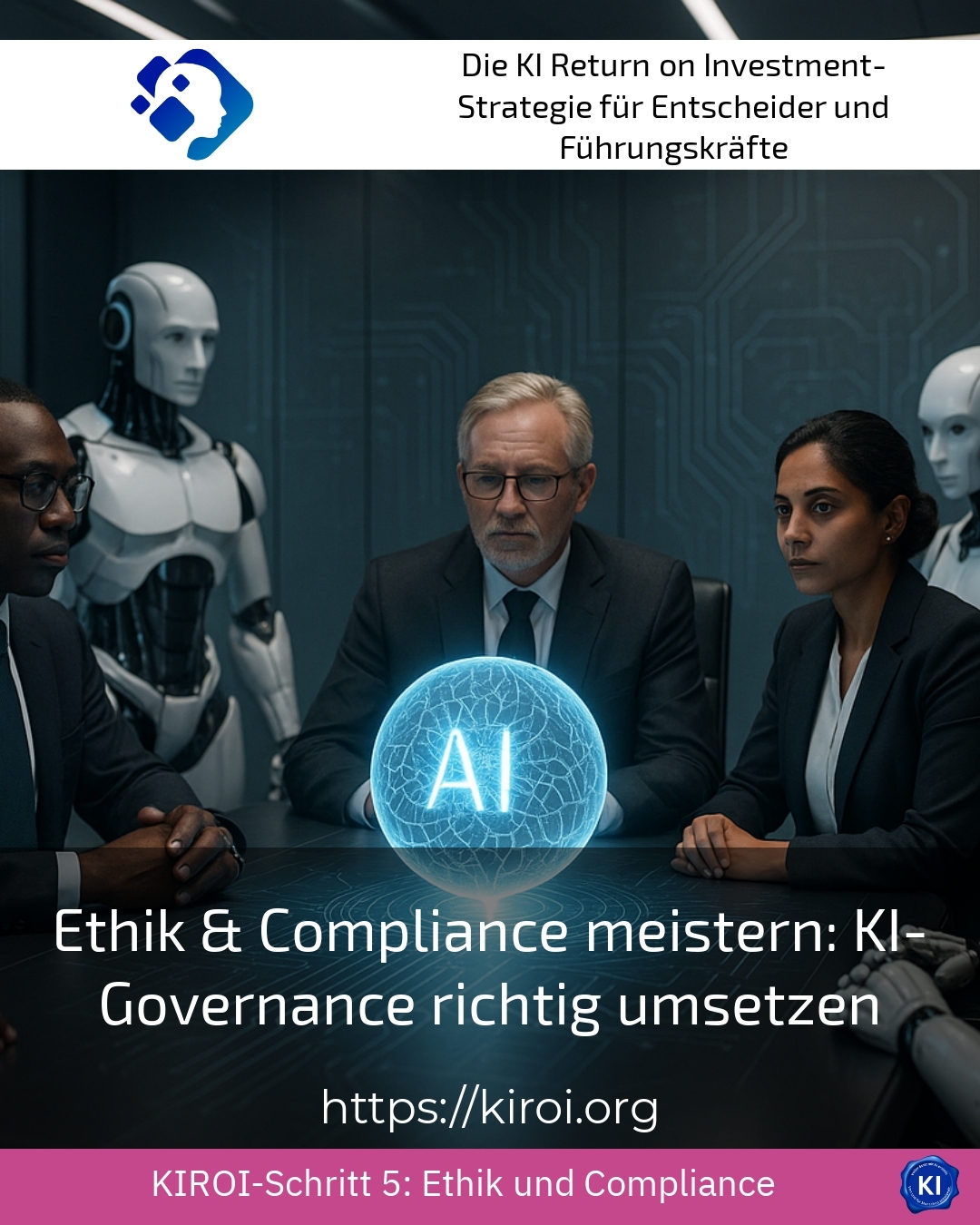
Imagine your company uses innovative algorithmic systems that could save millions within a few weeks. Yet suddenly, the management faces an ethical dilemma because no one can fully trace how these decisions are reached. Exactly here begins the real challenge of our time. Implementing AI governance correctly today means far more than just technical implementation. It is about responsibility, transparency and the fundamental question of how we control intelligent systems so that they align with our societal values. In this article, you will learn the specific steps organisations must take to successfully shape this transformation process.
Understanding the new reality of connected decision-making systems
The integration of intelligent systems into business processes has reached a dynamic that would have seemed unthinkable only a few years ago. In doing so, companies face the task of combining technological progress with ethical principles. This combination requires a profound rethink at all levels of the organisation. Leaders frequently report feeling torn between the pressure to innovate and a sense of responsibility. At the same time, regulatory pressure is increasing significantly due to new legislation [1]. Many organisations are therefore looking for structured approaches that can offer them guidance.
For example, a medium-sized logistics company implemented an automated route planning system. After a few months, it turned out that certain districts were systematically disadvantaged. The system had adopted historical data without taking its inherent biases into account. Such examples illustrate why thoughtful governance is essential. A retail group experienced a similar situation when it introduced automated pricing. The software adjusted prices in such a way that certain customer groups paid higher prices. In turn, a financial services provider used algorithmic credit checks. These unintentionally led to discriminatory decisions in lending.
Why traditional compliance approaches are no longer enough
Traditional compliance structures were developed for a world in which human decision-makers were clearly identifiable. These structures quickly reach their limits with self-learning systems. The speed of algorithmic decisions far exceeds human review capacities. Therefore, companies need new methods for continuous monitoring. An insurance company, for example, realised that its claims assessment was becoming increasingly automated. The existing review mechanisms could no longer capture the multitude of decisions. A telecommunications provider faced similar challenges in customer communication. Chatbots provided information whose accuracy no one systematically checked. In the healthcare sector, the problem became particularly apparent with diagnostic support systems.
Implementing AI governance correctly through structured frameworks
A functioning governance system for intelligent technologies requires clear responsibilities and defined processes. At the same time, these processes must be flexible enough to keep pace with technological developments. Simultaneously, they should be robust enough to provide a reliable basis for decision-making. The establishment of an ethics advisory board has proven to be a sensible first step in many organisations. This board can bring together different perspectives and address critical questions at an early stage [2]. The composition should be deliberately diverse to avoid blind spots.
A manufacturing company established such a body with representatives from engineering, legal, human resources and external experts. The monthly meetings enabled a systematic evaluation of new use cases. This meant it was possible to identify at an early stage that a planned monitoring system in production could infringe personal rights. An energy supplier took a similar approach when introducing smart grids. The ethical assessment uncovered potential data protection issues in good time. A mobility service provider used the framework to review its fare calculation algorithms.
Best practice with a AIROI customer
An internationally active manufacturing company faced the challenge of automating its quality control using image-recognition systems. The executive board recognised early on that this implementation would have far-reaching effects on jobs and decision-making processes. As part of the support provided by transruption coaching, a comprehensive stakeholder analysis was first carried out, actively involving both employees and works councils. The coaching team provided impetus for the development of a transparent communication concept that addressed fears and highlighted opportunities. The joint development of criteria determining where the system was permitted to make decisions and where human review remained strictly necessary proved to be particularly valuable. The employees were not treated as passive parties affected by the changes, but were involved as active co-creators of the transformation. Clients frequently report that precisely this participatory approach makes the difference between acceptance and resistance. After six months, the company was able to demonstrate an implementation that was both technically and ethically convincing. The error rate fell significantly, while workforce trust had actually increased.
Transparency as the foundation of sustainable AI governance
Without transparency, any control system ultimately remains ineffective. Employees, customers and business partners must be able to understand how decisions are made. This traceability builds trust and enables constructive criticism. A retail company had a positive experience with the disclosure of its personalisation algorithms. Customers were given the opportunity to understand why certain products were suggested to them. A media company went a step further and actively explained how editorial recommendations were made [3]. A banking institution developed dashboards for its advisers that made algorithmic recommendations transparent.
Practical implementation steps for various organisation sizes
The specific implementation varies greatly depending on company size and industry. Small and medium-sized enterprises can often act more agilely than large corporations. At the same time, they frequently lack the resources for extensive governance structures. This is where a pragmatic approach that starts with the most critical use cases is well suited. A craft business, for example, used intelligent scheduling without an extensive review structure. The integration of a simple human control instance was sufficient for responsible use. A medium-sized mechanical engineering company, on the other hand, required a more sophisticated system for its predictive maintenance. Finally, a large enterprise in the chemical industry established its own department for technological ethics.
The guidance of experienced partners can provide essential impetus in this regard. Transruption coaching supports organisations in developing bespoke solutions. This guidance takes into account both technical and human factors of change. Many companies significantly underestimate the cultural aspects of such transformation projects. Yet it is precisely the corporate culture that determines the success or failure of the implementation. A pharmaceutical company, for instance, initially failed due to internal resistance to new testing processes. Only the systematic involvement of all participants led to a breakthrough.
Define and monitor measurable success criteria
Without clear metrics, progress on ethical issues often remains nebulous. Companies should therefore develop concrete metrics that are regularly reviewed. These can include, for example, the proportion of human-reviewed decisions. The number of identified and corrected biases also provides valuable insights. A recruitment agency introduced metrics for the diversity of its algorithmic pre-selection. These figures quickly showed where adjustments were needed. A tourism group measured customer satisfaction separately for algorithmically and humanly handled enquiries [4]. A real estate company systematically recorded complaints about automated valuations.
Best practice with a AIROI customer
A facility management service provider wanted to optimise its rostering through intelligent systems. The previous manual planning was time-consuming and regularly led to dissatisfaction among employees. The new system was supposed to take preferences into account while being efficient at the same time. During the transruptions coaching, however, it quickly became clear that ethical issues played a central role. How should the system deal with fairness when some shifts were more attractive than others? Which criteria could be used for decision-making and which could not? Together, the team developed a catalogue of guidelines that were incorporated into the system development. Of particular importance was the definition of exceptional cases in which human decision-making remained strictly necessary. The coaching support also helped to establish a continuous improvement process. Regular feedback loops with the affected employees were institutionalised. Following the introduction, acceptance was significantly higher than in comparable projects in the industry. Employee satisfaction rose measurably, while planning efficiency was improved at the same time.
Viewing regulatory requirements as an opportunity
New legislation such as the European AI Act places significant demands on companies. Many executives initially view this regulation as a burden. However, this perspective falls short and overlooks essential opportunities. Companies that establish robust governance systems early on gain competitive advantages. They can build trust with customers and partners that is invaluable in the long term. One software company positioned itself successfully as a provider of ethically tested solutions [5]. An automotive supplier used the requirements to differentiate itself in the market. A plant manufacturer made transparent algorithms a unique selling point.
Implementing AI governance correctly therefore also means proactively anticipating regulatory developments. Businesses should not wait for legal requirements, but rather develop their own standards. These standards can later serve as a basis for meeting new requirements. For instance, an electronics manufacturer established internal guidelines that already fulfilled compliance requirements later on. The investment in forward-looking structures paid off quickly. By taking early measures, a food corporation avoided costly subsequent adjustments.
Training and competence development as key factors
The best governance structure is of little use if employees are not appropriately qualified. Companies must therefore invest in comprehensive training programmes. These programmes should impart not only technical but also ethical competencies. One financial institution developed a multi-level training programme for all levels of hierarchy. In the process, managers learned to ask critical questions and assess risks. Administrative staff were empowered to critically question algorithmic recommendations. A technology company integrated ethical case studies into its regular continuing education. An insurance group established a mentoring programme specifically for these topics.
My AIROI Analysis
The systematic control of intelligent systems presents organisations with fundamental challenges that go far beyond technical implementation. My analysis shows that successful companies have three key factors in common. Firstly, they do not view ethical issues as a barrier, but as an integral part of their innovation strategy. This perspective makes it possible to identify and address potential problems at an early stage. Secondly, they continuously invest in the skills development of their employees at all levels. Technical knowledge alone is not enough if the ability for ethical reflection is lacking. Thirdly, they establish robust processes that are flexible enough to keep pace with rapid technological development.
Guidance by experienced partners such as transruptions-Coaching can offer essential support in this regard. External perspectives help to identify blind spots and develop new approaches to solutions. The experience gained from diverse industries and contexts is particularly valuable. Companies that take on this challenge will not only meet regulatory requirements; they will also win the trust of their stakeholders and be more successful in the long term. Implementing AI governance correctly is not a one-off project, but a continuous process. This process requires commitment, resources and a willingness to learn constantly. The organisations that start today will set the standards tomorrow.
Further links from the text above:
[1] EU Regulatory Framework for Artificial Intelligence
[2] Federal Ministry for Economic Affairs – Artificial Intelligence
[3] AlgorithmWatch – monitoring of algorithmic decision-making systems
[4] Bitkom – Artificial Intelligence Topic Area
[5] BSI – Information on Artificial Intelligence
For more information and if you have any questions, please contact Contact us or read more blog posts on the topic Artificial intelligence here.








 Deutsch
 English (UK)