
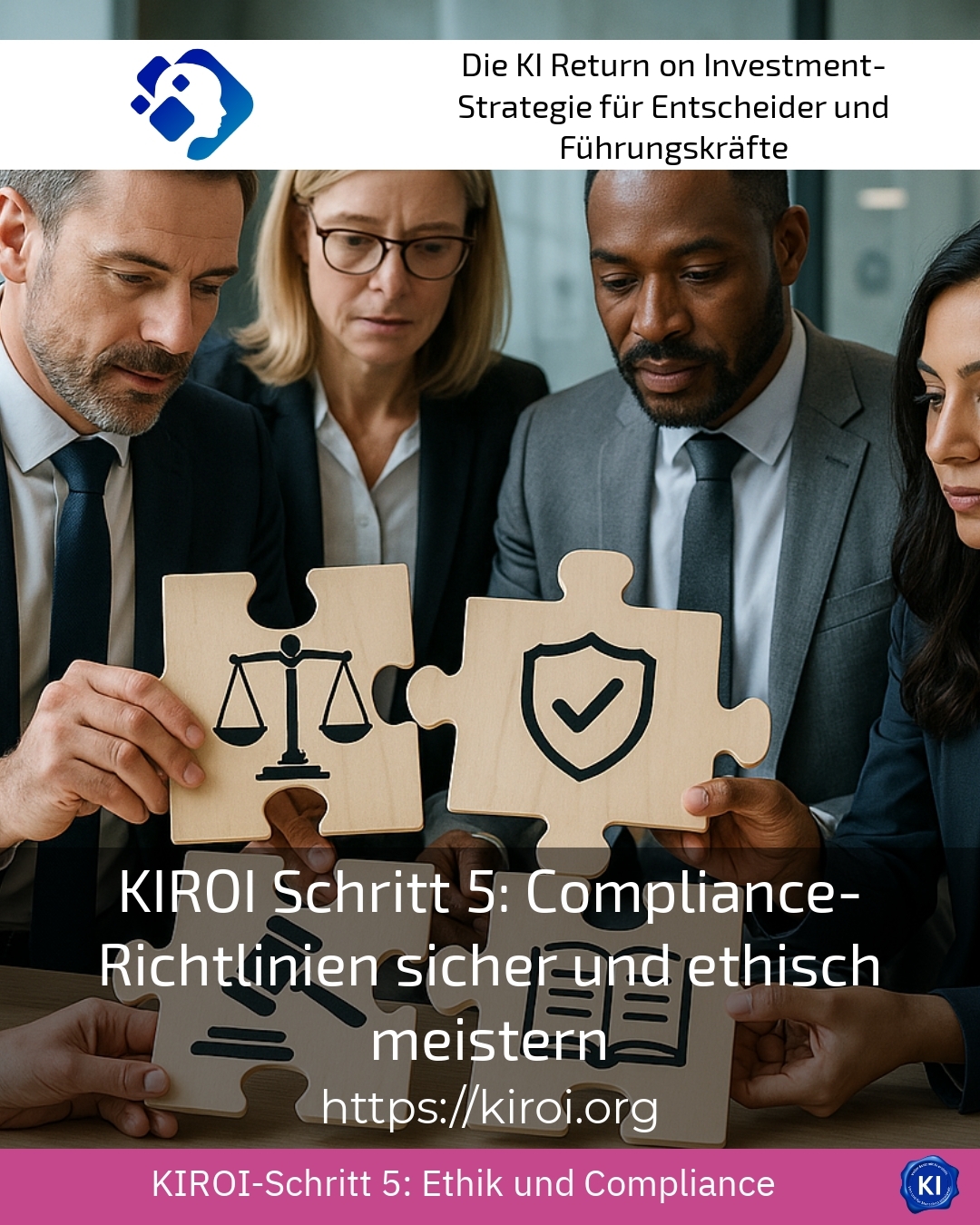
Mastering compliance guidelines safely and ethically
Compliance policies are central components of modern corporate governance. They support companies in adhering to legal requirements and upholding ethical standards. In doing so, they not only ensure risk minimisation but also a sustainable corporate reputation. In this article, you will learn how companies can successfully implement compliance policies while promoting values such as integrity and transparency.
The importance of compliance policies in the company
Compliance guidelines help to reliably implement legal requirements – whether in data protection, environmental management, or dealing with business partners. For instance, an international manufacturing company establishes clear procedural instructions to prevent corruption risks. Likewise, a financial services provider supports compliance with legal provisions through detailed anti-money laundering guidelines.
Another practical case comes from the chemical industry, where strict safety standards have been introduced through compliance guidelines. These reduce accidents and promote the confidence of employees and customers. Such measures show how compliance guidelines combine practical and ethical aspects in everyday business life.
Compliance guidelines also promote fair competition. In trade, for example, they support transparency in promotions, ensuring that competition law and consumer protection are observed. In this way, a medium-sized provider of consumer goods helps to prevent excessive discounts and misleading advertising.
Clear communication as the key to compliance
A key challenge with compliance policies is communicating them clearly and understandably. Companies in the IT sector are demonstrating that training and information campaigns can enhance employees' awareness of compliance issues. This way, the rules are not only internalized but also taken into account in daily practice.
An insurance company likewise relies on regular workshops to impart compliance content. Practical cases are discussed there, which promote ethical decision-making. This methodological support ensures that employees actively participate in compliance processes.
The construction industry is also focusing on transparent communication: digital platforms give all project participants access to binding compliance documents at any time. This helps to avoid misunderstandings and reduce organizational effort.
BEST PRACTICE with one customer (name hidden due to NDA contract)
BEST PRACTICE with one customer (name hidden due to NDA contract) As part of a global restructuring, the introduction of a compliance management system was supported. All compliance guidelines were mapped digitally, supplemented by live training for all managers and employees, and enhanced by a secure whistleblower system. After only a short time, a significantly improved implementation and a tangible strengthening of the compliance culture became apparent.
Practical tips for implementing compliance policies
For sustainable implementation, compliance policies should be regularly reviewed and updated. It is advisable to identify and specifically address risk areas within the company. A large logistics company, for example, analyses new regulatory requirements annually and adapts its policies accordingly.
Technological support can also increase the effect. For example, a pharmaceutical manufacturer uses modern software to keep an overview of all compliance-relevant processes. Automated document management and reminder systems help to meet deadlines and provide proof.
Furthermore, it is important to establish a culture of openness where employees can report violations without fear. For example, a mechanical engineering company sets up an anonymous hotline, which helps to clarify and respond quickly.
Compliance policies as an ethical compass
Compliance policies are not just tools for avoiding sanctions, but also an expression of ethical corporate governance. A consulting firm provides its employees with clear guidelines that go beyond legal obligations – for example, regarding respectful behaviour and sustainability.
In the food industry, adherence to compliance policies supports traceability and quality assurance, ultimately promoting consumer protection and trust. The ethical component is clearly paramount here, as is the legal framework.
The service sector provides another example, where integrity and transparency in customer contact are strengthened through regular compliance checks. This not only creates legal certainty but also fosters sustainable business relationships.
My analysis
Compliance guidelines are fundamental building blocks of a responsible and sustainable corporate strategy. Companies from a wide range of industries demonstrate that a clear structure, transparent communication, and ethical awareness significantly facilitate implementation. Compliance guidelines not only support adherence to legal regulations but also simultaneously foster a culture of integrity and respectful cooperation. To achieve these successes, continuous training, technological tools, and an open error culture are indispensable.
Further links from the text above:
Compliance guidelines explained simply
Effective implementation of compliance policies
Compliance: Definition and Tasks
Tips for efficient policy management
Implement compliance in the company
Compliance Guide with Practical Tips
For more information and if you have any questions, please contact Contact us or read more blog posts on the topic Artificial intelligence here.











 Deutsch
  English (UK)