
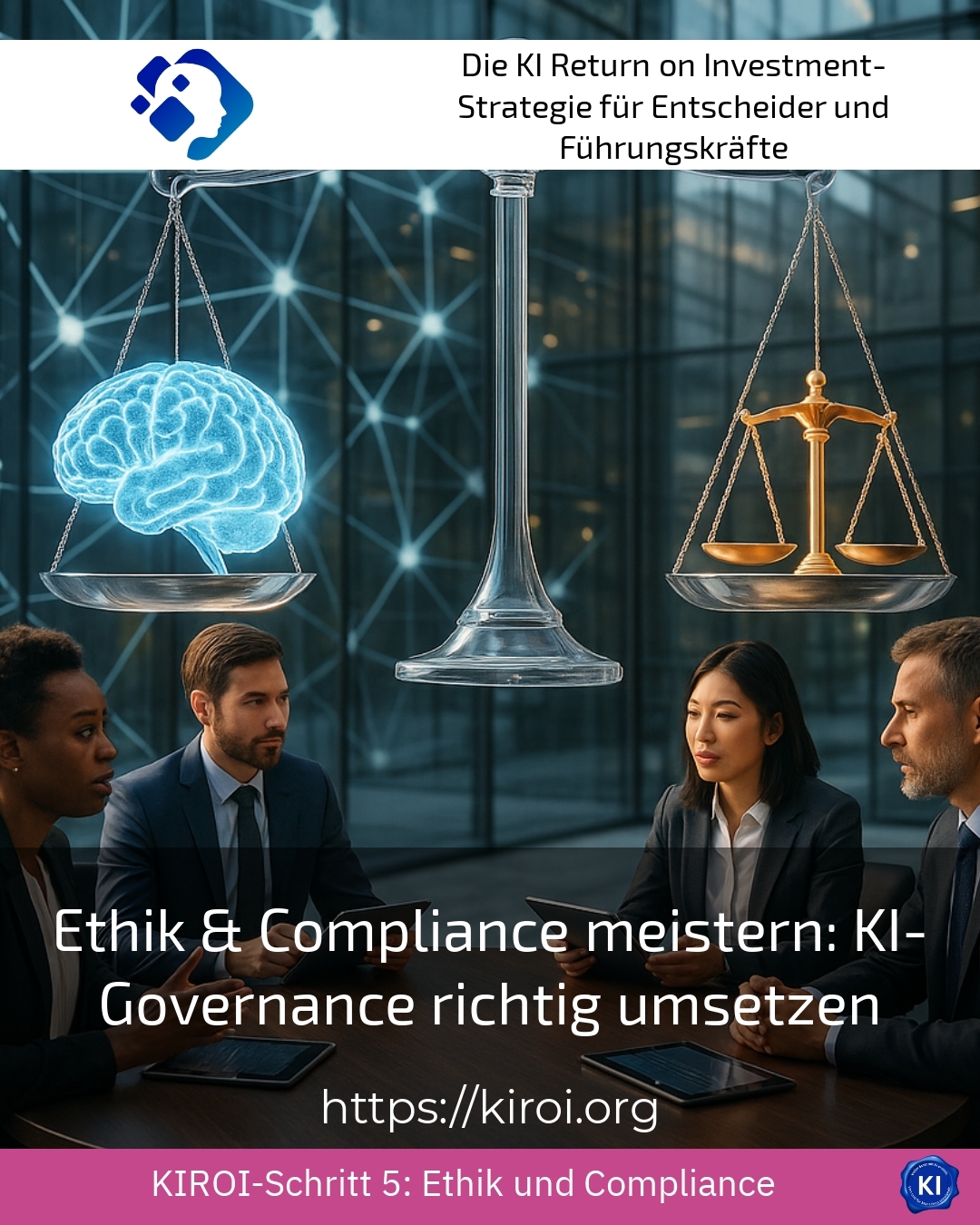
The rapid development of algorithm-based systems is presenting organisations worldwide with completely new challenges that go far beyond technical implementation issues. Implementing AI governance correctly becomes a core competence for those companies that want to operate sustainably and responsibly. For whilst automated decision-making systems promise enormous efficiency gains, they simultaneously harbour considerable risks to reputation, legal compliance and social trust. Leaders frequently report uncertainties when it comes to treading the fine line between innovation and responsibility. This is precisely where a well-conceived governance architecture comes in, combining ethical principles with operational excellence.
Why responsible governance of algorithm-based systems has become essential
The integration of intelligent systems into business processes has achieved unprecedented momentum in recent years, penetrating virtually all economic sectors and requiring fundamental changes in corporate management. Organisations now use automated analytical tools for HR decisions, credit approvals, medical diagnoses and strategic planning. This far-reaching penetration makes it clear why Implementing AI governance correctly no longer represents an optional addition. Rather, it forms the foundation for sustainable competitiveness and social acceptance.
Regulatory authorities worldwide have recognised this development and are responding with comprehensive legislative initiatives. The European regulatory framework for intelligent systems, for instance, defines clear requirements regarding transparency, risk classification and human oversight [1]. Companies must document how their systems make decisions. They must demonstrate that risks of discrimination are systematically identified. In addition, supervisory authorities demand regular reviews of algorithmic performance.
In the financial sector, for example, institutions use algorithmic systems for credit assessments. These must be able to explain comprehensibly why an application was rejected. In healthcare, diagnostic algorithms support medical decisions. Here, patient safety is the primary focus of all governance considerations. Insurance companies also use predictive models for risk assessment. However, these must not perpetuate discriminatory patterns.
Best practice with a AIROI customer
A medium-sized financial services company faced the challenge of making its algorithmic assessment systems compliant. The existing models had grown over years, and no one could fully trace which factors influenced the automated decisions and to what extent. transruptions coaching accompanied the project team over several months in the systematic analysis and restructuring of governance processes. Together, we developed a documentation architecture that both meets regulatory requirements and remains practical in day-to-day operations. The involvement of various specialist departments was particularly important, as this was the only way to create a holistic understanding of the systems. The compliance department received clear auditing criteria, the IT department implemented technical monitoring solutions, and the executive board established a regular reporting cycle. Following the completion of the project, the company reported a significantly increased level of trust among customers and regulatory authorities.
Core building blocks of an effective control architecture for intelligent systems
An effective governance architecture for algorithm-based decision-making systems consists of several interlocking elements that can only achieve their full effectiveness when combined. At the beginning is the development of a clear ethical framework that defines the company's core principles in dealing with automated systems. This framework must be supported by corporate management. It should be specific enough to provide guidance. At the same time, it needs flexibility for different application contexts.
The second element concerns the organisational anchoring of responsibilities, because without clear jurisdictions, even the best statements of intent will peter out into operational lack of commitment. A growing number of organisations are therefore establishing specialised roles such as ethics officers or interdisciplinary review boards [2]. These boards evaluate new use cases prior to their introduction. They audit existing systems at regular intervals. In the event of critical incidents, they initiate investigations.
In retail, for example, companies use predictive systems for personalised pricing. Here, it must be ensured that no unfair price discrimination occurs. Telecommunications providers use algorithm-based systems for customer service routing. The quality of care must not depend on demographic characteristics. Energy suppliers use smart grid management systems for load distribution. These must function reliably even in unforeseen situations.
Implementing AI governance correctly through systematic risk assessment
The systematic identification and assessment of risks forms the heart of any serious governance effort, because severe negative developments can only be avoided through preventive analysis. Companies should carry out a comprehensive impact assessment for every algorithmic system, taking into account technical, legal, ethical and societal dimensions. This assessment should take place before implementation. It must be updated in the event of significant changes. External developments can also make a reassessment necessary.
Particularly sensitive are use cases where algorithms make decisions with significant impacts on individuals. In recruitment, for example, automated screening tools can unconsciously disadvantage certain groups of applicants [3]. Banks must be able to demonstrate that their systems operate fairly when making credit decisions. Insurers must not apply discriminatory patterns in claims settlement.
Logistics companies use intelligent route planning for their vehicle fleets. These systems significantly affect the working hours and working conditions of employees. Manufacturing companies use predictive maintenance systems for their machinery. Incorrect decisions can lead to expensive production downtime. Media companies use recommendation algorithms for content personalisation. These influence which information people perceive.
Best practice with a AIROI customer
A service-sector company had introduced algorithmic systems for internal performance evaluations without previously conducting a structured risk assessment. After a few months, complaints from employees who felt they were being unfairly assessed piled up, and the working atmosphere deteriorated noticeably. The transruptions coaching supported the company in systematically working through the situation and developing constructive solutions. We jointly conducted workshops with all stakeholders to gather expectations and concerns and to create a shared understanding. The technical analysis indeed revealed problematic biases in the evaluation logics that systematically disadvantaged certain working methods. The company subsequently established a transparent process for the continuous review of such systems and set up a contact point for complaints. Following the intervention, employees reported a significantly increased trust in the fairness of the evaluation processes because they now understood how decisions are made.
Practical implementation strategies for sustainable compliance
The theoretical design of a governance architecture is only the first step on a longer journey, as the real challenge lies in its practical implementation within day-to-day organisational life. Many companies do not fail due to a lack of concepts. They fail at translating these concepts into lived practice. Therefore, a systematic implementation approach is crucial for success.
Successful organisations frequently begin with pilot projects in selected areas before establishing company-wide governance structures. This iterative approach enables learning experiences without excessive risks. Insights from early projects are incorporated into further development. Employees can build up competencies gradually. The organisation gains experience with new processes.
Pharmaceutical companies use algorithm-based systems for evaluating clinical trials. Particularly stringent regulatory requirements apply here. Automobile manufacturers implement intelligent assistance systems in their vehicles. Safety and reliability have absolute priority. Educational institutions deploy adaptive learning systems for personalised teaching. These must not systematically disadvantage any learners.
Successfully implementing cultural transformation as the foundation for AI governance
Beyond formal structures and processes, effective governance requires a profound cultural transformation that embeds ethical reflection as a natural part of professional practice. Employees at all levels must understand why responsible handling of algorithm-based systems is important. They need practical skills to recognise ethical issues. They require safe spaces to raise concerns.
Leaders play a key role in this cultural transformation because their behaviour significantly shapes which values are actually lived out in everyday work life [4]. If leaders present ethical considerations as an obstacle to business goals, employees will act accordingly. Conversely, if they value critical questions, a culture of responsibility is created. transruptions coaching can provide valuable impetus here.
In the field of professional services, law firms use algorithmic systems for document analysis. Quality assurance remains the responsibility of humans. Auditors use automated anomaly detection for audits. The professional judgement of the auditor cannot be replaced. Management consultants use analytical tools for strategy development. Creativity and contextual understanding remain human strengths.
Best practice with a AIROI customer
An internationally active company wanted to fundamentally modernise its governance structures for algorithmic systems while achieving a sustainable change in behaviour across the entire organisation. The initial situation was characterised by fragmented responsibility, insufficient documentation and a low level of awareness of ethical implications at the operational level. transruptions coaching accompanied a comprehensive transformation process lasting more than a year, which combined structural and cultural elements. Together, we developed a training programme tailored to the specific needs of different employee groups, using practical case studies from the company's own context. At the same time, we established a network of governance champions across all relevant departments who acted as multipliers and served as points of contact for their colleagues' questions. The company management visibly supported the process through regular communication and the provision of necessary resources for training and system adjustments. Following the completion of the intensive support phase, the company reported a fundamentally altered approach to dealing with algorithmic systems.
Continuous development and adaptive control
Governance structures for algorithm-based systems must not be understood as buildings to be erected once, but rather must be designed as living organisms that continuously evolve. Technological development is advancing rapidly. Regulatory requirements are changing. Societal expectations are shifting. Therefore, companies need adaptive control mechanisms.
Regular reviews of governance structures should be firmly anchored in the corporate calendar. These reviews should systematically take external developments into account. Findings from incidents or near misses must be incorporated. Feedback from stakeholders deserves serious attention. Benchmarking with other organisations can provide valuable impetus.
In the public sector, authorities use algorithm-based systems for benefit approvals. Transparency towards citizens is of particular importance here. Municipal administrations deploy predictive tools for resource planning. Democratic legitimation and accountability must be guaranteed. International organisations use analytical systems for aid programmes. Fairness and effectiveness must be considered together.
My AIROI Analysis
Intensive involvement in numerous transformation projects in the field of responsible technology governance has shown me that success depends largely on three factors whose importance is frequently underestimated. Firstly, the genuine commitment of senior management is indispensable, because without visible support from the top, all efforts at the operational level will hit a ceiling. Secondly, adequate resources are required, not only of a financial nature, but also in the form of time, attention and human capacity. Thirdly, the link between ethical principles and concrete operational action must be established.
Clients frequently report initial overwhelm in the face of the subject's complexity. This overwhelm is understandable and is not a sign of incompetence. The challenge lies in finding a pragmatic entry point and working systematically onwards from there. Transruptions coaching clearly positions itself here as accompaniment for projects surrounding these questions, without selling ready-made solutions. Every organisation must find its own path that suits its specific culture, its resources and its use cases.
What always impresses me in my work is the genuine interest of many specialists and managers in acting responsibly. Most people want to do good. They need guidance, structure and sometimes simply someone to think things through with them. Implementing AI governance correctly ultimately means channelling this intrinsic motivation and translating it into effective structures. That is demanding, but doable, and it is worthwhile for companies, employees and society alike.
Further links from the text above:
[1] European approach to Artificial Intelligence – European Commission
[2] Digitalisation and AI in the world of work – Federal Ministry of Labour and Social Affairs
[3] Federal Anti-Discrimination Agency – Information on algorithmic discrimination
[4] Bitkom – Information on Artificial Intelligence in Enterprises
For more information and if you have any questions, please contact Contact us or read more blog posts on the topic Artificial intelligence here.









 Deutsch
 English (UK)