
How do companies ensure that their automated decision-making systems do not suddenly become a liability risk that entails multi-million-pound fines and destroys a hard-earned reputation in a matter of days?
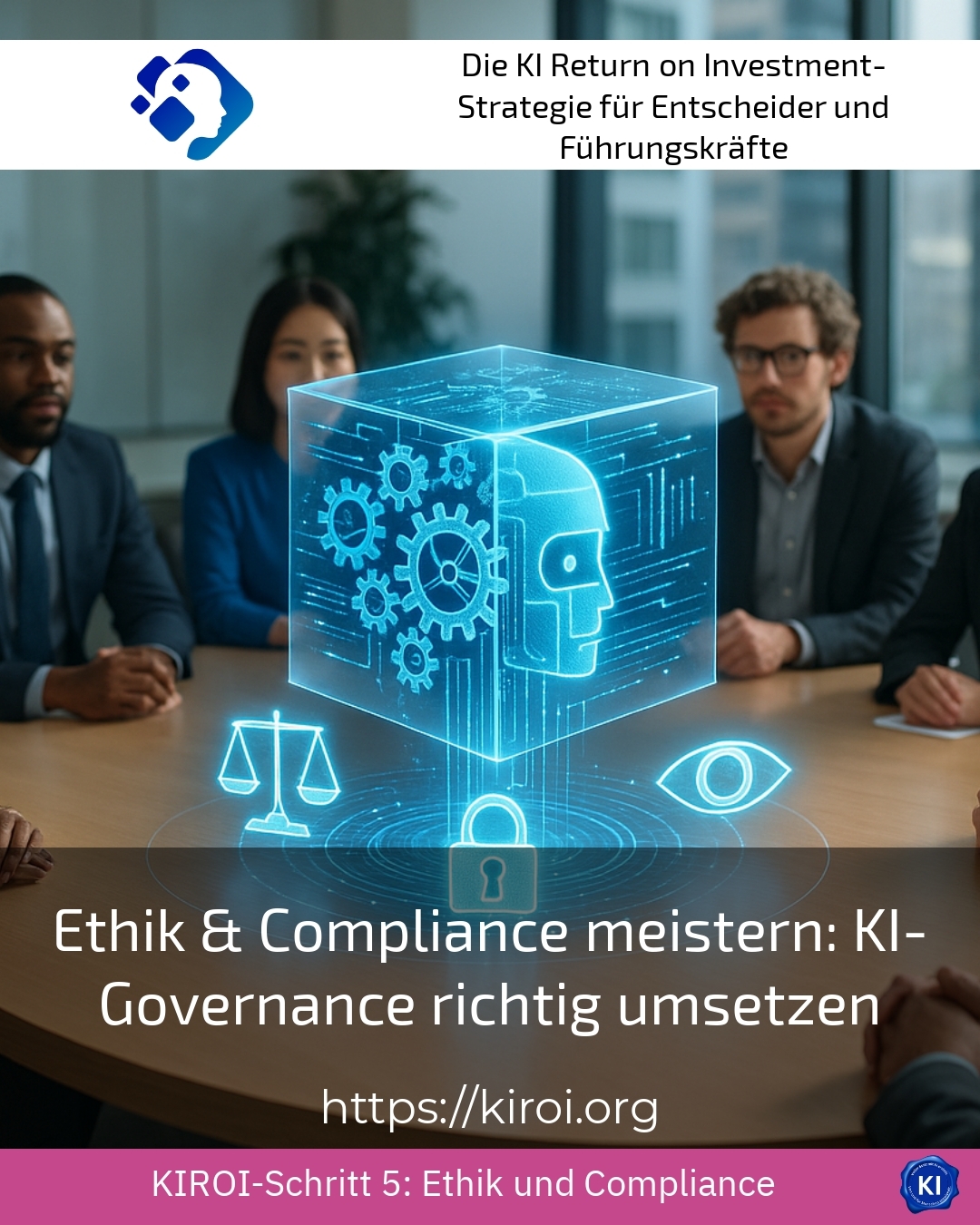
This question is currently occupying leaders from almost all sectors of the economy because regulatory requirements are increasing and public attention to algorithmic misdecisions is growing. The ability to, Implementing AI governance correctly to be able to, is developing into a core competency of modern organisations. This has long ceased to be just about technical issues, but rather about fundamental aspects of corporate governance that equally affect strategy, culture and operational processes. Those who set the right course today secure competitive advantages. Those who hesitate, however, risk severe disadvantages.
The strategic dimension of responsible technology leadership
Many organisations still underestimate the gravity of the decisions they have to make in connection with intelligent systems. At the same time, numerous examples from various sectors demonstrate the far-reaching consequences that a lack of preparation can have. For instance, financial service providers frequently report situations where automated credit decisions have led to allegations of discrimination because historical data patterns were adopted without critical reflection. Insurance companies face similar challenges when claims settlement systems systematically disadvantage certain customer groups. In healthcare, too, cases are mounting where diagnostic support systems issue flawed recommendations because they are based on insufficiently validated training data.
The establishment of effective governance mechanisms first requires a deep understanding of one's own starting position. Organisations must systematically record which algorithmic systems are already in use and which decisions they influence. Clients frequently report surprises that they experience during this stocktake, because decentralised procurement has led to a confusing patchwork. A clear inventory, however, forms the indispensable basis for all further steps.
Best practice with a AIROI customer
A medium-sized manufacturing company approached us because the management team was increasingly concerned about the growing number of automated decision-making processes in quality assurance and human resources. Over several years, the organisation had implemented various software solutions without establishing an overarching governance structure. As part of our transruptions-guidance, we initially conducted a comprehensive stock-take that identified more than twenty relevant systems. Subsequently, together with the leadership team, we developed a classification scheme that categorised the systems according to risk potential and strategic importance. On this basis, a tailored governance framework was created which defined clear responsibilities and established escalation pathways. Implementation took place gradually over a period of six months, during which we continuously supported and empowered the internal teams. Upon completion of the project, the company possessed a robust structure that both met regulatory requirements and ensured operational flexibility. The management reported a significantly increased level of confidence in their own technology landscape.
Implementing AI governance correctly through clear accountability structures
Assigning clear responsibilities presents many organisations with significant challenges because algorithmic systems cross traditional departmental boundaries. A recruitment tool, for example, affects the HR department just as much as IT, the legal department and, ultimately, the business units as users. Without clear areas of responsibility, accountability gaps arise which, in the event of a problem, lead to protracted finger-pointing. Successful organisations therefore establish dedicated committees or roles that act as a central point of contact and bring together the different perspectives.
In the banking sector, some institutions have already appointed Chief AI Officers who report directly to the board of directors and hold overarching governance powers. Telecommunications companies are increasingly relying on ethics boards to review critical use cases before they go live. Awareness of this necessity is also growing in retail following several prominent cases of price discrimination by dynamic algorithms coming to light. These examples illustrate that industry-specific solutions are required that take into account the respective risk profiles and regulatory frameworks.
The documentation of decision-making processes is also becoming increasingly important because regulatory authorities and courts expect transparent justifications. Organisations must be in order to explain why certain systems are deployed and how the selection was made. This burden of proof also extends to the ongoing monitoring and regular review of system performance. Many clients report that it was only through external stimuli that they recognised the full implications of these requirements.
Risk assessment as the foundation of sustainable AI governance
A systematic risk assessment forms the heart of any effective governance architecture for intelligent systems. It is important to distinguish between various risk categories and to develop appropriate evaluation criteria. Technical risks include malfunctions, security vulnerabilities or performance issues under altered conditions. Legal risks relate to potential violations of data protection regulations, prohibitions against discrimination or sector-specific regulations. Reputational risks arise from public perception and media reporting regarding algorithmic misdecisions.
Energy suppliers, for instance, face specific challenges when deploying smart grid management systems that could cause supply interruptions. Logistics companies must ensure that their route optimisation algorithms do not systematically disadvantage certain regions. In the media sector, recommendation systems require special attention because they can influence societal opinion-forming processes. Each of these industries requires tailored risk matrices that adequately take the specific context into account.
Best practice with a AIROI customer
A service company with strong customer contact approached us because the introduction of an automated customer communication system was imminent and the compliance department had raised significant concerns. The original plan was to put the system into operation without a comprehensive risk analysis, which we classified as critical and proposed alternative courses of action. Together with the internal experts, we developed a multi-stage evaluation process that integrated technical, legal and ethical dimensions. In a series of workshops, we identified potential problem scenarios and developed countermeasures for each critical point. The inclusion of customer perspectives through structured feedback surveys proved to be particularly valuable, providing crucial insights into acceptance risks. Transruption coaching accompanied the project team over the entire implementation period and supported the development of internal competencies. Following the successful introduction, the company established the evaluation process as a standard for all future technology projects. The compliance department now has a robust set of tools that provides security while simultaneously enabling innovation.
Cultural transformation as a success factor for sustainable management
Technical measures and formal structures alone are not enough to ensure the effective governance of intelligent systems. Rather, what is decisive is the embedding of corresponding values and behaviours within the organisational culture. Employees at all levels must understand why responsible handling of algorithmic systems is important and what contribution they can personally make. This cultural dimension is frequently underestimated, even though it is a key determinant of success or failure.
Pharmaceutical companies have already gained valuable experience in this area because they traditionally have to meet stringent compliance requirements and have established corresponding cultures. Financial institutions can learn from this experience and develop similar mechanisms for the algorithmic sector. Industrial enterprises are also increasingly discovering the importance of these soft factors after technically flawless systems have failed due to a lack of user acceptance. Investing in training and awareness-raising measures pays off in the long term because it lays the foundation for sustainable success.
An open approach to mistakes and uncertainties fosters organisational learning and enables continuous improvement. Organisations that cultivate a culture of silence miss valuable opportunities for optimisation and risk the escalation of avoidable problems. Successful leaders therefore establish explicit channels for reporting concerns and anomalies. They reward proactive behaviour and avoid apportioning blame for well-intentioned misjudgements. This attitude requires exemplary leadership at the highest level and consistent implementation in everyday operations.
Implementing AI governance properly requires continuous adaptation
The regulatory frameworks are developing dynamically, which requires ongoing attention and readiness to adapt. Organisations must establish mechanisms that capture relevant developments at an early stage and translate them into internal processes. This task goes beyond classical compliance monitoring because technological and societal changes must also be taken into account. A rigid framework does not meet the requirements of a changing environment.
Car manufacturers, for example, face the challenge that autonomous driving systems raise completely new liability issues for which established frameworks provide no answers. Retail companies must adapt their pricing algorithms when new consumer protection regulations come into force. In the public sector, too, the pressure is growing to make algorithmic decisions transparent and to grant citizens opportunities to object [1]. These developments underline the need for agile governance approaches that enable rapid responses without sacrificing stability and reliability.
Regular review cycles help to evaluate the effectiveness of existing measures and identify potential for improvement. In doing so, both internal and external perspectives should be incorporated to avoid blind spots. External audits by independent experts are gaining increasing importance and are already partly required by regulatory authorities [2]. Organisations that proactively address such requirements gain an advantage over reactive competitors.
Practical implementation steps for different maturity levels
Not every organisation starts from the same baseline, which is why differentiated implementation approaches are required. Companies at early maturity levels should first establish fundamental structures before introducing more complex mechanisms. Advanced organisations, on the other hand, can build upon existing foundations and refine their systems. This differentiation prevents overload and ensures sustainable progress.
Medium-sized enterprises often lack dedicated resources for extensive governance initiatives, which is why pragmatic approaches are required. Here, integration into existing compliance structures can be useful in order to leverage synergies and limit additional effort. Large enterprises, on the other hand, have more leeway for specialised functions and comprehensive programmes. Groups with an international presence must also take account of different legal systems and develop harmonised solutions [3]. This complexity requires professional support and strategic planning.
Best practice with a AIROI customer
An internationally active consumer goods company sought support in harmonising its governance practices across multiple national subsidiaries. The initial situation was characterised by heterogeneous approaches that had emerged independently in individual markets and in some cases posed contradictory requirements. Our transruptions coaching accompanied the project team in developing a modular framework that combined a common core with country-specific additions. We held workshops with representatives from various regions to incorporate local perspectives and foster buy-in. Technical implementation was carried out via a central platform that enabled decentralised adjustments while ensuring consistency. Following completion of the implementation, the company had a scalable system capable of efficiently integrating new markets and rapidly absorbing regulatory changes. The experience gained from this project is now feeding into industry discussions and serving as a guide for other organisations. The leadership team particularly emphasises the value of external support in overcoming internal resistance.
My AIROI Analysis
The ability to, Implementing AI governance correctly being able to do so, is increasingly becoming the differentiating feature of successful organisations. My experience from numerous consultancy projects shows that success depends crucially on three factors: firstly, the commitment of top management, secondly, integration into existing structures, and thirdly, cultural anchoring at all levels. Organisations that address these three dimensions simultaneously achieve more sustainable results than those that concentrate on individual aspects.
I find the increasing convergence of requirements across industry boundaries particularly noteworthy, as it facilitates mutual learning and the exchange of best practices. At the same time, sector-specific characteristics remain relevant, which necessitate individual adaptations and push standard solutions to their limits. Striking the balance between standardisation and customisation represents one of the central challenges for practitioners. Here, external guidance can provide valuable impetus by bringing in cross-industry perspectives while simultaneously developing a deep understanding of specific contexts.
The coming years will show which organisations successfully master the necessary transformations and which fall behind. I am convinced that acting proactively today creates the prerequisite for long-term success. Investing in robust control mechanisms may tie up resources in the short term, but it pays off many times over through avoided risks and strengthened trust. Organisations that seize this opportunity position themselves as responsible players in an increasingly technology-driven economy and society.
Further links from the text above:
[1] AlgorithmWatch – Monitoring algorithmic decision-making processes
[2] European Commission – Trustworthy Artificial Intelligence
[3] Bitkom – Guidelines on AI Governance in Businesses
For more information and if you have any questions, please contact Contact us or read more blog posts on the topic Artificial intelligence here.









 Deutsch
 English (UK)