
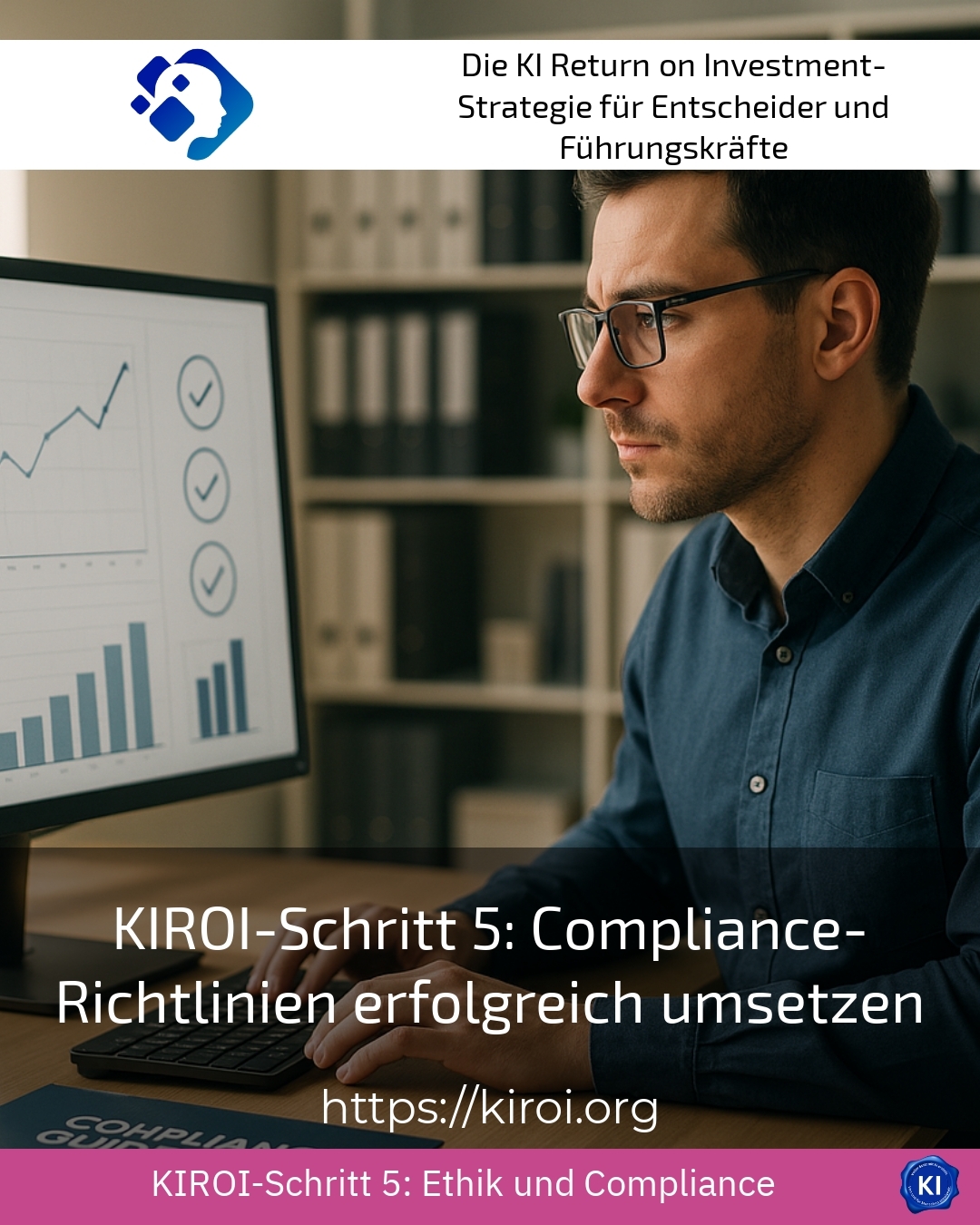
Compliance policies are the backbone of a well-functioning company that wishes to adhere to legal requirements and ethical standards equally. Especially in a complex business world, their successful implementation is crucial for reducing risks and strengthening trust with customers and partners. The fifth step on the path to sustainable success begins right here – with the practical integration of compliance policies into the daily operations of the company.
Compliance Guidelines: Getting started with sustainable implementation
The primary principle for successfully implementing compliance policies is their mandatory integration across all levels of the company. Without broad acceptance and active participation, policies often remain mere paper products. Companies, for instance in the financial sector, manufacturing, or healthcare, know that the involvement of management and employees is crucial. For example, a bank uses regular workshops to ensure that compliance violations are identified and addressed early on.
In the automotive industry, many companies report positive experiences when they integrate compliance as a fixed part of their daily work. This not only reduces the risk of legal violations but also promotes internal transparency. In the medical technology sector, too, companies are increasingly focusing on clear responsibilities, as here adherence to compliance guidelines has a direct impact on product safety.
BEST PRACTICE with one customer (name hidden due to NDA contract)
A medium-sized financial services company utilised the expertise of transruptions-Coaching to effectively embed compliance policies into its management structure. Through individual coaching sessions, leaders were empowered to foster a culture of openness while ensuring adherence to policies. This guided approach supported the company in minimising risk and sustainably strengthened employee retention.
Communication and training as keys to the implementation of compliance policies
The path to implementing compliance guidelines involves clear and understandable communication. In the IT industry, for instance, regular training sessions, whether through e-learning or in-person events, can help to make complex legal requirements transparent and to quickly clarify questions. The automotive industry also utilises interactive workshops to impart compliance topics in a practical way.
In the healthcare sector, training is particularly important as employees frequently handle sensitive patient data. A pharmaceutical company has strengthened and continuously monitored compliance with legal requirements by introducing a system for certificate verification. This way, compliance is perceived not as a burdensome fulfilment of duty, but as a driver for safe and professional practice.
BEST PRACTICE with one customer (name hidden due to NDA contract)
An IT service provider used modular compliance training that was specifically tailored to the different specialist areas. This enabled employees to better understand technological and legal requirements and implement them directly within their area of responsibility. This led to higher participation rates and a noticeably stronger compliance culture within the company.
Continuous monitoring and adaptation of compliance policies
Compliance guidelines are not static. In the food industry, for example, companies must regularly comply with new legal requirements and adapt their internal processes. Systematic monitoring, such as through internal audits or regular reporting, helps to identify risks at an early stage and initiate countermeasures.
The energy sector also demonstrates that transparent documentation of all measures ensures traceability and thus builds trust with regulatory authorities. Changed regulatory requirements are systematically integrated into existing processes, as exemplified by the use of compliance management systems in a large utility company.
This increases the company's agility and supports a sustainable compliance strategy in the long term.
BEST PRACTICE with one customer (name hidden due to NDA contract)
An energy supplier implemented a digital platform, which allows compliance-related documents and evidence to be stored centrally and updated regularly. This enabled the company to react quickly to new legal requirements and permanently ensure compliance with compliance guidelines. This digital support helped to make internal processes more efficient and significantly reduce the risk of violations.
Reporting and accountability as the final pillar of compliance policies
Transparent reporting is necessary for companies to document and be accountable for compliance with policies. In the property sector, regular reporting to management helps to review the status quo and strategically adapt compliance measures.
Furthermore, clear accountability structures foster a culture of responsibility within the organisation. For example, a chemical plant periodically reports to a compliance oversight committee, which analyses infringements and weaknesses and issues recommendations. Comparable procedures are also being established in the aviation industry to effectively implement national and international requirements.
My analysis
The successful implementation of compliance policies requires a holistic approach that combines communication, training, monitoring, and accountability. Practical examples from various industries show that accompanying support through coaching and digital tools facilitates the process and builds trust. Companies that see compliance not just as an obligation but as an opportunity benefit in the long term from increased security, better cooperation, and a sustainable corporate image.
Further links from the text above:
[1] Compliance Policy Development – Governance Risk and Compliance
[3] Effective Implementation of Compliance Policies – DataGuard
[5] Comenius Academy Compliance Guidelines
[11] Corporate Compliance – Fundamentals and Strategies – AcadiAS
[15] Explanation of Terms: Compliance Policies – Navan
For more information and if you have any questions, please contact Contact us or read more blog posts on the topic Artificial intelligence here.









 Deutsch
  English (UK)