
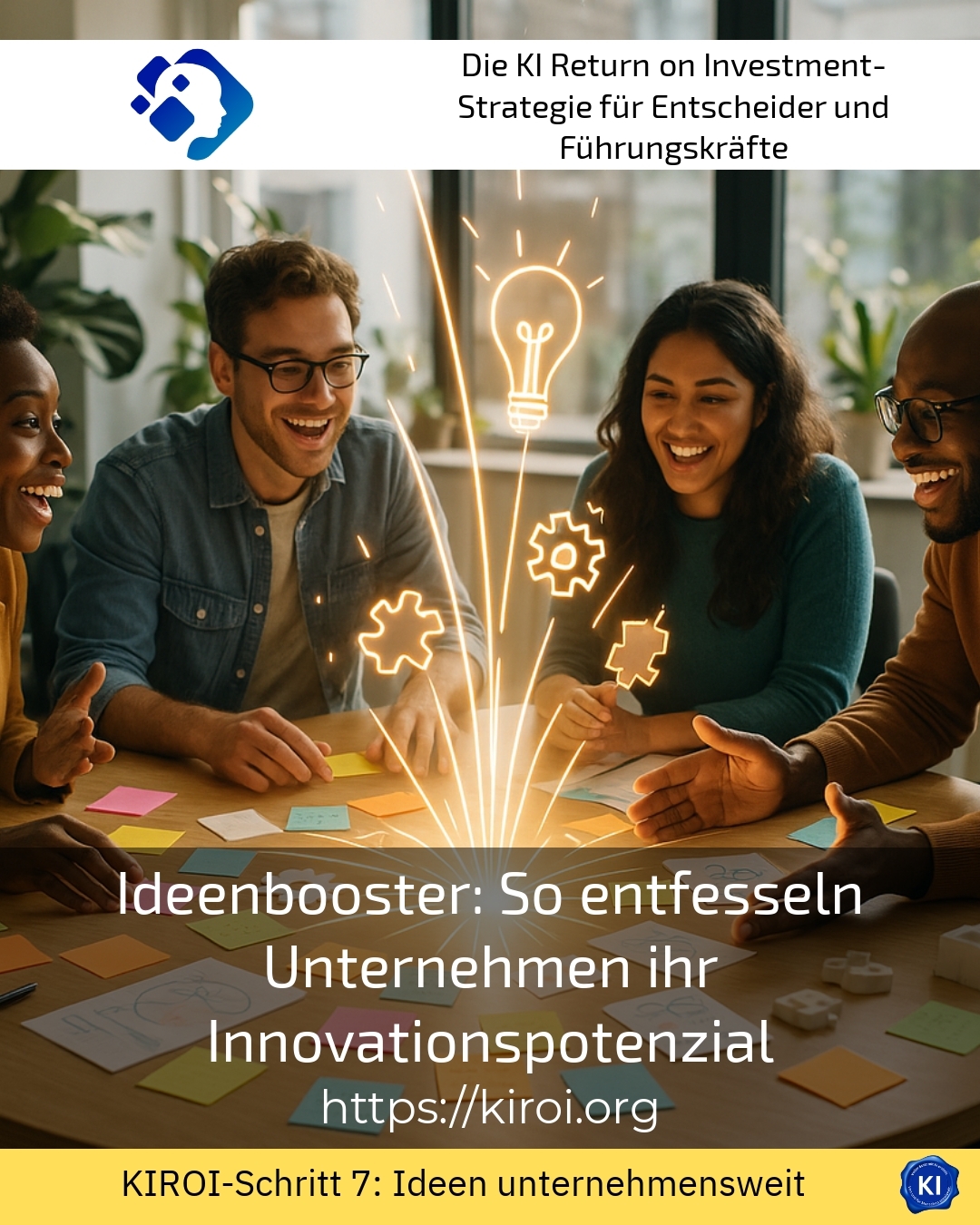
In a world that is changing at a breathtaking pace, organizations face a fundamental challenge that goes beyond mere survival and reaches deep into the very essence of their future viability. Idea-booster As a strategic concept, it is gaining increasing importance because it unleashes exactly those creative forces that have long been trapped in rigid structures. But how do leaders and teams tap into those hidden reserves that lie dormant in every organization and are only waiting to be awakened? The answer lies in a well-thought-out interplay of methodological guidance, cultural change, and a willingness to consistently question established mindsets.
The idea booster as a catalyst for entrepreneurial transformation
The ability to continuously innovate separates successful organizations from those that slowly drift into irrelevance and lose their market relevance. A systematic approach to idea generation works like a turbocharger for creative processes. It not only accelerates the creation of new concepts, but also significantly improves their quality. Leaders often report that structured methods for fostering innovation make a measurable difference. Transformation often begins with small steps and then unfolds a self-reinforcing dynamic.
In the manufacturing industry, this dynamic is particularly impressive. A medium-sized machine manufacturer developed a completely new product line through systematic creative workshops. A logistics company revolutionized its internal processes through employee ideas from the warehouse. A automotive supplier discovered potential that had previously remained invisible through interdisciplinary teams. These examples illustrate that inspiration can come from all levels of an organization.
Best practice with a AIROI customer
An established production company with several hundred employees turned to transruptional coaching because the company’s innovation power had been steadily declining over the years, and management felt that there was an urgent need for action. The workforce had become accustomed to routine procedures and showed little willingness to take new paths. During intensive support over several months, the underlying blocks that hindered creative thinking were first identified. It turned out that a pronounced culture of error stifled any attempt at innovation by stifling creative thinking. Through targeted workshops and individual discussions, it was possible to establish a completely new understanding of failure, which sees mistakes as valuable learning opportunities. The management learned how to create psychological safety in their teams and explicitly encouraged experimentation. Within six months, the number of submitted improvement proposals increased more than threefold. Several of these ideas led to concrete process optimizations with measurable economic benefits. The corporate culture changed significantly, and employee satisfaction improved significantly.
Recognizing creative blockages and resolving them sustainably
Many people who turn to transruptional coaching report a sense of stagnation. They intuitively feel that more is possible, but cannot tap into this potential. The causes of such blockages often lie deeper than expected and require a sensitive approach. Sometimes it is unconscious beliefs that stifle creative thinking. In other cases, the right framework for experimentation simply lacks.
In the service sector, these obstacles often manifest themselves in the form of perfectionism. A consulting firm lost its ability to innovate due to excessive quality standards imposed on every idea. A financial services provider blocked creative impulses through overly strict compliance interpretations. An advertising agency stifled fresh concepts under the pressure to repeat proven success formulas. However, these patterns can be broken if the right impulses are set in motion.
The idea booster in practical application
Implementing an effective concept for idea promotion requires patience and consistency. Quick solutions do not exist in this area, but sustainable progress is possible. The first step often consists of creating spaces for creative thinking at all. Many organizations have completely lost such spaces over time. The rediscovery of these spaces sometimes resembles an archaeological excavation.
In healthcare, remarkable developments are evident in the promotion of innovation. A group of clinics established interdisciplinary innovation teams with astonishing results. A nursing home developed completely new care concepts through employee ideas. A medical care center revolutionized its patient communication through creative workshops. These examples demonstrate that even in highly regulated industries there is significant room for innovation.
The role of leadership in unleashing creative forces
Leaders often underestimate their own influence on the innovation culture of their teams. Every response to a suggestion sends signals to the organization. These signals are carefully recorded and shape the behavior of employees. A single disparaging comment can undo months of creative development work. Conversely, sincere appreciation and genuine interest can work wonders.
In the technology industry, we observe particularly pronounced dynamics. One software company transformed its innovation culture through modified meeting formats. Another IT service provider discovered untapped potential through systematic idea-gathering. A hardware manufacturer created entirely new possibilities for spontaneous exchange through physical creative spaces. Investments in such measures pay off many times over in the long term.
Best practice with a AIROI customer
A rapidly growing technology company sought support from transruptive coaching because, despite considerable resources, it was no longer producing truly groundbreaking products and the competition seemed increasingly innovative. The deeper analysis revealed a complex web of hindering structures and mental barriers at all levels of the hierarchy. The management had unconsciously created an atmosphere in which only safe ideas were proposed because riskier concepts had been harshly criticized in the past. Through accompanying coaching sessions with the leadership team, a deeper understanding of these interconnectedness was initially developed. Subsequently, we worked together on new communication patterns and feedback practices that explicitly rewarded experimentation. The company introduced so-called innovation sprints, in which teams were allowed to work on bold ideas without a guarantee of success. The results exceeded all expectations, and several of these projects developed into promising new business areas. The corporate culture changed significantly, and employees report increased motivation and commitment.
Structured methods as ideas boosters for sustainable change
Paradoxically, creativity often needs structure to fully unfold. Complete freedom can be paralyzing, while clear frameworks provide guidance. The art lies in finding the right balance. Too strict guidelines stifle every creative spark. Too wide a scope leads to disorientation and frustration.
In retail, the effects of structured creativity promotion are particularly evident. A retail conglomerate revolutionized its customer experience by systematically gathering employee ideas. A department store developed innovative service concepts through regular brainstorming sessions. An online retailer significantly improved its logistics through an internal idea competition. These successes did not happen by chance; they were the result of deliberately designed processes.
The importance of psychological safety for creative processes
People share their best ideas only in environments that they perceive as safe. This fundamental insight of organizational psychology has far-reaching practical implications [1]. Without psychological safety, the most creative minds remain silent. Creating such safety requires continuous work. One-time measures are by far not enough.
In the construction industry, which is traditionally considered conservative, surprising developments are taking place. One construction company revolutionized its project execution by open exchange of ideas. An architectural firm developed innovative working methods through team-based workshops. An real estate developer created space for unconventional proposals through new meeting formats. These examples show that change is possible everywhere.
Digital tools as amplifiers of creative impulses
Modern technologies can significantly support and accelerate creative processes. However, they never replace the human factor. Artificial intelligence offers interesting possibilities for idea generation and evaluation [2]. Collaboration platforms enable cross-location creative exchange. The combination of various tools enhances their effectiveness.
In the media sector, we are witnessing fascinating developments in digital creative support. One publishing house is successfully using AI-powered systems to identify topics. A broadcasting organization revolutionized its programming planning through data-driven idea evaluation. A film production developed innovative formats through the use of virtual creative spaces. These examples illustrate the potential of digital tools as a complement to human creativity.
My AIROI Analysis
The systematic examination of the relationships presented here reveals a multifaceted picture that goes beyond simple recommendations for action and requires deeper strategic considerations. The ability to unleash creative potential is today one of the most important competencies for leaders and organizations. At the same time, it is repeatedly shown that isolated measures rarely yield the desired results, while holistic approaches can bring about lasting changes. The Idea-booster As a concept, its full effect is only realized when it is embedded in a comprehensive transformation strategy.
The central role of leadership culture for all innovation efforts is particularly noteworthy. Without genuine commitment from the top, even the best methods remain ineffective. The experiences from accompanying numerous projects through transruptive coaching strongly confirm this assessment. Leaders must act as role models for creative thinking and constructive handling of mistakes themselves. Only then can an atmosphere be created in which employees actually bring their best ideas to the table.
The integration of digital tools undoubtedly offers interesting opportunities, but should never become an end in itself. Technology optimally supports human creativity when used consciously and purposefully. The coming years will show how the capabilities of artificial intelligence will continue to evolve and what new opportunities emerge from this [3]. Organizations that invest in their innovation capabilities today will be able to reap the benefits of this work tomorrow.
Further links from the text above:
[1] Harvard Business Review: Psychological Safety
[2] McKinsey: The Economic Potential of Generative AI
[3] World Economic Forum: Artificial Intelligence
For more information and if you have any questions, please contact Contact us or read more blog posts on the topic Artificial intelligence here.











 Deutsch
 English (UK)