
Why do so many brilliant ideas remain undiscovered in your company, even though they have been around for a long time and are just waiting to finally be heard?
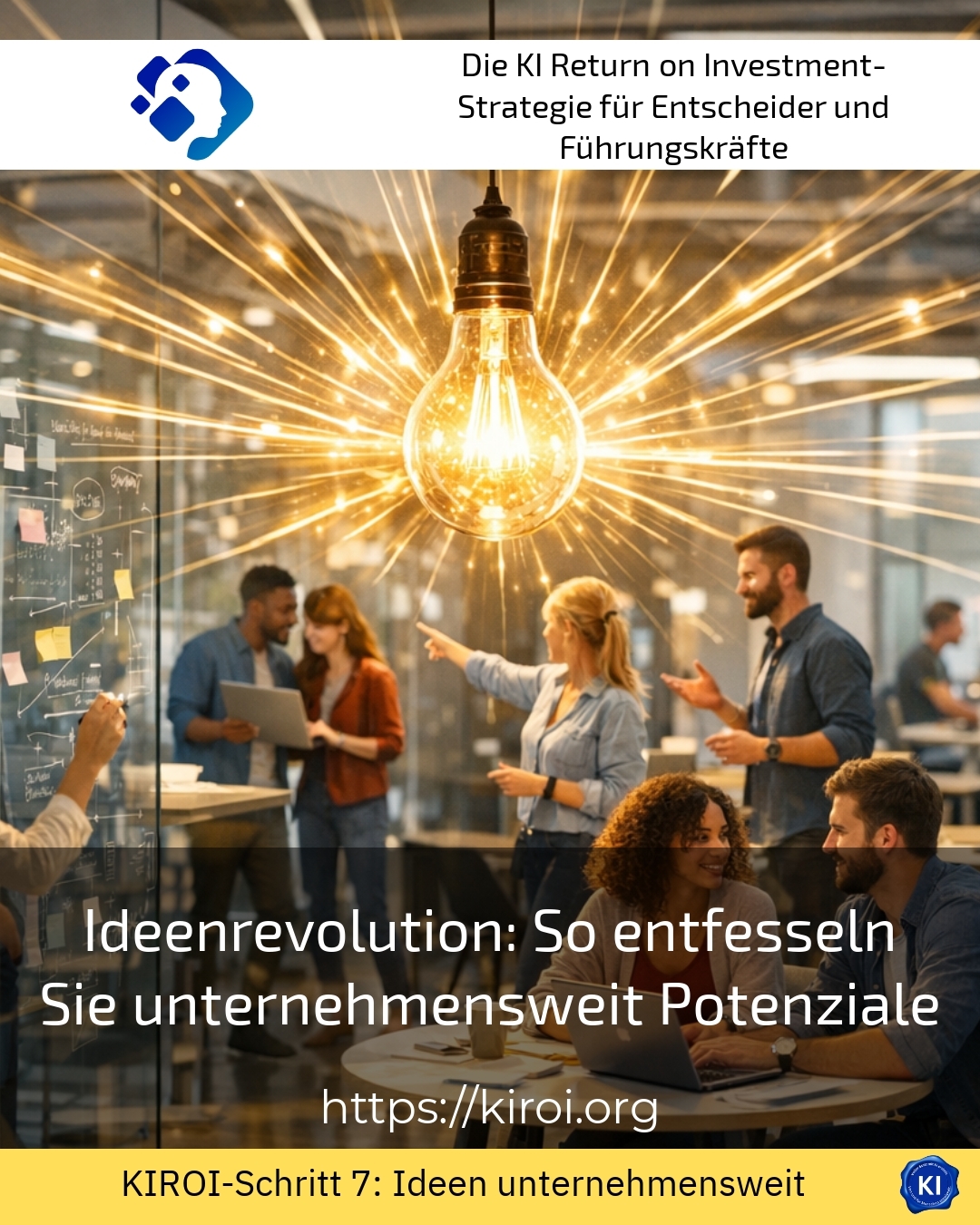
This question concerns executives and decision-makers in all industries, because the answer to it can mean the crucial difference between stagnation and sustainable growth. Idea revolution: This is how you unlock potential across your entire company It begins exactly where traditional thinking ends and a new culture of openness begins. Many organizations systematically underestimate the creative resources that lie dormant within their own ranks. Employees at all levels possess valuable knowledge that often remains untapped. It is precisely these hidden assets that can lay the foundation for transformative change. Transruptions coaching helps companies systematically tap into these potentialities and transform them into concrete results.
The hidden sources of innovation: Why hierarchies often block creative impulses
In many organizations, invisible barriers exist that significantly hinder the free flow of ideas and suggestions. These obstacles are not caused by malicious intent, but rather by entrenched structures and established communication channels. For example, when a service worker in the field identifies a brilliant optimization for customer processes, the direct channel to the business management often lacks. The suggestion often gets lost at middle management levels or simply never gets articulated. Similarly, in production facilities, where machine operators observe inefficiencies daily, their findings could revolutionize processes, but rarely reach the decision-makers.
This phenomenon is particularly evident in healthcare when caregivers develop innovative care delivery concepts. In retail, valuable insights are also emerging at the point of sale, where employees directly capture customer needs. Technology companies regularly lose competitive advantages because developers keep their best ideas to themselves. The fear of rejection or embarrassment paralyzes them and prevents open communication. Transruptive coaching intervenes precisely here and creates safe spaces for the exchange of impulses.
Best practice with a AIROI customer A medium-sized mechanical engineering company with over five hundred employees faced the challenge of significantly increasing its rate of innovation. The management realized that traditional suggestion systems were no longer generating any resonance and many good ideas remained unheard. As part of a AIROI coaching process, an anonymous survey was initially conducted, which revealed surprising findings. More than seventy percent of the employees stated that they had concrete improvement suggestions but never submitted them. The main reasons cited were a lack of appreciation and a lack of feedback on previous suggestions. After introducing a novel exchange format with regular cross-departmental workshops, the situation changed fundamentally. Within six months, thirteen actionable process optimizations were created that demonstrably enabled the organization to realize six-figure savings. However, the most important insight was not financial in nature but concerned the increased motivation and identification of the workforce with the company.
Idea revolution: This is how you unlock potential across your entire organization through systematic networking
The targeted integration of different departments and hierarchical levels forms the foundation of a vibrant innovation culture. When marketing experts talk to technologists, completely new perspectives on familiar challenges often emerge. In accounting, there is insight into cost structures that can provide valuable guidance for product development. In the logistics sector, warehouse workers often have optimization suggestions that managers would never have discovered themselves. Financial service providers benefit enormously when customer advisors can directly share their observations with product managers.
The pharmaceutical industry impressively demonstrates how interdisciplinary teams can accelerate research breakthroughs when scientists from different disciplines work together [1]. Similarly, in the construction industry, architects and tradespeople work together to develop more practical solutions. Educational institutions can benefit from the exchange between teachers and administrative staff because both groups bring different perspectives. Energy providers are increasingly networking their technical teams with customer service to detect patterns of disruption earlier. This creates synergies that seemed unimaginable before.
The automotive industry has recognized that designers and engineers should work together from the very beginning to avoid costly rework [2]. Tourism also thrives on the sharing of experiences between tour guides and the central organization, which leads to the creation of new offerings. Media companies are experimenting with formats where editors and technical staff work together to develop digital products. However, this networking requires conscious design and continuous maintenance.
Tools and methods for creative exchange
Modern organizations use various tools to promote and structure the exchange of ideas. Digital platforms enable asynchronous communication across locations and time zones, which is particularly relevant for internationally operating companies. Regular innovation workshops create safe spaces where even unusual ideas are welcome. Hackathons have established themselves as an effective format for generating and evaluating many approaches in a short time.
In the insurance sector, companies are experimenting with innovation labs that are deliberately located outside the normal structures. Retail companies are running idea competitions where store employees can submit their improvement proposals. Hospitals are establishing interprofessional quality circles where doctors, nurses, and management jointly question processes. The telecommunications industry is increasingly adopting design thinking workshops to better understand customer needs [3]. Even traditional industrial companies are discovering agile methods because they enable faster feedback cycles.
Best practice with a AIROI customer A nationwide grocery retailer wanted to involve its branch managers more in strategic decisions and systematically use their practical knowledge. The company operated more than two hundred locations and had previously relied on centralized control, which often overlooked local specifics. As part of the AIROI mentoring program, a digital forum was established that enabled direct exchange between branches and the headquarters. At the same time, quarterly attendance meetings were established where selected branch managers could present their experiences in person. The response exceeded all expectations, as over four hundred proposals were submitted within the first year. More than sixty of them proved directly actionable, and another ninety were incorporated into longer-term plans. Especially valuable were insights into regional customer preferences that would never have been captured centrally. The company was able to better adapt its product range across many stores, thereby achieving sales increases that were significantly above the industry average.
The role of leadership in the idea revolution: How to unlock the potential of the entire company in a sustainable way
Without the active engagement of the leadership level, any innovation initiative remains a fleeting flame with no lasting effect. Leaders shape the culture of an organization far more through their behavior than through instructions or strategy documents. When a CEO openly admits mistakes, it encourages others to take risks and try new things as well. Conversely, a culture of blame stifles any creative impulse at its very inception, before it can even be expressed.
In the banking sector, many companies are observing a transformation of leadership roles from controllers to facilitators and supporters. Technology companies are increasingly relying on flat hierarchies to shorten decision-making processes and encourage self-initiative. Family businesses face the particular challenge of reconciling tradition and innovation, which requires sensitive moderation. Public administrations are discovering that they too can benefit from a more open culture of error, although this involves significant cultural change.
Chemical companies are increasingly placing innovation responsibility at the board level to ensure the necessary attention is given to the topic. Publishing houses are experimenting with rotating leadership roles in project teams to bring different perspectives to the table. Engineering firms are establishing mentoring programs where experienced employees pass on their knowledge to younger colleagues. Transruptive coaching helps leaders further develop their personal style and create an innovation-friendly atmosphere.
Psychological security as a foundation for creative development
People express their best ideas only when they feel safe and do not have to fear negative consequences. This psychological safety does not arise automatically; it must be consciously cultivated and continuously maintained. Studies show that teams with high psychological safety work significantly more creatively and productively than comparable groups [4]. The path to achieving this requires patience, consistency, and the willingness to critically question old patterns.
In the aviation industry, the systematic analysis of near-accidents has revolutionized safety because employees can report errors without fear. Clinics are increasingly adapting this principle to learn from critical events and improve treatment quality. Software companies are conducting retrospectives where teams openly discuss failures and work together to develop improvements. The mechanical engineering industry is increasingly relying on quality circles where workers can contribute their observations without fearing sanctions.
Best practice with a AIROI customer A medium-sized consulting firm with about eighty employees struggled with high turnover and low willingness to innovate in the project teams. A staff survey revealed that many employees were afraid to make critical comments about projects or clients. In AIROI the process, intensive work was initially done on the communication culture, with the company’s partners being actively involved. Anonymous feedback channels were established and regular retrospectives after each project completion were established, where all involved spoke up. The management team trained in active listening and the constructive handling of critical feedback, which was initially unusual. After about nine months, a further survey showed significantly improved values in perceived openness and trust in leadership. Turnover decreased measurably, while at the same time the innovation activities in the teams increased, which also translated into better customer ratings.
From idea to implementation: structures for sustainable change
The best idea remains ineffective if it is not systematically evaluated, developed, and ultimately implemented. Many organizations fail not because of a lack of creativity, but because of the lack of processes for implementing promising approaches. Clear criteria, transparent decision-making paths, and sufficient resources for implementing innovations are needed. This does not mean that every proposal should be treated as a matter of course; rather, it requires differentiated responsibilities depending on the scope of the issue.
Consumer goods manufacturers have established innovation processes that span from the initial idea to market launch and involve all functions [5]. Logistics service providers use stage-gate models to gradually develop promising projects and regularly review them. Medical technology companies closely link innovation management with regulatory requirements to avoid subsequent approval issues. The construction industry relies on pilot projects to test new concepts on a small scale before they are rolled out.
Energy companies are experimenting with corporate venture approaches to develop disruptive business models outside the core organization. Trading companies are establishing incubators for digital business models that operate consciously separate from the parent organization. The chemical industry is increasingly partnering with startups to bring fresh impulses into established structures. Transruptive coaching supports organizations in developing appropriate structures for their specific situation and successfully implementing them.
My AIROI Analysis
The Idea revolution: This is how you unlock potential across your entire company It is not a one-time campaign, but a continuous cultural change that requires patience and perseverance. In my consulting practice, I regularly observe how organizations underestimate or simply cannot utilize the enormous creative potential of their workforce. The causes are rarely rooted in a lack of will, but mostly in established structures and unconscious behavioral patterns of the leadership level.
Clients often report frustration over having made good proposals that then went unheeded. This pattern destroys any long-term willingness to innovate and leads to a culture of passive adaptation that harms the company. The key lies in the combination of cultural openness and structural support, with both being addressed simultaneously.
Transruptions coaching can help identify the specific blockages in an organization and develop tailored solutions. Experience shows that even small changes can have a significant impact when implemented consistently. It is crucial that the leadership level authentically supports and actively demonstrates the change, as employees quickly recognize whether it is intended seriously. The investment in an open innovation culture is proven to pay off multiple times, not only in the form of new products or processes, but also through higher employee engagement and increased employer attractiveness in a competitive labor market.
Further links from the text above:
[1] Harvard Business Review – Innovation Insights
[2] McKinsey – Innovation Strategy
[3] IDEO – Design Thinking Resources
[4] Google Re:Work – Team Effectiveness
[5] Stage-Gate International – Innovation Process
For more information and if you have any questions, please contact Contact us or read more blog posts on the topic Artificial intelligence here.






 Deutsch
 English (UK)