
Have you ever wondered why some organizations seem to effortlessly come up with innovative solutions, while others, despite having enormous resources, are unable to make any progress at all?
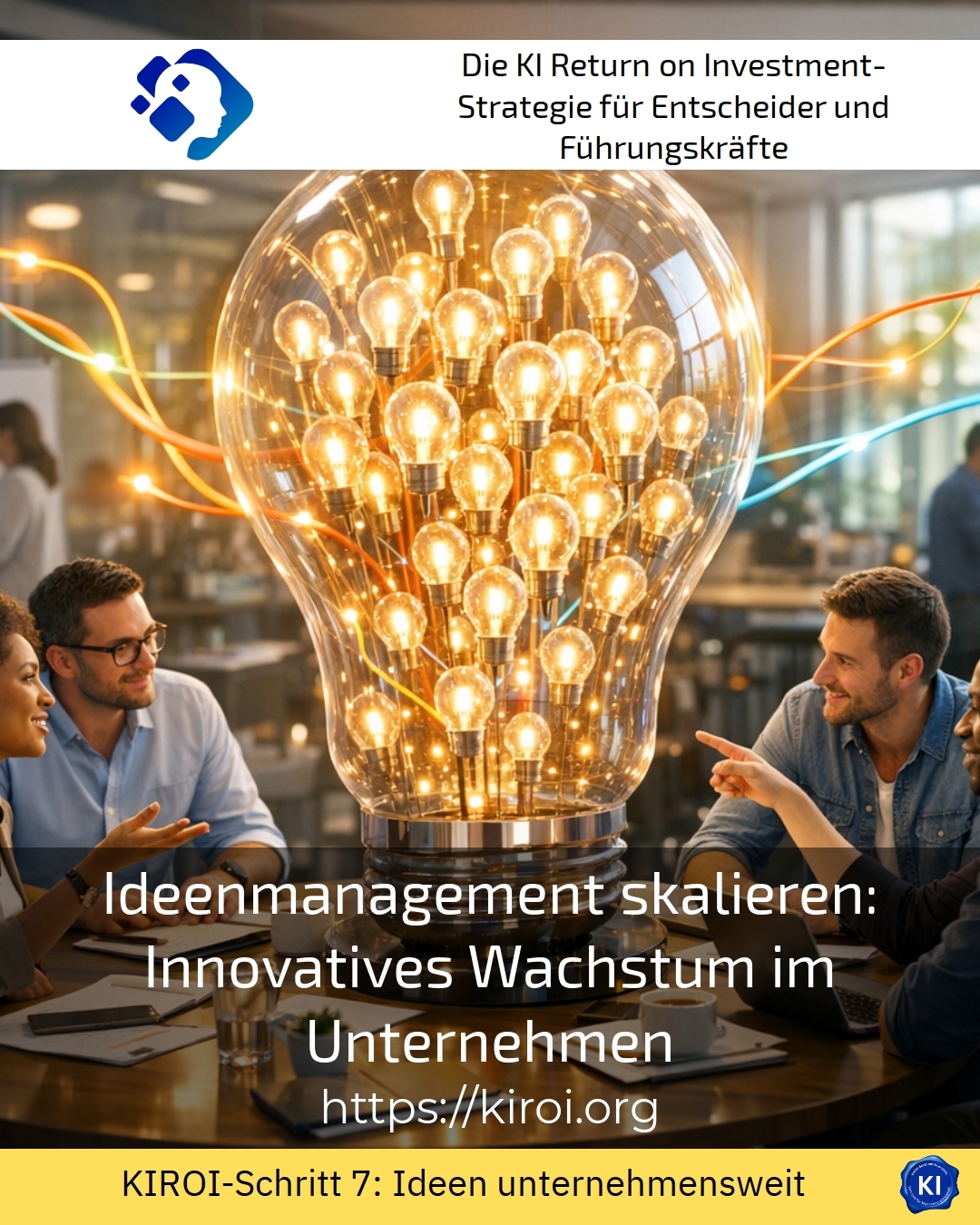
The answer often lies in the systematic ability to harness creative impulses from the entire workforce, to further develop them, and ultimately to translate them into marketable products or more efficient processes. This is exactly where the company excels. Scaling ideas management It is essential because it enables companies to specifically utilize the collective knowledge of their employees. This methodology is gaining immense importance in times of digital transformation. Especially machine engineering companies face the challenge of combining traditional manufacturing processes with modern innovation approaches. The following sections will show you how to successfully manage this transformation process.
Why mechanical engineering places special requirements on innovation processes
The industry is characterized by complex production processes, long development cycles, and high quality requirements. For example, a machine tool manufacturer must maintain tolerances in the micrometer range. At the same time, engineers, assemblers, and sales representatives often work in different locations. This spatial distribution significantly hinders the spontaneous exchange of improvement suggestions. Many valuable insights are thus lost or never reach the decision-makers.
A manufacturer of industrial robots recently reported that its assembly department had been working with an inefficient process for years. Only when a structured process for idea collection was introduced did they realize the potential for optimization. The production time for individual components was thereby reduced by a considerable fifteen percent. A specialist in conveyor technology implemented digital suggestion systems that gained widespread attention in the industry. Additionally, an equipment manufacturer for the food industry created innovative feedback loops between customer service and the development department.
Best practice with a AIROI customer
A medium-sized manufacturer of precision lathes turned to transruptive coaching because the existing innovation structures no longer met the requirements. The management had recognized that valuable improvement suggestions from production regularly fell into oblivion. Together we developed a multi-stage approach that first involved all relevant stakeholders and analyzed their specific needs. The implementation of a digital platform enabled employees to submit and comment on their suggestions across multiple locations. Within eight months, the company recorded a two-hundred percent increase in the number of improvement suggestions submitted. Particularly noteworthy was the quality of the submissions, which significantly improved. Many of the ideas came from long-standing professionals who previously had no suitable opportunity to articulate their experiences. The economic effects were evident in the first quarter after the implementation, with measurable cost savings. The transruptive coaching also accompanied the cultural transformation within the organization.
Scaling idea management through digital tools and clear processes
The successful expansion of innovation processes requires both technological and organizational measures. Cloud-based systems today enable cross-site collaboration in real time. For example, a manufacturer of CNC controllers uses a platform where service technicians can directly document their field experience. This information is automatically incorporated into product development and significantly accelerates the improvement cycles.
Another aspect concerns the evaluation and prioritization of submitted proposals. Without clear criteria, the risk exists that promising approaches will be overlooked. A manufacturer of hydraulic components has therefore introduced a transparent scoring system. Each proposal is evaluated based on its feasibility, cost-effectiveness, and strategic relevance. This creates trust among the submitters and motivates them to contribute further. Additionally, an provider of automation solutions has established regular innovation workshops that bring together cross-functional teams. A specialist in packaging machines uses gamification elements to increase participation in the idea-generation process.
The role of leaders in scaling idea management
Without active support from management, many innovation initiatives remain ineffective. Leaders must act as role models and bring forward suggestions for improvement themselves. A manager at a tool manufacturer reported that his own involvement in the proposal process triggered a significant cultural change. The employees felt encouraged to become active as well. Moreover, the quick feedback on submitted ideas is crucial for motivation.
A manufacturer of industrial gearboxes has defined fixed response times. Within two weeks, each submitter receives an initial feedback on the status of their proposal. This commitment signals appreciation and promotes continued participation in a sustainable way. A manufacturer of injection molding machines also actively involves its department managers in the idea evaluation process. This creates a shared sense of responsibility for innovation topics throughout the entire company.
Best practice with a AIROI customer
An internationally operating manufacturer of special machines for the automotive supply industry sought support in scaling up its innovation processes. The existing structures had grown and exhibited significant inefficiencies because different locations used different systems. The transruptions coaching accompanied the integration of this heterogeneous landscape over a period of twelve months. First, we jointly analyzed the existing processes and identified interfaces with potential for improvement. The introduction of a unified platform for the first time enabled a transparent overview of all ongoing innovation projects. Employees from different countries were now able to work on common topics and learn from each other. The management reported a significantly improved time-to-market for new product features. The ability to share and adapt best practices between the locations proved particularly valuable. The innovation culture changed noticeably, and employee satisfaction regarding development opportunities increased significantly.
Cultural factors as a foundation for sustainable innovation growth
Technology alone is not enough to fully unlock innovation potential. The corporate culture plays a crucial role in the success of such initiatives. Employees must feel safe to express unconventional ideas. A culture of error-taking that encourages experimentation forms the foundation for real innovation. A manufacturer of measuring instruments has therefore explicitly created spaces for creative projects.
The so-called innovation time allows engineers to devote part of their working time to their own projects. Some of the company’s most successful product innovations have thus emerged outside the regular development process. A specialist in drive technology also promotes interdisciplinary exchange through regular innovation days. During these events, various departments present their current challenges and work together to find solutions. An industrial furnace supplier has integrated external partners such as universities and research institutes into its innovation processes.
Scalability of measurability and continuous improvement in idea management
Without appropriate metrics, the success of innovation initiatives is difficult to assess. Companies should therefore define relevant KPIs and regularly review them. The number of submitted proposals is only a first indicator. More important are metrics such as the implementation rate or the economic benefit realized from realized ideas [1]. A manufacturer of pumps and compressors monitors these KPIs on a monthly basis as part of its management reports.
The insights gained are continuously fed back into the further development of the processes. For example, a manufacturer of packaging systems has found that certain departments submit significantly fewer proposals. A more detailed analysis showed that communication about the proposal process needed to be improved there. After targeted measures were taken, participation significantly increased. A similar experience was made by a specialist in surface technology who identified regional differences in innovation activity.
Best practice with a AIROI customer
A long-established manufacturer of textile machinery faced the challenge of modernizing its innovation culture. The structures that had grown over decades proved to be an obstacle to agile development methods. Transruptive coaching was added to accompany a transformation process that addressed both the technical systems and the corporate culture. Together, we developed a concept that preserved the strengths of the existing structures while at the same time introducing new impulses. Implementation took place in several phases, with each step carefully evaluated and adjusted as needed. The employees were actively involved from the outset, which significantly increased acceptance of the changes. After about a year, the company was able to point to impressive results: the number of patentable innovations had doubled, and employee satisfaction reached record highs. The close support provided by transruptive coaching proved to be a crucial success factor for this positive development.
My AIROI Analysis
The systematic expansion of innovation structures represents a strategic necessity for machine engineering companies. The examples presented in this article impressively demonstrate the potential that can be unlocked through targeted measures. It becomes clear that technological solutions and cultural changes must go hand in hand. Companies that rely solely on digital tools without making the necessary organizational adjustments will hardly be able to achieve the desired results.
The combination of clear processes, transparent communication, and active leadership engagement appears particularly promising. The presented best practices illustrate that professional guidance can significantly accelerate the transformation process [2]. Transruptive coaching helps organizations identify their specific challenges and develop customized solutions. Continuous development of innovation structures requires a long-term commitment and the willingness to learn from experience.
For the future of mechanical engineering, the ability to systematically utilize the knowledge and creativity of employees is becoming increasingly important. Companies that invest early in this area gain crucial competitive advantages [3]. Technological possibilities are evolving rapidly and opening up new opportunities for collaboration. Organizations should closely monitor these developments and adapt their strategies accordingly.
Further links from the text above:
[1] VDMA Innovation Management in Mechanical Engineering
[2] Fraunhofer Production Research
[3] McKinsey Insights on the manufacturing industry
For more information and if you have any questions, please contact Contact us or read more blog posts on the topic Artificial intelligence here.








 Deutsch
 English (UK)