
The process of idea management is a crucial component of modern corporate management, as it harnesses the collective intelligence of employees and stakeholders to foster innovation and drive continuous improvement. By systematically stimulating, collecting, evaluating, and implementing ideas, companies can strengthen their competitiveness and achieve long-term growth. In the following article, we will delve into the transformation of a department through targeted idea management.
## Introduction to Ideas Management
Ideas management is the process of systematically capturing, organising, evaluating, and implementing ideas within an organisation. This includes not only encouraging employees to generate ideas but also integrating a structured system to identify and develop the most promising ones. Through active ideas management, companies can harness the creative potential of their employees to develop new solutions and increase organisational efficiency [1][5].
## Process of idea management
###Ideation and Capture
Successful idea management begins with idea generation. Here, employees are encouraged to submit their ideas through various channels, such as suggestion boxes, digital platforms, or brainstorming sessions. The ideas are then collected and documented in a central system to ensure that no valuable ideas are lost [1][9].
### Development of ideas
Selected ideas are further developed, often through cross-functional collaboration, prototyping, and testing to validate concepts. This phase is crucial for assessing the feasibility of ideas and realising their full potential [1][6].
###Appraisal and Selection
The evaluation of ideas is based on feasibility, potential impact, and strategic alignment. This evaluation may include expert opinions, feasibility studies, or market research. Only the most promising ideas will be selected for implementation [1][6].
### Implementation and Feedback
Once an idea has been developed and validated, it is implemented. This includes the allocation of resources, the creation of action plans, and the ongoing monitoring of progress. Feedback to the idea generators and recognition of their efforts are crucial to foster engagement in the idea management process [1][3].
## KIROI Step 6: Transformation through targeted support
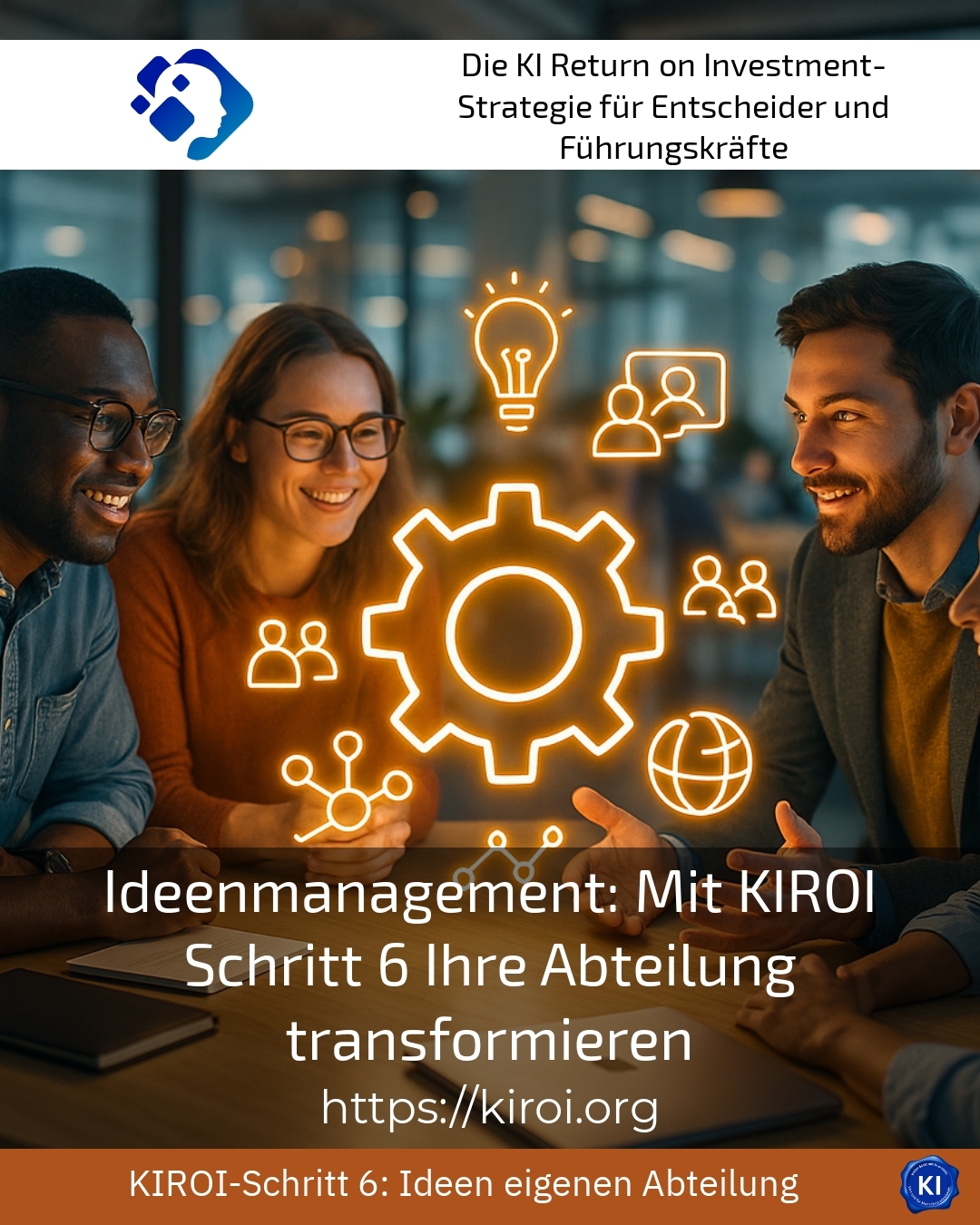
A clearly structured accompanying process, as proposed by the KIROI approach, supports teams in systematically developing ideas and transforming them into actionable projects. This fosters a vibrant innovation culture that becomes anchored in the company long-term. Teams often report greater involvement from all levels and a better understanding of corporate objectives [4].
### Practical Examples
BEST PRACTICE with a customer (name hidden due to NDA contract): The introduction of targeted exchange formats increased transparency around decisions, and staff were more motivated to share ideas. This led to greater involvement from all levels and a better understanding of the company's objectives.
In the manufacturing industry, the introduction of continuous improvement processes (KVP) can help employees actively share ideas and increase transparency regarding decisions. At the same time, this promotes collaboration and engagement within teams.
##
Ideas Management: A Key to Business Growth
Idea management is not just a process for generating ideas but also a key to business growth. It helps companies strengthen their competitiveness, save costs, and make processes more efficient. By mobilising performance reserves and fostering a creative working environment, employees' potential is leveraged to develop sustainable innovations [5].
### Advantages of Idea Management
####Process improvement
Ideas management leads to continuous improvement of internal processes, as it encourages employees to identify problems and develop solutions. This can be supported by continuous improvement processes (CIP), where teams work on improvements [5].
#### Promoting innovation
It fosters innovation by enabling employees to propose and implement new ideas. This can be supported by methods such as brainstorming and hackathons, which enhance creativity and collaboration within teams [9].
#### Staff Motivation
Employee engagement is fostered through recognition and feedback, leading to increased job satisfaction and motivation. This supports the long-term retention of employees within the company [1].
##
Implementation of ideas management in practice
Implementing idea management requires a clear strategy and integration into the corporate culture. Companies should use digital platforms to collect and manage ideas, and regularly provide feedback to the idea originators. This can be supported by targeted coaching programmes that unlock the potential in idea management and help to break down barriers [4].
### Examples from various industries
In the IT industry, idea management is fostered through collaboration between experienced and junior teams. The exchange of know-how and suggestions for improvement enhances projects and ensures a sustainable learning culture.
In the manufacturing industry, targeted idea management supports the involvement of all levels and promotes transparency in decision-making. This leads to greater employee identification with corporate goals.
##
Conclusion: The importance of idea management
It was rephrased into a short paragraph titled „My Analysis“.
My analysis
Ideas management is a crucial factor for business success, as it leverages employees' creative potential to foster innovation and improve processes. Through targeted support and clear structures, ideas management can strengthen competitiveness and support business growth. It is important to motivate employees through transparent processes and regular feedback to promote a vibrant innovation culture.
Further links from the text above:
– [Idea Management: Definition, Process, and Best Practices](https://ideascale.com/de/der-blog/ideen-management/)
– [Ideas Management: Processes](https://www.crowdworx.com/de/ideenmanagement-prozesse/)
– [Idea Management Methods](https://tableofvisions.com/ideenmanagement/methoden/)
For more information and if you have any questions, please contact Contact us or read more blog posts on the topic Artificial intelligence here.











 Deutsch
  English (UK)