
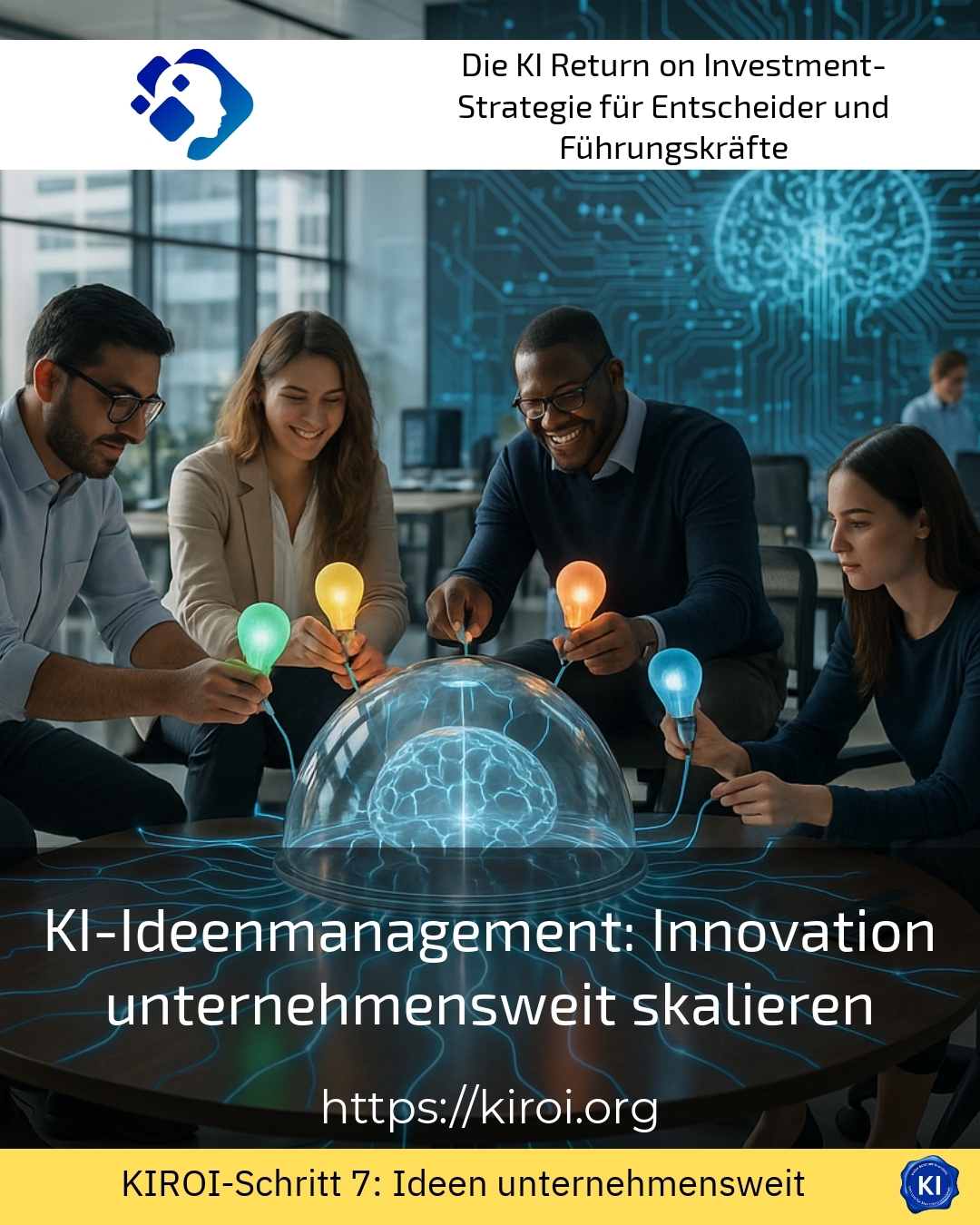
Imagine every single employee in your company could become a driving force for groundbreaking innovation. That AI Ideation Management makes exactly that possible and opens up entirely new dimensions of collective creativity. While many organisations still rely on dusty suggestion schemes, intelligent technology is already revolutionising the way companies tap into and utilise their innovation potential. The question is no longer whether you will shape this transformation, but how quickly you can leverage it for yourselves.
Why traditional innovation processes are reaching their limits
Classic approaches to idea generation often fail due to structural barriers. Employees submit suggestions, and these disappear into bureaucratic processes. Weeks or months go by before any feedback is received. This delay demotivates even the most dedicated individuals. At the same time, there is a lack of systematic methods for evaluation and prioritisation. Leaders repeatedly report similar challenges within their organisations.
Another problem lies in the lack of interconnected ideas. Similar suggestions arise in different departments in parallel. Nobody brings these thoughts together or recognises synergies. Consequently, valuable potential remains untapped, and resources are used inefficiently. Frustration grows on all sides of the company.
What's more, there's a lack of transparency regarding the processing status of submitted ideas. Employees often don't know what's happening with their suggestions. This lack of transparency leads to mistrust in the entire innovation process. As a result, many companies are experiencing a continuous decline in participation rates. The existing creative potential remains largely untapped.
AI Idea Management as a Catalyst for Company-Wide Creativity
Intelligent systems are fundamentally and sustainably transforming the innovation landscape. They analyse submitted proposals in real-time and recognise patterns. Similar ideas are automatically merged and grouped thematically. This allows larger, well-considered concepts to emerge from many small impulses.
Furthermore, these technologies assist in evaluating innovation proposals. They assess market potential and identify possible risks. This provides decision-makers with sound foundations for their prioritisation. The quality of selection processes is thus significantly enhanced.
The ability for proactive idea generation is particularly valuable. Intelligent assistants can provide targeted stimuli and food for thought. They combine information from various sources to create new approaches. This actively accompanies and supports employees in their creative work.
Best practice with a AIROI customer
A medium-sized manufacturing company faced a classic challenge in fostering internal innovation. While their existing suggestion scheme generated an average of forty to fifty submissions per month, the processing time frequently exceeded three months. Frustration among employees had noticeably grown, and participation rates were steadily declining. As part of a transruption support process, an intelligent idea processing system was implemented, automatically categorising incoming suggestions and linking them to existing initiatives. Evaluation now takes place within seven working days instead of several months. Employees also receive automated status updates on the progress of their submissions. The system identifies thematic overlaps and proactively suggests collaborations between different idea generators. Within six months, participation in the innovation process tripled. The quality of submitted suggestions also measurably increased because the system posed targeted questions for clarification. Particularly noteworthy was the formation of several cross-departmental project teams, which would not have come about without the automatic networking.
Practical examples from everyday business life
A logistics company uses intelligent analysis to evaluate optimisation suggestions for supply chains. The system recognises interdependencies between route planning, inventory levels and customer satisfaction [1]. Employees from the fleet department can submit their observations directly. The technology then automatically assesses the potential savings of each individual suggestion.
A financial services provider is focusing on the automated assessment of product ideas. Incoming proposals are matched against market data and regulatory requirements, enabling a quick evaluation of which concepts are feasible. This has significantly shortened the time to market for new services.
In healthcare, an intelligent system supports the development of process improvements. Nurses and doctors submit their observations via a mobile application. The system identifies recurring issues and suggests solutions. Patient care benefits from this continuous improvement process.
Scaling AI idea management in complex organisations
Large companies face particular challenges when implementing innovation. Different departments have varied requirements for innovation processes. Cultural barriers often hinder the open exchange of ideas. Siloed thinking persistently impedes cross-departmental collaboration.
Intelligent systems can specifically address and overcome these barriers. They create a common platform for company-wide idea exchange [2]. Language barriers are bridged by automatic translation functions, enabling international teams to collaborate seamlessly.
However, scaling requires a well-thought-out implementation strategy within the company. Pilot projects in selected areas provide valuable insights for the rollout. Success stories from these pilots convince sceptical stakeholders of the benefits. A gradual expansion minimises risks and maximises acceptance.
Technical and cultural success factors in AI idea management
Technical integration into existing system landscapes is crucial for success. Interfaces to project management tools enable the seamless implementation of ideas. Connections to knowledge bases enrich suggestions with relevant context. An intuitive user interface lowers the inhibition threshold for active participation.
Equally important is the cultural dimension of transformation. Leaders must actively participate in the innovation process as role models. Tolerance for error and a willingness to experiment are essential values for successful implementation. Regular communication about successes strengthens the commitment of all those involved.
Acknowledging idea generators plays a central role in motivation. Intelligent systems can automatically document and recognise contributions. Gamification elements encourage playful competition for the best suggestions. This creates a vibrant innovation culture throughout the entire organisation.
Best practice with a AIROI customer
A globally active trading company with over fifteen thousand employees in twelve countries approached transruption coaching with a complex problem. Despite an established innovation programme, participation rates in most country organisations remained below five percent. Local teams felt neither heard nor valued by central headquarters. Incoming ideas could not be efficiently evaluated due to language barriers. The introduction of an intelligent idea management system with real-time translation fundamentally changed the situation. Employees can now submit suggestions in their native language and receive direct feedback. The system automatically compares incoming ideas with similar concepts from other regions. Successful innovations from individual markets are proactively proposed for other countries. Within one year, the participation rate rose to an average of twenty-two percent. The emergence of eleven cross-border innovation projects was particularly pleasing. Collaboration between country organisations has measurably improved as a result. The company reports a significantly strengthened innovation culture across the entire group.
Opportunities and limitations of intelligent innovation support
The possibilities of these technologies are impressive, but not limitless. Intelligent systems can support human creativity, but not completely replace it. The final decision on the implementation of ideas remains with humans. Empathy and intuition continue to be indispensable qualities in the innovation process.
Data protection and ethical issues require special attention during implementation [3]. The processing of employee ideas must be transparent and traceable. Algorithms should be regularly checked for potential biases. Open communication about how the systems work builds necessary trust.
The quality of the results depends heavily on the data foundation. Incomplete or faulty information leads to suboptimal system recommendations. Continuous maintenance and updating of the knowledge base are therefore indispensable. Humans remain the most important factor for successful innovation processes.
Industry-specific application scenarios in practice
In mechanical engineering, intelligent analysis specifically supports the development of new product features. Service technicians capture customer requirements and problem descriptions directly on-site using mobile devices. The system aggregates this information into actionable development impulses for design. In this way, practical knowledge is systematically incorporated into product development.
Retailers are using technology to optimise the in-store customer experience. Sales staff can easily submit observations and suggestions for improvement via smartphone. The analysis is carried out automatically, differentiated by location and product category. Successful concepts are quickly rolled out to other branches.
Innovative approaches to more sustainable business models are emerging in the energy industry. Employees from power plants, grid operations, and sales contribute different perspectives. The intelligent system recognises connections between these diverse viewpoints. This allows for holistic solutions for the energy transition.
The Path to the Innovative Organisation of the Future
The transformation into an innovation-driven company requires patience and perseverance. Short-term successes should not mask long-term development goals. A sustainable innovation culture emerges through months and years of continuous work. Guidance from experienced partners provides valuable impetus.
Investing in intelligent systems alone does not guarantee success. Technology must be linked with strategy, culture, and skills development. Only a holistic approach leads to sustainable changes in the company. The human element must always be at the centre of all considerations.
Businesses today in AI Ideation Management investing, securing their future competitiveness. They systematically tap into the creative potential of their entire workforce. They react faster to market changes and customer demands than their competitors. The ability for continuous innovation becomes the decisive success factor.
My AIROI Analysis
Following intensive consideration of the potentials and challenges of intelligent innovation support, a nuanced picture emerges for companies of all sizes. The technology undoubtedly offers enormous opportunities for democratising innovation processes and unlocking previously untapped creative resources within organisations. However, it would be misguided to view these systems as a panacea for all challenges in the field of corporate development or to place unrealistic expectations on their capabilities.
From my consultancy practice, I can report that success depends crucially on careful preparation and support. Companies that neglect their cultural foundations often fail despite the most modern technical equipment. The combination of technological excellence and people-centred implementation is the key to success. It has been shown that gradual introductions with intensive communication achieve the best results.
What seems particularly important to me is the realisation that AI Ideation Management It is not a one-off project task. Rather, it is a continuous development process that requires regular adjustments and improvements. The systems learn over time and become increasingly precise in their recommendations. Companies should therefore plan long-term resources for maintenance and further development. The investment is worthwhile, as experience shows that consistently implemented approaches can lead to measurable improvements in innovation speed and employee engagement.
Further links from the text above:
[1] McKinsey – Supply Chain Innovation Insights
[2] Harvard Business Review – Innovation Management
[3] Bitkom – Data Protection and Security
For more information and if you have any questions, please contact Contact us or read more blog posts on the topic Artificial intelligence here.










 Deutsch
  English (UK)