
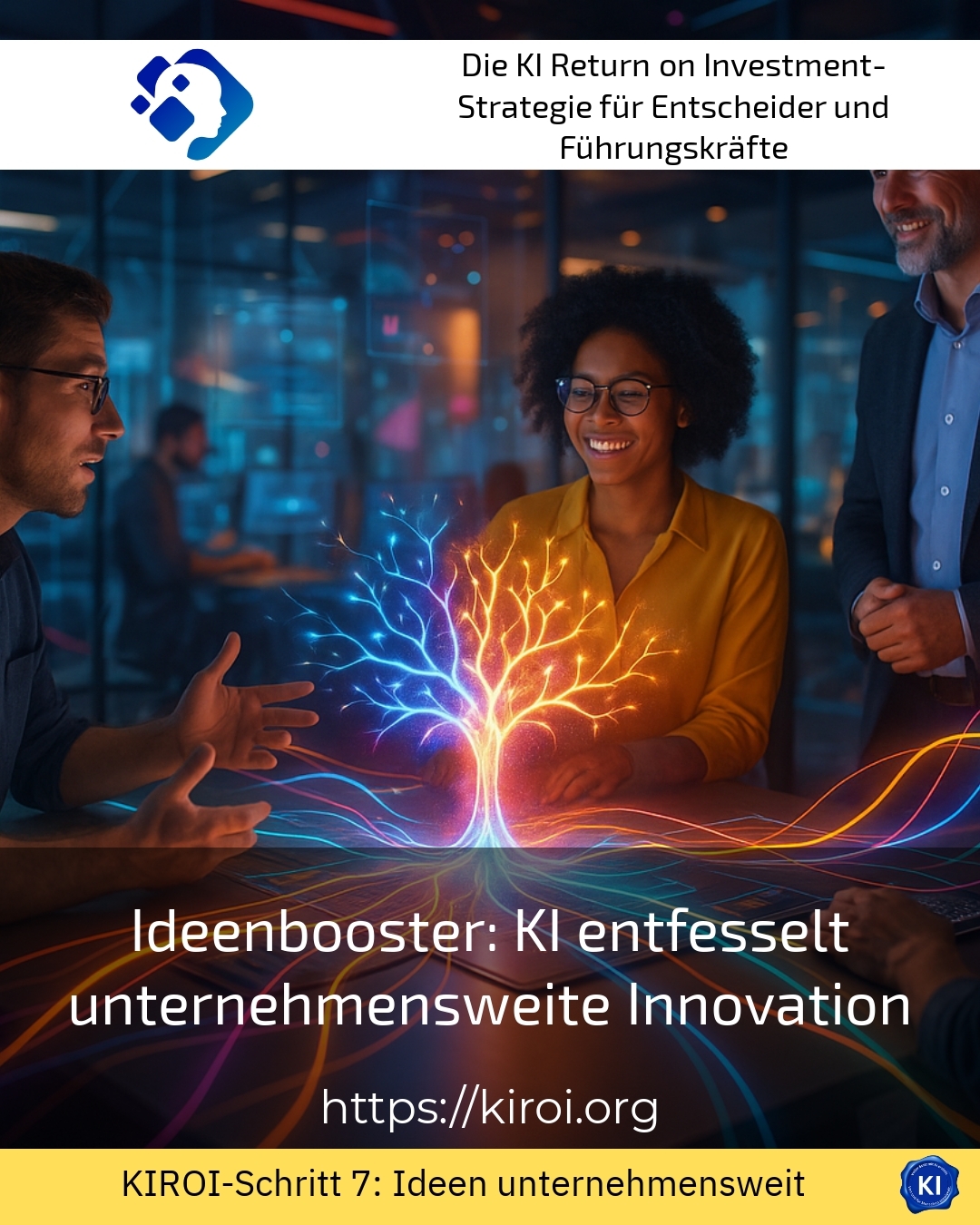
Imagine every employee in your company could suddenly become a driver of innovation. This vision is increasingly becoming a reality because intelligent systems as Idea Booster: AI unleashes enterprise-wide innovation act. The transformation affects not only individual departments, but permeates all areas of modern organisations. What used to be the exclusive preserve of research and development departments is now democratising rapidly. Artificial intelligence makes it possible to activate dormant creative potential. It supports employees in structuring and developing their ideas. The results frequently surprise even sceptical managers.
How intelligent systems are revolutionising creative processes
The combination of human creativity and machine intelligence opens up entirely new horizons. Traditional innovation processes often ran linearly and hierarchically. Ideas had to go through numerous approval loops. Many promising approaches fizzled out on this long path. Today, things look different because AI-powered platforms enable immediate feedback. Employees receive instant assessments regarding the feasibility of their proposals. They get pointers to similar projects or potential synergies. This acceleration motivates and fosters continuous engagement.
For example, a medium-sized mechanical engineering company implemented an AI-powered ideas portal. Within a few months, the number of submitted suggestions for improvement tripled. The quality of the submissions also increased significantly. The system helped employees to flesh out their ideas. It suggested relevant data and market information. As a result, more thought-out and better-reasoned concepts were created.
A logistics company used similar technology for its sustainability programme. Employees from all areas jointly developed concepts for carbon reduction. The AI linked proposals from different departments together. This created holistic approaches to solutions. These would hardly have come about without digital support.
An energy supplier relied on AI-based trend analysis. The system identified emerging customer needs at an early stage. Employees subsequently developed matching service offerings. The time-to-market was reduced significantly. The company gained competitive advantages.
The Idea Booster: AI unleashes company-wide innovation through networking
Silo mentality is one of the biggest barriers to innovation in organisations. Departments frequently work in isolation from one another. Valuable knowledge remains trapped within individual teams. Intelligent systems break down these barriers in an elegant way. They identify thematic overlaps between different projects. They suggest collaborations between employees who do not know each other. This networking function acts as a catalyst for company-wide innovation dynamics.
A pharmaceutical company impressively demonstrated this potential. Researchers from the oncology department were working on a specific active ingredient. At the same time, the neurology team was investigating similar molecular structures. The AI platform identified this parallel. It initiated an exchange between the two groups. The result was a promising interdisciplinary research approach.
An automotive supplier experienced something similar during the electrification of its product range. Engineers from engine manufacturing possessed relevant thermal management expertise. Battery developers were looking for precisely this expertise. The intelligent system brought both teams together. Together they developed innovative cooling concepts.
An insurance group used the networking function for its customer service programme. Employees from sales, claims processing and IT exchanged ideas. The AI moderated and structured this exchange. Customer-oriented process improvements were created. These would have taken years without technical support.
Best practice with a AIROI customer
A long-established family-run manufacturing business turned to transruptions-Coaching because its capacity for innovation had waned. The management had noticed that younger competitors were operating more agilely and bringing new products to market more quickly. There was certainly creative potential amongst the workforce, but there was a lack of structured channels for developing ideas. transruptions’ support began with a comprehensive analysis of the existing innovation processes. This revealed that many employees did indeed have ideas for improvement. However, they did not know how to put them forward. Together, an AI-supported platform was designed to facilitate low-threshold participation. The AIROI methodology helped to select and implement the right technologies. Training managers to make the most of these new opportunities was particularly important. They learnt to treat submitted ideas with respect and to develop them constructively. After six months, the culture of innovation had noticeably changed. Employees reported increased motivation and a greater sense of belonging. The number of improvement suggestions put into practice quadrupled. The company won an industry award for its culture of innovation. The collaboration with transruptions-Coaching continues to this day.
From the suggestion scheme to the continuous innovation ecosystem
Traditional suggestion schemes were long considered sufficient for employee innovation. Employees dropped their ideas into a suggestion box. A committee evaluated these at regular intervals. The best suggestions received small bonuses. This model has had its day now. Modern companies require more dynamic structures. They need systems that permanently generate new impulses. They must recognise trends early and react to them quickly.
A retail group fundamentally transformed its traditional idea management. The old approach generated around two hundred proposals annually. Following the AI-supported realignment, this figure increased tenfold. The quality also improved measurably. The system supported employees in the development process. It provided market data and competitor analyses. As a result, proposals became more well-founded and convincing.
A telecommunications provider went a step further. It linked its innovation portal with external data sources. Social media, patent databases and research publications were integrated. The AI identified relevant developments automatically. It suggested that employees respond to specific trends. This proactive approach significantly accelerated innovation cycles.
A financial services provider used AI for pattern recognition in customer queries. The system identified recurring problems and requests. These insights fed directly into the innovation process. Employees developed targeted solutions for identified needs. Customer satisfaction demonstrably increased [1].
Mastering implementation challenges
The introduction of AI-supported innovation systems rarely runs smoothly. Employees initially often react sceptically to new technologies. They fear monitoring or control of their ideas. These concerns must be taken seriously. Transparent communication builds trust. Clear rules on how to handle submitted proposals also help. Managers play a crucial role as role models.
A chemical company initially experienced massive resistance. The workforce deeply distrusted the new system. Management responded with a comprehensive participation process. Employees were able to help shape the platform. They co-determined functions and data protection rules. This involvement transformed scepticism into engagement.
A construction company struggled with technical hurdles. The existing IT infrastructure was outdated. Nevertheless, a gradual modernisation enabled initial successes. Pilot projects in individual departments demonstrated the potential. The proven benefits also convinced hesitant decision-makers. Company-wide implementation followed with broad support.
A healthcare provider faced regulatory challenges. Strict data protection requirements limited the options. A specialised solution took all legal requirements into account. Nevertheless, it enabled effective innovation processes. The company even developed a competitive advantage. Its data-protection-compliant solution interested other market participants [2].
Idea Booster: AI unleashes company-wide innovation through democratised creativity
Innovation was traditionally reserved for the upper hierarchical levels. Strategic decisions were made by managers and specialists. The knowledge of the grassroots workforce often remained untapped. Intelligent systems are fundamentally changing this pattern. They enable every employee to become an innovation driver. Regardless of position or training, anyone can contribute. This democratisation unleashes enormous creative energies.
A textile manufacturer impressively demonstrated this potential. A production employee developed a groundbreaking idea. The AI platform helped her structure and present it. She was given access to relevant market data. She was able to carry out feasibility calculations. Her proposal ultimately convinced the management. As a result, the company saved considerable production costs.
A catering business experienced something similar during the development of its menu. Front-of-house staff brought customer requests directly into the innovation process. The AI combined these observations with dietary trends. New dishes emerged from this interaction. They hit the target audience's tastes precisely.
A software company opened its development process to all employees. Sales and marketing colleagues were also able to contribute feature ideas. AI automatically evaluated technical feasibility. This resulted in user-centric product improvements. Customer satisfaction improved measurably [3].
Best practice with a AIROI customer
A medium-sized service company approached transruptions-Coaching because it was struggling to attract and retain younger talent. The corporate culture was regarded as somewhat outdated and hierarchical. Innovative minds did not feel sufficiently involved and were moving to rival companies. The transruptions support programme initially focused on a cultural analysis and staff surveys. It became clear that the main criticism centred on a lack of opportunities for participation. Together, a concept was developed that combined AI-supported innovation tools with cultural change processes. The AIROI methodology served as the framework for the technological implementation. Managers received intensive coaching to foster an open culture of innovation. Employees at all levels were involved in workshops and received training. The platform enabled anonymous idea submission, which helped to overcome initial reservations. After one year, staff turnover amongst young talent had halved. Applications from qualified specialists increased because the company was able to position itself as an innovative employer. According to internal surveys, staff satisfaction rose by over twenty per cent. The company continues to work with transruptions-Coaching to consolidate and build on these positive developments.
The human element remains crucial
Despite all technological advancements, humans remain at the centre. AI supports and enhances human creativity. However, it does not replace it. The emotional intelligence and contextual knowledge of employees are irreplaceable. Machines recognise patterns and process data. Humans understand nuances and develop visionary ideas.
A media company illustrates this interaction vividly. The AI analyses usage data and identifies trends. Creative minds develop original content ideas from this. The combination of both strengths leads to success. Neither algorithms nor humans alone achieve comparable results.
A consultancy firm uses AI to prepare for client meetings. The system automatically researches relevant information. However, the actual consulting service is provided by humans. They build trust and develop tailored solutions. The technology creates free space for this valuable work.
An educational provider combines AI-supported learning platforms with personal tutoring. The system identifies knowledge gaps and suggests exercises. Teachers concentrate on individual support and motivation. Both elements complement each other harmoniously. The learning outcomes significantly surpass traditional approaches [4].
My AIROI Analysis
The integration of intelligent systems into organisational innovation processes marks a significant shift. Companies that embrace this development at an early stage put themselves in a favourable position. They create structures that continuously generate new ideas. They harness the full creative potential of their workforce. The AIROI methodology provides a structured framework for successful implementation.
My observations from numerous accompaniment projects show recurring patterns of success. Companies that consider technological and cultural aspects equally achieve better results. The mere introduction of software is not enough. Accompanying measures for organisational development are needed. Managers must act as role models and live out a joy of innovation.
The idea booster: AI unleashes company-wide innovation most effectively when psychological safety prevails. Employees must dare to contribute even unfinished ideas. They must not fear negative consequences. This culture cannot be mandated, but must grow. Accompanying coaching measures effectively support this process.
The coming years will bring further technological advances. Generative AI systems will become even more powerful. Human-machine collaboration will become more commonplace. Companies that lay the foundations now will benefit from these developments. They are developing a culture of innovation that will also master future challenges. transruptions coaching accompanies organisations on this path with expertise and experience.
Further links from the text above:
[1] McKinsey: The economic potential of generative AI
[2] Harvard Business Review: Innovation
[3] Gartner: Artificial Intelligence Insights
[4] World Economic Forum: AI and Robotics
For more information and if you have any questions, please contact Contact us or read more blog posts on the topic Artificial intelligence here.











 Deutsch
 English (UK)