
Have you ever wondered why some organizations seem to glide effortlessly into the digital era while others, despite enormous investments, fail and lose their footing?
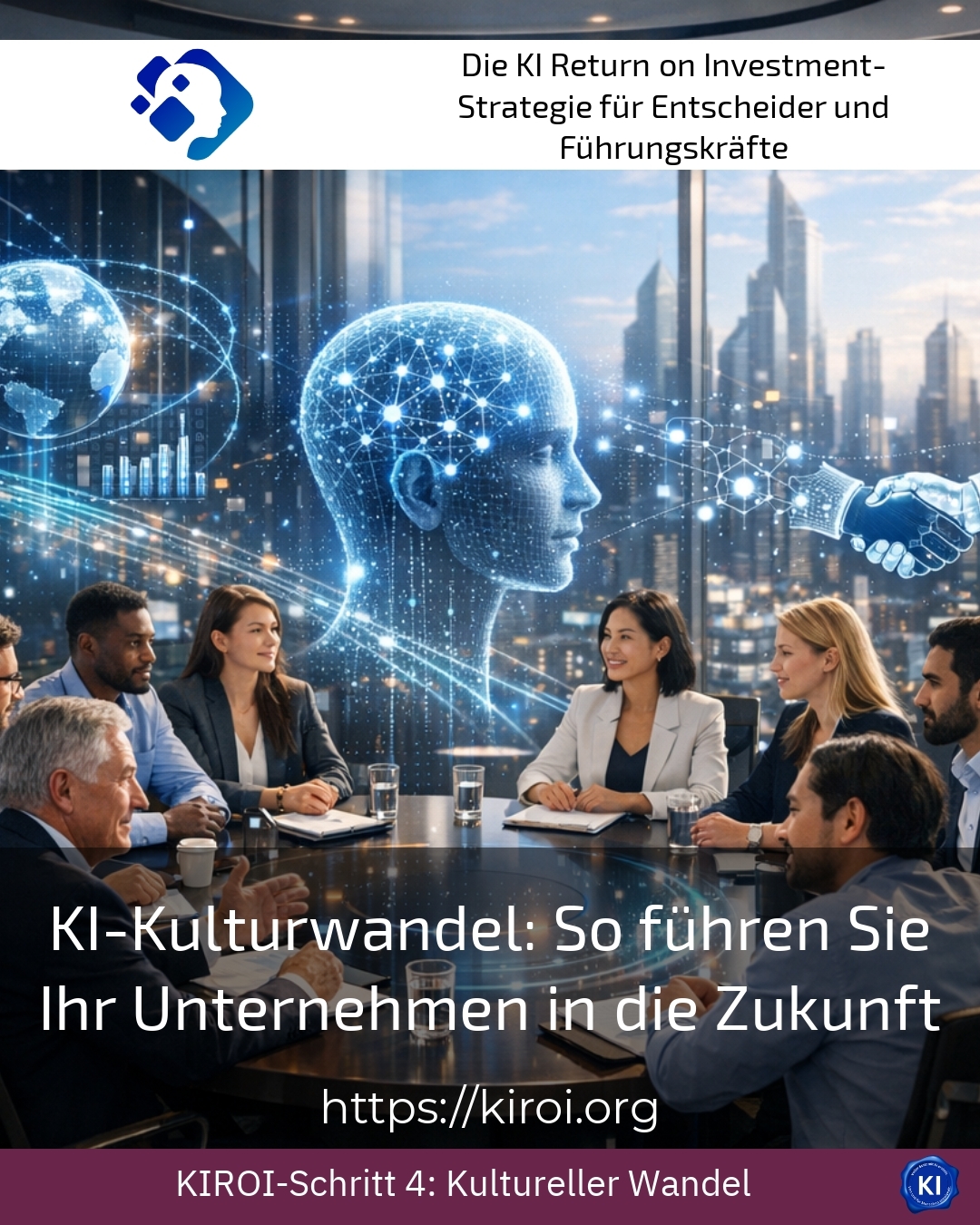
The answer lies not in the technology itself, but rather in a fundamental AI cultural change, This transformation goes far beyond the mere implementation of new systems and profoundly changes the entire structure of an organization. While many executives still believe that buying the latest software is enough to remain future-proof, reality paints a completely different picture: only when people, processes, and mindsets interact harmoniously can intelligent technologies unleash their true potential. This transformation affects every single employee, every department, and ultimately the entire corporate identity, which is why it must be approached with utmost care and strategic foresight.
The invisible barrier: Why technological progress alone is not enough
Management personnel repeatedly report similar experiences and frustrations. They invest considerable sums in state-of-the-art analytical tools. The systems are installed and configured. Yet the hoped-for efficiency gains remain absent. Employees hardly or not at all take advantage of the new opportunities. Instead, they secretly revert to old-fashioned methods.
This situation illustrates a fundamental misunderstanding. Technology is never an end in itself, but always just a tool. However, a tool can only have an effect when people understand how to use it and when they recognize the added value it brings to their daily work. This is exactly where the real challenge lies. AI cultural change an approach that goes far beyond technical training and questions fundamental beliefs and working methods.
For example, a medium-sized manufacturing company had introduced state-of-the-art systems for predictive maintenance. However, the technicians largely ignored the recommendations. They preferred to rely on their experience and intuition. It was only when the management began an intensive dialogue with the teams that the situation changed. The employees were involved in the development process. Their expertise was incorporated into the optimization of the algorithms. Suddenly, they no longer saw the technology as a threat, but as valuable support for their own expertise.
Best practice with a AIROI customer
A family-run machine engineering company with over three hundred employees faced a formidable challenge, as the introduction of intelligent production control threatened to fail against the resistance of the workforce, even though the technical implementation had already been completed. In the context of a transruptive coaching process, a comprehensive inventory of existing fears and concerns was first conducted, revealing that many employees feared being replaced or devalued by the new systems. Through regular workshops in which employees themselves were able to develop use cases, the mood changed fundamentally, and after six months of intensive coaching, over eighty percent of the workforce actively used the new opportunities and even submitted their own improvement suggestions, which the management had not originally expected. The crucial insight of this project was that technological transformation always has an emotional dimension that must not be underestimated and requires professional guidance.
The transformation of AI culture as a leadership task: Developing new competencies
The transformation of an organization always begins at the top. Leaders must lead by example and show that they are willing to learn new things. They cannot expect employees to embrace change if they themselves remain entrenched in old patterns. This role of role models is central to any successful transformation.
In many industries, there are astonishing parallels here. A logistics company noticed that the middle management level had become a bottleneck. The management had understood the vision and wanted to move forward. The operational employees were curious and open to change. But the team leaders blocked progress because they saw their position being threatened. They feared that data-based decisions would undermine their experience.
The solution lay in redefining the leadership role itself. Instead of making decisions, leaders became facilitators. They learned to use intelligent systems as support. At the same time, their human competence remained irreplaceable. They interpreted data in context and made ethical decisions. They motivated teams and resolved conflicts that no machine could handle.
A retail company took a similar path of transformation. The store managers gained access to detailed analyses of customer behavior and purchasing patterns. Initially, they felt monitored and controlled. Through intensive discussions and training, their perspective completely changed. They realized that they now had better tools to understand their customers. Their expertise in personal customer contact was not replaced but rather specifically complemented.
Strategies for sustainable AI cultural change in practice
Successful transformation does not follow a rigid scheme or a set roadmap. Nevertheless, certain patterns can be identified that work in various industries. These patterns can serve as a guide, but they must always be adapted to the specific context.
Communication is at the forefront and forms the foundation of any change. Employees must understand why the change is necessary and what benefits it brings. For example, an insurance company introduced monthly town hall meetings where progress and challenges were openly discussed. The management did not hesitate to discuss setbacks, which strengthened the trust of the workforce and established a culture of openness.
Participation is the second crucial success factor for successful transformation. People support changes that they are allowed to co-create and influence. A pharmaceutical company formed interdisciplinary working groups that identified and prioritized new use cases. The employees brought their expertise and simultaneously recognized the potential of the technology. This combination led to solutions that would never have been developed by external consultants.
The third factor is patience, which is often underestimated. Cultural changes take time and cannot be forced. A financial services provider had originally planned a six-month period. After a year, they had reached only fifty percent of their goal. Instead of imposing pressure, the management accepted this reality and extended the time horizon. The result was more sustainable than that of competitors who moved ahead faster and later struggled with massive resistance.
Overcoming obstacles: Typical stumbling blocks and how to overcome them
Every transformation encounters resistance, which is natural and inevitable. The question is not whether obstacles will arise, but how they are handled. Successful organizations recognize resistance early and address it proactively rather than reactively.
A common obstacle is the fear of job loss that plagues many employees. One automotive supplier addressed this concern with a clear commitment to its workforce. No one would be laid off due to automation. Instead, the company invested heavily in further training and retraining. Production employees were trained to become system administrators. Others took on new roles in quality assurance or process optimization.
Another obstacle is a lack of data literacy, which prevails in many organizations. One healthcare provider found that many employees had difficulty interpreting and properly organizing data visualizations. The solution was a tiered training program that began with the basics and gradually built upon them. Particular emphasis was placed on practical use cases that directly improved the work day.
Best practice with a AIROI customer
A traditional business with several thousand employees in various locations approached us because digital transformation had stalled and the mood within the workforce had become increasingly critical, which was reflected in rising sick leave and increased turnover. As part of the transruptive coaching process, it quickly became clear that middle management had not been sufficiently involved and felt out of touch, leading to active and passive resistance that blocked the entire process. We developed a multi-stage program that initially included intensive individual conversations with the executives, in which their concerns were taken seriously and their expertise was valued, before they became active agents of change. After nine months, the situation had completely changed, and the company not only saw a significantly higher acceptance of the new technologies, but also a measurably improved employee satisfaction, demonstrating that successful transformation must always put people at the center.
The role of external support in cultural change
Many organizations significantly underestimate the complexity of cultural transformation. They believe they can handle the change on their own and do not need external support. In some cases, this actually works, but clients often report that external support has made the crucial difference.
A neutral outsider’s perspective can uncover blind spots and open up new perspectives. Internal executives are often too close to the situation and overlook important dynamics. They have their own history with the company and cannot be completely objective. External advisors bring experience from different industries and contexts, which can provide valuable insights.
For example, an energy provider had undertaken three attempts at transformation. Each attempt failed after a few months due to similar problems and resistance. Only when external experts were involved did the breakthrough finally succeed. They identified systemic patterns that no one within the company had recognized, and developed customized interventions.
Transruptions coaching positions itself clearly as a support for such complex projects. It is not about delivering ready-made solutions or applying patent prescriptions. Instead, we help organizations find their own answers and anchor sustainable changes. We accompany the process, provide inspiration, and help overcome obstacles without taking on the responsibility for the outcome.
Future perspectives: What makes successful organizations different
Organisations that AI cultural change To successfully master certain characteristics and behaviors, they must share certain qualities and approaches. They do not view transformation as a one-time project with a defined end. Instead, they understand change as a continuous process that never ends.
One media company has institutionalized and anchored this approach. There is no longer a digital transformation department that works in isolation. Instead, willingness to change has become part of the corporate culture and permeates all areas. Every employee has time set aside for experimentation and further training. Mistakes are not punished but viewed as learning opportunities and openly discussed.
One construction company takes a different but equally successful approach. The management has established an innovation lab that works closely with all departments. New technologies are initially tested and evaluated in a protected environment. Only when they have proven themselves do they roll them out across the organization. This approach reduces risks while simultaneously building competence and trust.
A textile manufacturer has chosen a particularly interesting approach and has inspired others. The company has established and trained so-called transformation ambassadors in every department. These employees act as the link between strategy and operational day-to-day activities. They translate abstract concepts into concrete actions and simultaneously collect feedback from the grassroots level, which is then fed back into the strategy development process.
My AIROI Analysis
The intensive engagement with numerous transformation projects in a wide variety of industries paints a clear picture that I can draw from my consulting practice. The technological aspect is indeed necessary, but by far not sufficient for sustainable change. Organizations that focus exclusively on the implementation of new systems regularly fail due to the human dimension, which they grossly neglect [1].
The decisive success factor lies in the combination of technology and culture, which cannot be separated from each other. People need to understand why change is necessary and what personal benefits they can derive from it. They need the opportunity to shape the change and contribute their expertise. And they need sufficient time to develop new competencies and leave behind old habits [2].
Leaders play a key role that cannot be delegated. They must lead the way and demonstrate a willingness to change every day, anew. At the same time, they must create spaces where employees can experiment and even fail, without fearing negative consequences. This combination of role modeling and enabling is challenging but essential for successful transformation [3].
My recommendation to all organizations facing this change is clear and unequivocal. Take the time required by your specific context and do not be tempted by external pressure to rush into action. Invest at least as much in people as in technology, preferably even more. And do not hesitate to seek external support if you find that internal resources are not sufficient to handle the complexity. The path to the future is long and challenging, but with the right attitude and support it is absolutely feasible and rewarding.
Further links from the text above:
[1] McKinsey: Culture – The Missing Link in Digital Transformation
[2] Harvard Business Review: Digital Transformation
[3] Forbes: Cultural Transformation – The Key to AI Adoption
For more information and if you have any questions, please contact Contact us or read more blog posts on the topic Artificial intelligence here.









 Deutsch
 English (UK)