
Why do 70 percent of transformation projects fail, even though companies invest millions?
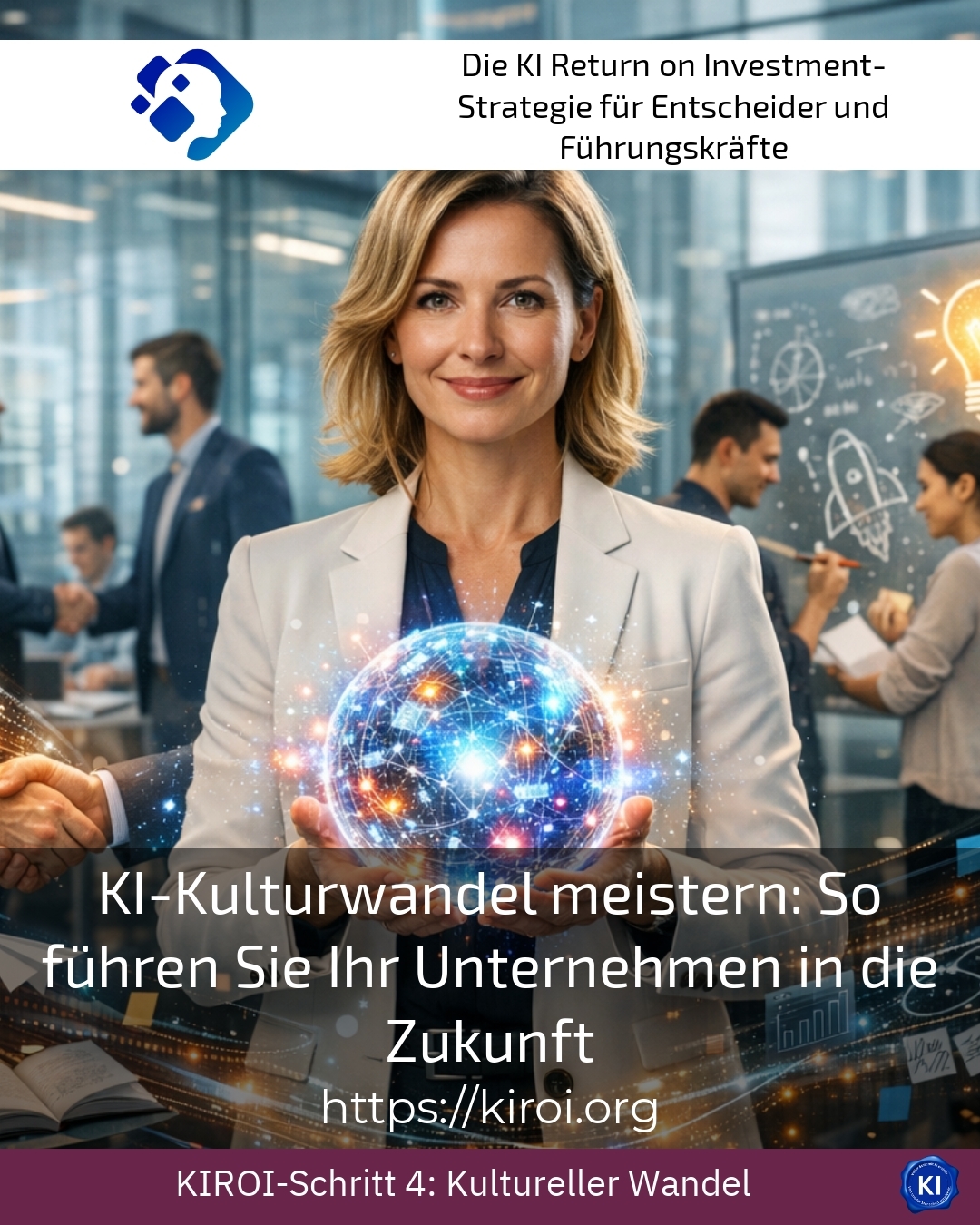
The answer lies not in the technology itself, but in the people who are supposed to use it. The Mastering AI cultural change Today is the central challenge for leaders in all industries. Many organizations underestimate the depth of the change that intelligent systems bring. It’s not just about new software or automated processes. Rather, the entire way teams collaborate, make decisions, and create value is changing. In this article, you’ll learn how to lead your company through this fundamental transformation. You’ll also learn concrete strategies that have already proven their effectiveness in numerous projects.
The invisible barrier: why technology alone isn't enough
Technological innovations often encounter resistance because they fundamentally challenge existing ways of working. In manufacturing companies, for example, production workers often perceive the introduction of predictive maintenance systems as a threat to their expertise. These people have developed a fine sense for machines over many years. They hear when something is not right. Suddenly, an algorithm is supposed to take over this assessment. This creates uncertainty and sometimes even rejection.
We are observing similar dynamics in the financial sector, where experienced analysts are confronted with automated evaluation systems. Similarly, professionals in the healthcare sector are reacting skeptically when diagnostic systems are intended to complement their assessments. These reactions are humanly understandable and absolutely comprehensible. However, they must not lead to blocking necessary developments.
The solution lies in gentle guidance that takes into account both the technical and emotional aspects. Transruptions coaching positions itself precisely here as valuable support for projects of this magnitude. It helps to understand and constructively address resistance.
Best practice with a AIROI customer
A medium-sized mechanical engineering company with about 800 employees faced the challenge of introducing intelligent quality control systems into production. The long-standing quality inspectors initially viewed the project with great skepticism. They feared that their experience would no longer play a role in the future. During the guidance provided by the AIROI Masterplan program, it quickly became clear that these concerns needed to be taken seriously. Together, we developed an approach in which the inspectors became key trainers of the systems. They brought their knowledge and helped refine the algorithms. After six months, most employees reported that they perceived their work as more valuable than before. The error rate in production fell by 34 percent. At the same time, employee satisfaction in the department increased measurably. This example impressively demonstrates how important a culturally sensitive approach is in such transformations.
Mastering AI cultural change through new leadership competencies
Executives face special challenges in times of technological disruption. They must not only develop strategies but also provide guidance. In retail, for example, store managers are experiencing massive changes due to automated warehouse systems and personalized customer interactions. They must motivate teams that are wondering what role they will play in the future.
In the logistics industry, dispatchers face similar questions. When route planning systems take on decision-making responsibilities, their job profile fundamentally changes. Similarly, in sales, requirements change as lead scoring systems prioritize tasks. These developments require a new understanding of leadership [1].
Successful leaders today see themselves as facilitators and companions. They create spaces for experimentation and allow for mistakes. They communicate transparently about changes and their effects. At the same time, they remain authentic and admit their own uncertainties. This exact attitude creates trust in turbulent times.
In banking, for example, the introduction of automated credit decision systems is more successful when executives openly discuss the limits of technology. They explain why human judgment remains indispensable. This leads to hybrid models that combine the best of both worlds.
Mastering Communication as the Key to AI Cultural Change
The way changes are communicated determines their success. In the insurance industry, we have often seen how unfortunate communication has jeopardized projects. When employees of automated claims processing systems learn about it, fears immediately arise. These fears do not disappear on their own.
A constructive communication strategy begins with an honest assessment of the current situation. What is actually changing? Which activities are being eliminated? What new tasks are emerging? In the pharmaceutical industry, for example, intelligent documentation systems mean that approval experts spend less time on routine tasks. Instead, they can focus on complex evaluation tasks. This perspective must be communicated clearly.
In the energy sector, clients often report positive experiences when change processes are designed in a participatory way. Employees in network companies are involved early when intelligent control systems are introduced. They bring valuable practical knowledge and actively participate in the change process.
Best practice with a AIROI customer
An international trading company focused on technical products wanted to complement its customer service processes with intelligent chatbots. The service staff initially reacted negatively to this announcement. Many of them had worked for the company for years and strongly identified with their role. As part of the AIROI master plan, we developed a communication strategy together with the management that emphasized dialogue. Regular discussion rounds were established where employees could express their concerns. At the same time, they gained insights into the technical capabilities and limitations of the systems. After a few weeks, the service staff began to contribute their own suggestions. They identified standard requests that could actually be automated. This gave them time for complex consultation sessions, which they found fulfilling. Customer satisfaction increased by 18 percent, while employee turnover in the service sector significantly decreased.
Structures create the foundation for sustainable transformation
Cultural change requires structures that support and perpetuate it. In the automotive sector, this is particularly evident. The introduction of intelligent production systems requires new roles and responsibilities. Positions such as data stewards or algorithm auditors are emerging, which were unthinkable just a few years ago.
In the chemical industry, we are observing similar developments. Process engineers are increasingly working with predictive models. They need to understand how these models work in order to properly interpret their results. This requires new training offerings and career paths [2].
In the media industry, structures are also changing fundamentally. Editorial departments are integrating automated text generation for standard reports. Journalists are focusing on investigative and analytical work. This division of labor must be organized and culturally accepted.
Transruptions coaching helps organizations design such structural adjustments. It provides impetus for the development of new organizational models and accompanies their implementation. In all considerations, the human being is always at the center.
Learning organizations develop
The Mastering AI cultural change This can only be achieved if companies become learning organizations. In the telecommunications sector, for example, technical solutions become outdated quickly. Employees must be prepared to continuously learn new things. This requires a culture that values and enables learning.
In the food industry, we see how important this learning culture is. Quality managers need to understand how sensor-based testing systems work. Production workers learn to handle data analysis. These developments require time and resources.
Successful companies invest in a variety of learning formats. They combine traditional training with peer learning and experimental phases. In the textile industry, for example, some companies have established so-called innovation labs. There, employees can explore new technologies in a protected environment.
Similar learning spaces are emerging in the construction industry. Project managers are experimenting with building information modeling systems before deploying them in real projects. This gradual approach reduces fears and promotes acceptance.
Best practice with a AIROI customer
A service company in the field of building management faced the task of introducing intelligent control systems for building technology. The on-site technicians had decades of experience with traditional systems. The transition to data-driven solutions presented a major hurdle for many. In the AIROI-master plan, we developed a tiered qualification concept that built on the individual prior knowledge. Each technician received a personal learning path. Experienced colleagues became mentors for younger employees. At the same time, younger team members learned from the practical experience of the older generation. This mutual appreciation positively changed the team climate. After nine months, all the technicians mastered the basic functions of the new systems. The error rate in system support decreased significantly, while at the same time the innovation readiness within the entire team increased.
Do not forget the ethical dimensions
Every technological transformation raises ethical questions. In human resources, for example, discussions are emerging about automated applicant screening. How can we ensure that systems do not discriminate? In the credit industry, similar questions arise regarding automated credit scoring [3].
In the security industry, ethical aspects are particularly intensively discussed. Video analysis systems can detect and evaluate behavior. Where do the limits of legitimate surveillance lie? These questions must be openly discussed within the company.
Ethical considerations also play a role in agriculture. Precision agriculture systems collect detailed data about soils and plants. Who owns this data? How is it protected? Farmers are increasingly addressing these questions.
A conscious approach to ethical dimensions strengthens the trust of all involved parties. It demonstrates that technological progress is managed responsibly. This contributes significantly to the successful implementation of projects. Mastering AI cultural change Bye.
My AIROI Analysis
The experience of accompanying numerous transformation projects in a wide variety of industries has yielded key insights. The technological aspect is important, but it is not decisive. What is crucial is the cultural dimension, which is underestimated in many projects. People react emotionally to changes, and these emotions deserve attention and respect.
Successful transformations are characterized by a combination of various factors. Leaders communicate transparently and authentically about changes. They involve employees early on and take their concerns seriously. Structures are created that enable and promote continuous learning. Ethical issues are openly discussed rather than suppressed.
At the same time, experience shows that there are no one-size-fits-all solutions. Every organization is unique with its history, culture, and people. What works in a manufacturing company cannot simply be applied to a financial services provider. The support must be tailored to the individual situation and context.
The AIROI-Masterplan provides a proven framework for this individual support. It takes into account both strategic and operational aspects. It integrates technical requirements with cultural development goals. Above all, it puts people at the center of all considerations.
Companies that adopt this holistic approach report more sustainable results. The adoption of new technologies increases because employees recognize their benefits. Productivity improves because people work motivated and engaged. Innovation capability grows because an open-minded culture is created.
Further links from the text above:
[1] Harvard Business Review – Leadership in Digital Transformation
[2] McKinsey – People and Organisational Performance
[3] European Parliament – Artificial Intelligence and Ethics
For more information and if you have any questions, please contact Contact us or read more blog posts on the topic Artificial intelligence here.







 Deutsch
 English (UK)