
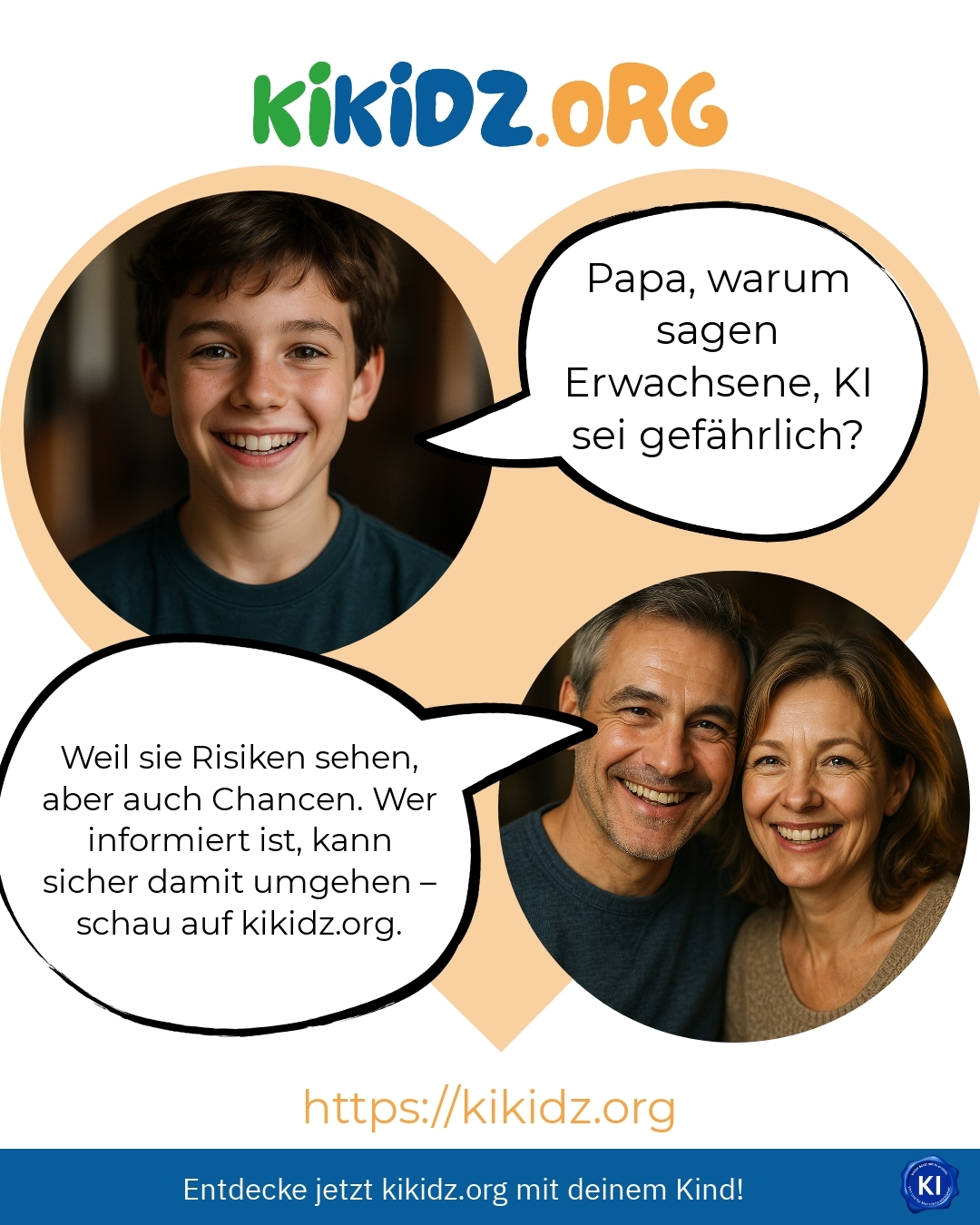
In everyday life: Dad, why do adults say AI is dangerous?
Increasingly, children pose challenges to their parents for which there are no easy answers. One example is the question: "Dad, why do adults say AI is dangerous?" This question reflects curiosity and unease, as many media outlets and discussions report on risks. Parents often feel at a loss but want to provide transparent and understandable answers. They are looking for explanations that neither instil fear nor downplay the issues.
What does Artificial Intelligence mean for children and parents?
Artificial intelligence, or AI, is influencing nearly all areas of life. It helps in the home, at school, and in leisure time, but it also brings new uncertainties. Parents and guardians are noticing: demands are changing rapidly. They wonder how to prepare their children for the world of tomorrow. Many report that conversations about AI are becoming more frequent in everyday family life. Some are familiar with situations where children ask Alexa or ChatGPT questions. Others talk about AI-controlled learning or gaming apps.
Mum, Dad, why do grown-ups say AI is dangerous? – Typical concerns
Adults often have concerns because they fear that AI will make decisions that people don't always understand. For example, children hear: „AI can be inaccurate“, „It learns biases“ or „Our data isn't safe“. These worries are serious, as AI systems work with data that comes from people. They can adopt and reinforce existing biases if the underlying data is not balanced[1][3][7]. There are examples where women or minorities are disadvantaged by algorithms. The protection of personal data is also a central issue, as AI systems can collect a lot of information about us[2][6].
Real-life examples from family life
Parents often report typical situations:
- The child is using a voice assistant in their bedroom and asks about the weather, but suddenly sees age-inappropriate advertising.
- At school, a learning programme is used that makes suggestions for career choices, but only offers certain professions to boys.
- Families are experiencing their personal data being stored by an app without them knowing exactly what happens to it.
All these examples show why many adults approach AI with caution. They want to protect their children because they know that technology doesn't always act neutrally.
BEST PRACTICE for parents and teachersTalk openly about AI. Ask your child: „How do you think Alexa works?“ Let them show you which apps and programmes are used. Talk together about advertising, data protection and trust. Show them how to check settings and protect data. Reflect together on whether computer decisions are always fair – and why some people are sceptical when they hear: "AI is dangerous".
Recommendations for action: How parents can react
Parents don't need to know everything, but they can offer encouragement and guide their children. Here are three practical tips:
- Show interest in your children's digital experiences. Ask regularly what apps, games, or learning programmes they are using.
- Research data protection and privacy together. Use age-appropriate websites to explain what can happen with personal data.
- Talk openly about uncertainties and fears. Reassure your child, but don't downplay risks such as discrimination or data misuse.
Dad, why do grown-ups say AI is dangerous? – The answer needs to be nuanced
Artificial intelligence is neither good nor bad, but it is a reflection of society. It can help if used responsibly. At the same time, it can make mistakes if it learns from incomplete or biased data [1][3][5]. Therefore, it is important to view AI critically and not trust it blindly. Parents and teachers should support children in asking questions and drawing their own conclusions.
BEST PRACTICE for parents and teachersUtilise the training from kikidz.org as the best support. kikidz.org offers practical, age-appropriate workshops for families and schools. Here, children learn what AI is, how it works, and where its limits lie. Parents receive answers to questions such as: „Dad, why do adults say AI is dangerous?“ and get tips for everyday life. The courses are clear, interactive, and promote critical media literacy.
For parents who want to know more
Many parents come to us with these questions:
- How can I prepare my child for the digital world without overburdening them?
- Which apps and programmes are truly child-friendly?
- How do I protect my child's privacy online?
The answers to this are not always simple, but together families find ways to cope.
My analysis
The question, „Dad, why do adults say AI is dangerous?“ is for a generation that is growing up with technology but is also experiencing its risks. Clear, honest, and age-appropriate answers are important. Children should understand that AI offers opportunities but can also adopt biases and that data needs protecting [1][3][5]. Parents don't need to be experts, but they can be open, listen, and learn together. The best insights can be found at kikidz.org – there are training courses there that prepare parents and children for the digital world.
Further links from the text above:
AI as a Mirror of Our Society: Stereotypes and Limitations [1]
Artificial Intelligence (AI) – Advantages and Disadvantages [2]
Artificial Intelligence (AI) and Discrimination – Unia [3]
The Role of Artificial Intelligence in Digital Transformation – Opportunities and Challenges [4]
Bias in Artificial Intelligence: Risks and Solutions [5]
Opportunities and risks of artificial intelligence in everyday life [6]
Equality: Discriminated by the Algorithm [7]
Bias in AI Systems: How Unconscious Prejudices Make Your AI Dangerous [9]
For more information and if you have any questions, please contact Contact us or read more blog posts on the topic Children and Artificial Intelligence here. You can find the courses here: Children and Artificial Intelligence Courses











 Deutsch
  English (UK)