
Will your teams still be competitive in a few years, or is the ability to keep up with the digital transformation in danger of being lost?
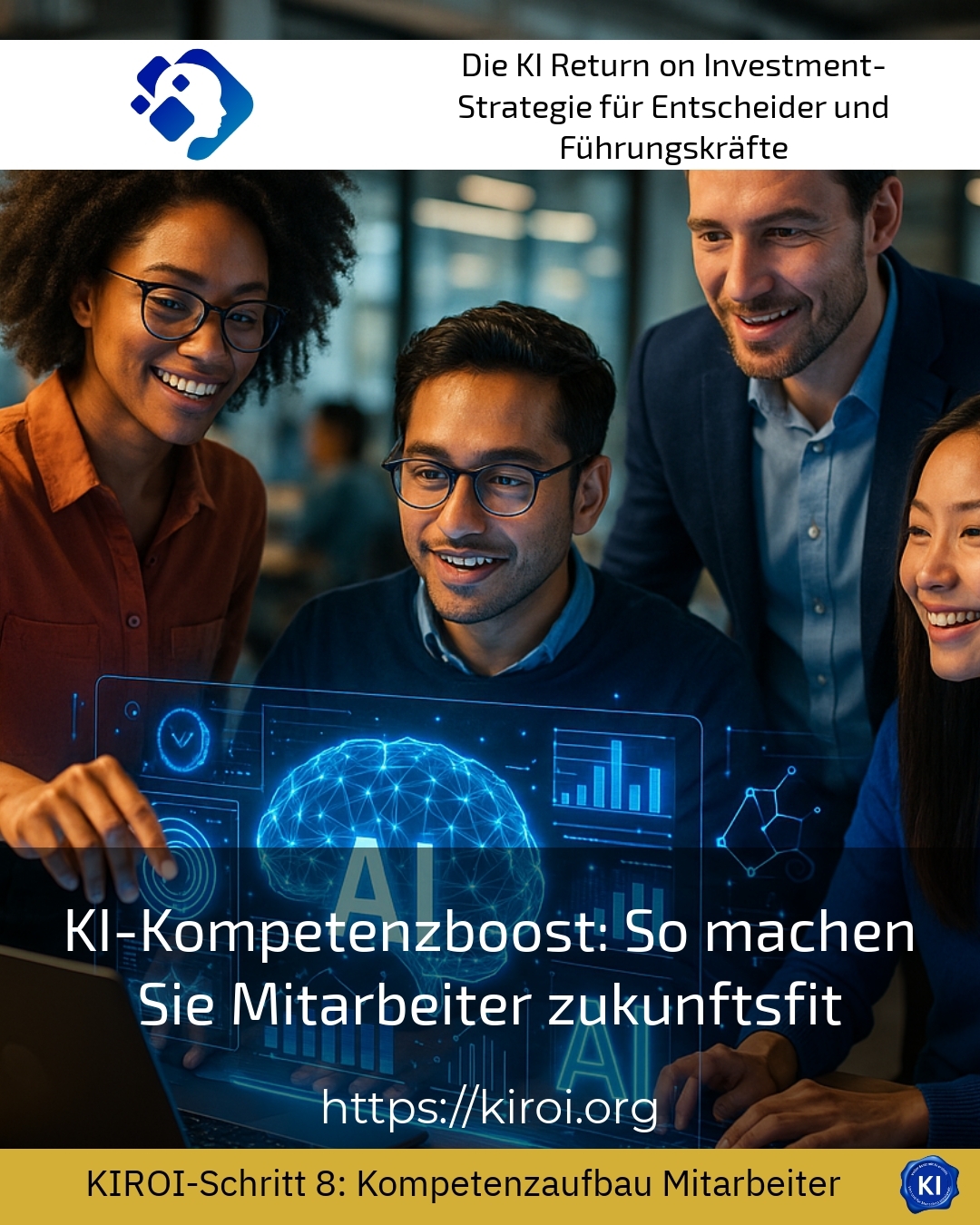
This question currently concerns executives and human resources managers in almost all industries, because technological development is advancing at a speed that poses significant challenges for many organizations. AI Skills Boost It is no longer an optional add-on program; it has become a strategic necessity for companies that want to secure their market position in the long term. While some organizations are already actively working to make their workforce future-proof, others remain in a wait-and-see attitude that could prove costly in the medium term. The good news is that there are indeed effective approaches that companies can use to systematically prepare their employees for the demands of an increasingly intelligent work environment.
Why the AI competence boost becomes the core task of the company
The integration of intelligent technologies into operational processes is fundamentally changing the way people work and the way value is created. In the insurance industry, intelligent systems are already automating claims processing today. Banks are relying on algorithmic decision support in lending decisions. Industrial companies are using predictive maintenance systems for their production facilities. These developments illustrate that virtually no industry remains untouched. At the same time, new job profiles are emerging that require in-depth knowledge of how to use data-driven tools.
Management often reports that their teams initially react uncertainly to technological changes. This reaction is understandable and should be taken seriously. Transruptive coaching can provide valuable insights here, because it helps people understand change not as a threat but as an opportunity for shaping the future. Structured competence development helps reduce fears and develop the ability to act.
Best practice with a AIROI customer
A medium-sized logistics company faced the challenge of preparing its dispatchers for the use of a new route optimization software. The experienced employees had decades of expertise, but had little experience with data-based planning tools. The management decided on an accompanying approach that combined technical training with personal coaching. First, all participants received an introduction to the basic functioning of algorithmic systems. Subsequently, small groups worked together on real planning scenarios, with experienced colleagues sharing their practical knowledge. After about four months, a remarkable change in the attitude of the workforce was evident. The dispatchers reported that they perceived the new technology as helpful support. Their expertise remained in demand because complex decisions required human judgment. The combination of systematic qualification and supportive guidance had enabled sustainable development of competencies.
Strategic approaches for a sustainable AI competence boost
Successful employee development requires more than just one-off training sessions. Rather, it requires a holistic approach that combines different learning formats. It has been proven that it is first necessary to conduct an inventory of existing competencies. On this basis, individual development paths can be designed. A mechanical engineering company could, for example, gradually introduce its designers to generative design tools. Retail companies benefit from having sales teams understand the basics of data analysis. Healthcare institutions need staff that can competently use diagnostic support systems.
The topics that executives come to us with are diverse. Some seek guidance to prioritize meaningful changes. Others want support in communicating the changes. Still others need guidance in selecting suitable training formats. Transruptions Coaching positions itself as a partner that accompanies organizations through complex transformation projects. The focus is on empowering people and unlocking potential.
Practice-oriented learning formats for different skill levels
Different roles require different approaches to training, which is why a differentiated approach is recommended. For executives, compact workshops that highlight strategic implications are suitable. Specialist departments often benefit from application-based training with concrete case studies. Technical teams require in-depth training on implementation aspects [1]. An energy provider could strengthen its customer service through training on intelligent chatbot systems. Pharmaceutical companies qualify research teams for handling literature analysis tools. Media companies train editorial staff in the responsible use of text generation systems.
Formats that link theoretical knowledge with practical application are particularly effective. So-called sandbox environments allow for risk-free experimentation. Mentoring programs promote the transfer of knowledge between experienced and less experienced colleagues. Regular reflection rounds help to anchor what has been learned [2].
Cultural prerequisites for successful competence development
Technical training alone is not enough to make an organization future-proof. Rather, it requires a corporate culture that promotes learning and understands mistakes as opportunities for development. This insight may sound self-evident at first, but often qualification initiatives fail due to unspoken cultural barriers. In some organizations, admitting knowledge gaps is considered a weakness. Elsewhere, there simply isn’t the time for continuous training. Others struggle with a pronounced silo mentality that hinders cross-departmental learning.
One automotive supplier reported initial resistance to new quality control systems. A telecommunications provider experienced skepticism towards automated sales recommendations. A retail company faced reservations regarding data-driven personnel planning. In all these cases, it was evident that open communication and genuine participation from those involved were crucial success factors [3].
Best practice with a AIROI customer
A supranational tax advisory firm wanted to qualify its employees for the use of intelligent document analysis. The management of the law firm recognized early on that purely technical training would not be sufficient. Instead, it initiated a comprehensive cultural change process that involved all levels of the hierarchy. Regular dialogue formats enabled the open discussion of concerns and the search for solutions together. The partners took the lead with a good example and participated themselves in basic training courses. This role of role model signaled to the entire workforce that learning was understood as an inherent part of professional development. Additionally, the firm established so-called learning sponsorships, in which technically-savvy colleagues individually supported less experienced team members. After about eight months, the attitude towards technological innovations had noticeably changed. The employees showed curiosity instead of rejection and brought forward their own suggestions for improvement.
The AI skills boost as a continuous process
Competency development in the field of intelligent technologies is not a one-time project with a defined endpoint. Rather, it is an ongoing process that requires regular adjustments. Technology is advancing rapidly, so acquired knowledge must be continuously updated. A financial services provider updates its training content quarterly to meet regulatory requirements. A chemical company continuously adds new application examples from research. A construction company gradually integrates new planning tools into its training program.
This dynamic requires agile learning structures that can flexibly adapt to changing requirements [4]. Rigid curricula often prove to be ineffective. Modular offerings offer more flexibility. Self-directed learning is gaining in importance. At the same time, personal interaction remains important, because complex competencies can be developed better in dialogue.
Measurable success through systematic competence management
The investment in the qualification of the workforce should yield tangible results, which is why systematic monitoring is recommended. This is not about controlling employees, but about making development progress visible. Appropriate metrics can include, for example, the usage intensity of new tools. The number of independently implemented improvement suggestions can also provide clues. Furthermore, it is possible to assess how satisfied teams are with their technological equipment [5].
A tourism company measures the success of its training programs based on booking rates on digital channels. A machine manufacturer considers the lead times of constructive changes. A healthcare provider assesses the acceptance of digital patient records among staff. These examples illustrate that success measurement should always be context-specific.
My AIROI Analysis
The systematic training of employees in the use of intelligent technologies represents one of the most pressing leadership challenges of our time. Organizations that recognize this need for action and take proactive steps gain a sustainable competitive advantage. It is repeatedly shown that technical training alone is not enough. Rather, a holistic approach is needed that equally considers cultural, structural, and individual aspects. The examples described in this article illustrate that successful qualification initiatives rest on several pillars.
First, a clear strategic orientation is required that defines which competencies are needed in what scope. Second, appropriate learning formats are needed that take into account different roles and prior knowledge. Third, cultural prerequisites must be created that enable and promote learning. Fourth, continuous monitoring is recommended that makes development progress visible and enables adjustments. Transruptive coaching can be supportive in all these aspects and accompany organizations through complex transformation processes. Experience shows that companies are particularly successful when they involve their workforce early and co-create change. Technological change offers enormous potential for value creation and work facilitation, provided that people are empowered to actively participate in its design.
Further links from the text above:
[1] Bitkom – Information on Artificial Intelligence and Further Education
[2] Federal Ministry of Economy – Dossier on intelligent technologies
[3] Haufe – HR management and competence development
[4] McKinsey – Studies on digital transformation
[5] ifo Institute – Research on the digitalization of the working world
For more information and if you have any questions, please contact Contact us or read more blog posts on the topic Artificial intelligence here.






 Deutsch
 English (UK)