
„`html
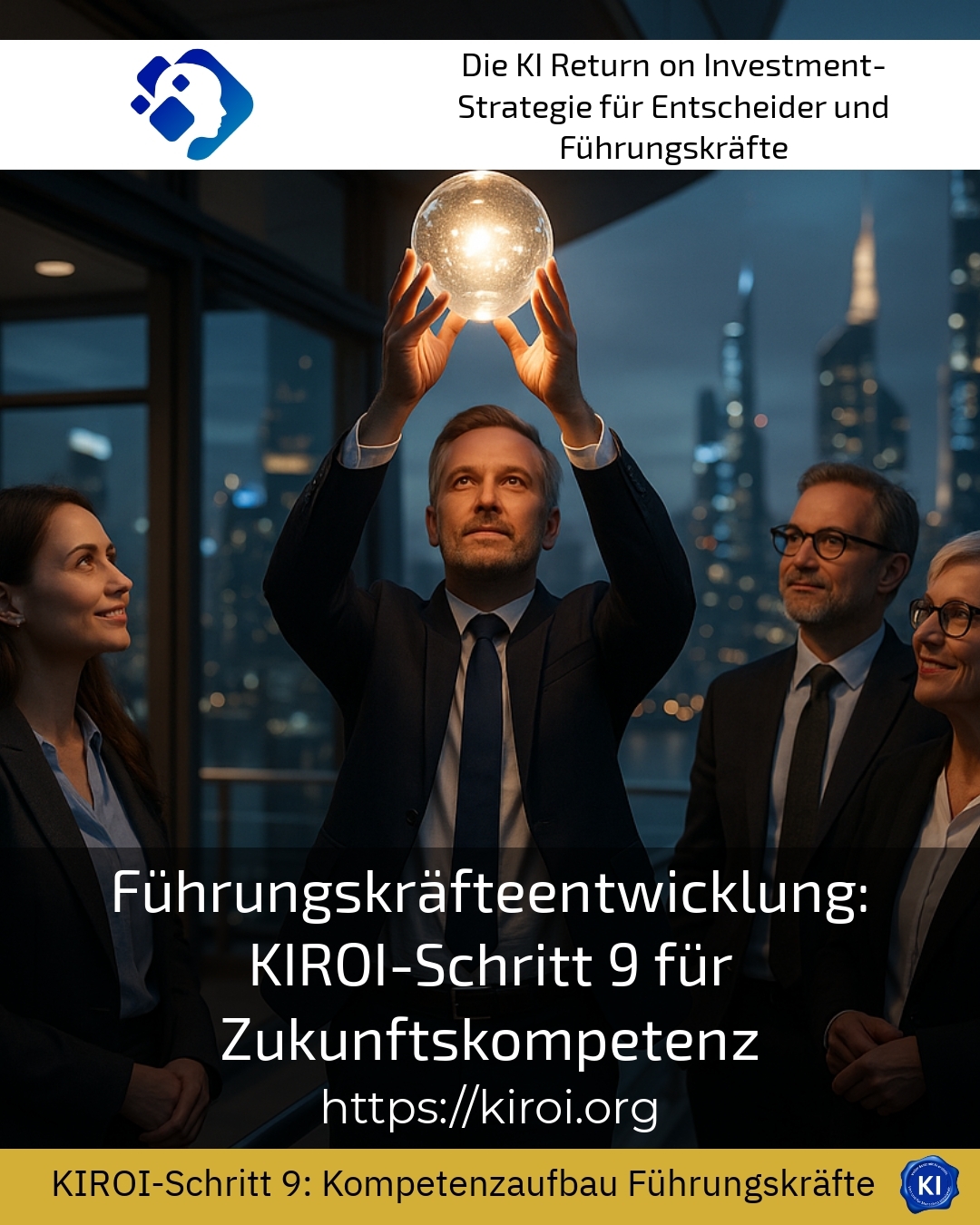
In a world that changes daily, companies need leaders with future-oriented skills. Classic leadership methods are no longer sufficient. Leadership development must be rethought today. An innovative approach that is gaining increasing attention is the KIROI concept. Step 9 in the KIROI concept, in particular, provides valuable impetus for fostering the necessary future skills in leaders. This blog article shows how transruption coaching can support you and your organisation in this important development process.[20]
Why leadership development is more important today than ever before
The demands placed on leaders have fundamentally changed. Digitalisation, global markets and constant change characterise everyday working life. Companies are realising: old hierarchies no longer work. Teams are working in a hybrid and distributed manner. Employees expect different leadership qualities than before.
Leadership development is therefore no longer an optional luxury. It is a strategic necessity. Organisations that invest in their leaders remain competitive. They retain talented employees and create a culture of collaboration.
Reality shows: many managers feel overwhelmed. They have to make decisions faster than ever before. At the same time, they are expected to motivate and develop their teams. This is a real challenge. This is precisely where modern leadership development comes in. It supports managers in mastering these new demands.
The KIROI concept and its revolutionary approach
KIROI is a comprehensive concept for transformation and development. It consists of nine progressive steps. Each step builds on the previous one. The concept considers both the personal and organisational levels.
The first eight steps create the foundations. They help to gain clarity. They support reflection. They promote new perspectives. But step 9 is special: it is the step towards the future. It revolves around future skills. It makes leadership development future-oriented.
What makes Step 9 so special and effective? It connects everything learned with concrete future scenarios. Leaders learn to transfer their competencies to new contexts. They develop resilience. They train adaptability. They sharpen their intuition for upcoming challenges.
The five dimensions of future competence in leadership development
Modern leadership development is based on five core future competencies. These are not optional. They are essential for success.
Firstly: Adaptability and ability to manage change. Leaders must be able to handle uncertainty. They must proactively shape change. A medium-sized technology company implemented this: the managing director specifically undertook coaching on change management. After three months, he led his team through a digital transformation. The employees noticed: the boss trusted the process. This created security and commitment.
Secondly: Creative and connected thinking. Complex problems require creative solutions. Leaders need to think cross-functionally. A large industrial company introduced innovation workshops. Leaders from various departments worked together. They developed new business models. This was only possible because leadership development had trained creative thinking.
Thirdly: Emotional intelligence and empathy. Leading people means understanding people. Leaders need high emotional intelligence. An international company noticed: staff turnover was high. The problem wasn't the pay. It was the leadership culture. An intensive coaching programme on emotional intelligence changed the situation. After six months, staff turnover dropped by 30 percent.
Fourthly: Digital literacy and technological understanding. Leaders must understand what digital transformation means. They don't need to program technology. But they do need to recognise its potential. A financial services provider trained its leaders in data literacy and AI basics. The result: they felt more confident in adopting new technologies more quickly.
Fifth: Sustainable and values-based leadership. Modern employees want more than a salary. They want purpose. Leaders need the competence to lead with values. A consumer goods manufacturer integrated sustainability into leadership development. The result: Young talent preferred to work for this company.
KIROI Step 9: The Bridge to Future Competence
Step 9 of the KIROI concept is the interface between the present and the future. It uses a special coaching format. This format is called transruptions coaching. It guides leaders through deep transformations.
What specifically happens in Step 9? Leaders are confronted with future-oriented scenarios. They reflect on their previous leadership patterns. They question assumptions. They develop new mental models. This is not superficial training. This is real development work.
Transruptions-Coaching clearly positions itself as support for projects related to leadership development. It's not about quick fixes. It's about sustainable change. Coaching supports leaders in mobilising their own resources. It provides impetus rather than dictating answers.
Practical Application of KIROI Step 9
What does the practical application look like? The KIROI concept works with several techniques. The first technique is scenario planning. Leaders design scenarios for their future. What could happen in two, five, or ten years? How will they lead then?
The second technique is deep reflection. Questions are asked such as: What is my own leadership narrative? What unconscious beliefs guide my actions? What skills do I still need? This reflection is uncomfortable. But it works.
The third technique is peer learning in groups. Leaders from similar levels and industries meet. They share experiences. They learn from each other. An energy company used this format. Its managing director met monthly with four other CEOs. They discussed future trends. This network was worth its weight in gold to everyone.
The fourth technique is the creation of action plans. Planning follows reflection. What concrete developmental steps will be taken? Within what timeframe? How will success be measured? Only concrete plans lead to real changes.
Methods and formats for leadership development
Leadership development requires a mix of different methods. A single format is not enough. Rather, multiple senses need to be engaged. Only then does true transformation occur.[1]
Seminars and workshops are a classic. They convey knowledge compactly. A logistics company held a leadership seminar annually. New trends were covered within it. The managers learned from external experts. These impulses were valuable. However, they were not enough on their own.
Coaching is individual and in-depth. A coach accompanies a leader for months. They work on specific challenges. This format is intensive. It is also expensive. But it has the deepest impact.
Mentoring connects experience with up-and-coming talent. An experienced mentor guides an emerging leader. This works particularly well in established companies. An automotive supplier systematically used mentoring. The rate of successful promotions increased significantly.
360-degree feedback offers comprehensive perspectives. A leader receives feedback from above, below, and the sides. This is sometimes uncomfortable. But it is valuable. A retail company used this tool regularly. The leaders quickly realised how others saw them.[1]
Job rotation It broadens horizons. A manager changes position. They learn about new areas. A pharmaceutical company practised job rotation consistently. Its top talents gained comprehensive experience this way. This made them better leaders.[1]
Action Learning It connects learning with real projects. Leaders work in small teams on real, complex problems. They don't just solve the problem. They also develop their skills. A financial services provider implemented this. Leadership teams worked on strategic issues. At the same time, they learned from each other.
Combine for maximum impact
The best leadership development uses multiple methods in combination. One university tested this successfully: It started with a workshop for reflection. This was followed by individual coaching. A mentoring programme ran in parallel. Every three months, there were action learning projects. After a year, the change was clearly noticeable. Leaders reported greater clarity. Teams were more engaged. Conflicts were resolved more constructively.
This shows: a mix of methods works. But it needs thoughtful planning. It needs continuity. It needs real support.
What topics managers approach us with
As a coach, I encounter similar challenges repeatedly in my work. They are typical for modern leaders. Some topics appear particularly frequently.
First topic: Authentic leadership in uncertain times. Leaders report: „I don't know how to lead my team when I myself am uncertain.“ That's an honest question. Many leaders have learned to always project confidence. That doesn't work today. Employees expect authenticity. They want to see that leaders are also learning. Coaching helps to go down new paths.
Second topic: Letting go of delegation and control. Many managers say: „I don't trust my team to work independently.“ This is not meant maliciously. It is often an unconscious fear. Coaching helps to understand this fear. It supports the creation of genuine self-responsibility.
Third topic: Understanding diversity and inclusive leadership. Leaders often report: „I don't know how to genuinely lead a diverse team. I don't understand the differences.“ This is an honest starting point. Modern coaching helps harness diversity as a strength.
Fourth topic: Driving Digital Transformation. Leaders ask: „How do I lead my team through digital changes when I don't understand everything myself yet?“ This is common. Coaching supports constructively dealing with uncertainty.
Fifth topic: Work-life balance and burnout prevention. Leaders are exhausted. They report: „I'm constantly working. I'm always available. This isn't sustainable.“ Coaching helps to set new boundaries. It supports the reflection of priorities.
The systematic design of leadership development
Leadership development shouldn't happen by chance. It needs a system. A solid system has multiple phases.[3]
Phase 1: Requirements Analysis and Objective Setting. First, let's clarify: What do we need? What are the development needs on an individual level?











 Deutsch
  English (UK)