
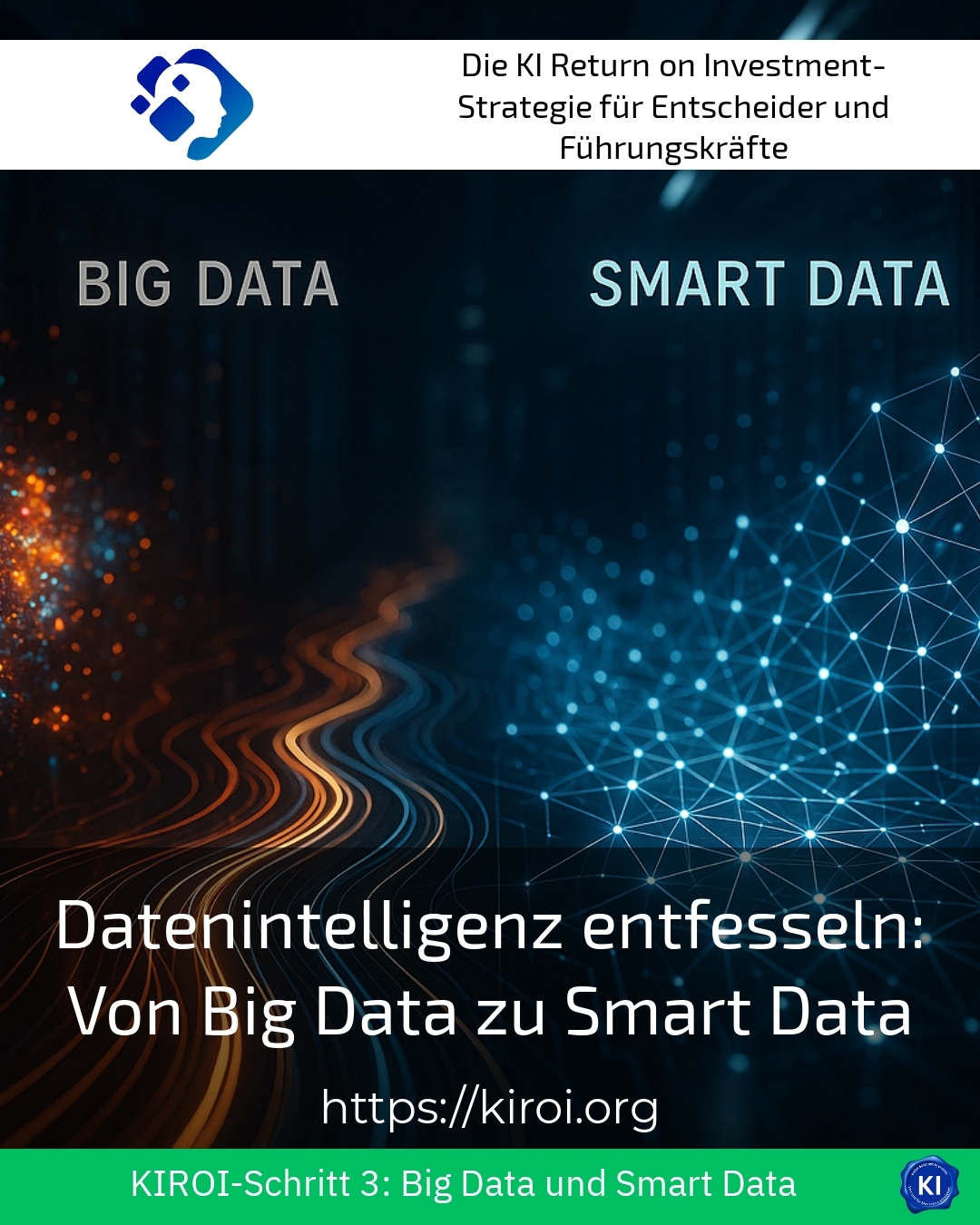
Imagine your company sitting on a vast trove of data, yet no one knows how to leverage it. This is exactly the situation many organizations face every day, because they collect countless amounts of information but fail to realize its true potential. The transition from big data to smart data marks a fundamental paradigm shift. Raw data volumes are transformed into actionable insights. This transformation not only transforms business processes but also the way decisions are made. Let’s explore together how you can harness this revolution for yourself.
The transformation of the data landscape: From Big Data to Smart Data
The digital world produces unimaginable amounts of information every second. Sensors, machines, and systems continuously generate data points. But quantity alone does not create added value. Only intelligent processing transforms data mountains into usable insights. The journey from big data to smart data therefore requires a strategic approach. Companies must learn to separate the essentials from the irrelevance. Quality triumphs over mere mass.
For example, a medium-sized machine manufacturer collected production data for years without any discernible benefit. The servers filled up, but no insights were gained. Only through targeted analysis was the team able to identify relevant patterns. Suddenly, connections between machine vibrations and failure probabilities became apparent. A logistics company, meanwhile, used sensor data from its vehicle fleet to optimize routes. The previously unused GPS data reduced fuel costs by significant percentages. A third example shows an energy provider that analyzed consumption patterns. Peak loads became predictable, and network management improved noticeably.
Why classic approaches often fail
Many organizations invest substantial sums in data infrastructure. They purchase powerful servers and implement complex systems. Yet the hoped-for results often remain elusive. The reason is rarely the technology itself. Rather, the strategic foundation for successful implementation is lacking. Employees do not understand what the data is intended to answer. Leaders expect miracles without clearly defining goals.
A automotive supplier invested millions in a data solution. After two years, impressive dashboards existed. However, no one used the generated reports for operational decisions. The gap between technical potential and practical application was simply too large. One pharmaceutical company collected clinical data from various studies in a central repository. The integration worked technically flawlessly. However, there were no standardized processes for evaluation, which meant valuable insights remained undetected. A chemical company, in turn, struggled with poor data quality. The available information was incomplete and inconsistent. Even the best analytics could not draw reliable conclusions from this material.
Best practice with a AIROI customer A traditional industrial company in the field of precision manufacturing faced a fundamental challenge. The management recognized that the existing production data were not being optimally utilized. For years, machines had been generating information that no one systematically analyzed. As part of a transruptive coaching project, we supported the project team in developing a new data strategy. First, we jointly identified the most pressing business issues. Which factors most significantly influence product quality? How can downtime be minimized? Where do avoidable costs arise? These questions formed the starting point for all further steps. The team learned to distinguish between relevant and irrelevant data. Instead of storing all available information, they focused on critical parameters. The introduction of automated analysis processes enabled timely insights. Employees received training in interpreting the results. After six months, the managers reported measurable improvements. The failure rate dropped significantly. Maintenance intervals were optimized. Cooperation between production and quality assurance intensified.
Developing intelligent data strategies: Transforming from Big Data to Smart Data
A successful data strategy never starts with technology. It starts with fundamental business questions. What do you want to achieve? What decisions should be improved through data? Who needs which information at what time? These questions may seem trivial, but they are surprisingly often overlooked. The answers form the foundation for all other measures.
A packaging manufacturer initially defined its strategic priorities. Energy efficiency, material consumption, and delivery reliability were the focus. For each area, the team identified relevant metrics and data sources. The subsequent technical implementation followed a clear roadmap. One food industry company pursued a similar approach for its cold chain. Temperature sensors continuously provided measurement data. Intelligent analysis enabled early warnings of deviations. Product losses were significantly reduced. A medical device manufacturer used usage data from its products for development improvements. Feedback from the field was directly incorporated into new product generations.
The role of corporate culture in transformation
Technology alone rarely leads to sustainable changes. Corporate culture plays a crucial role in success. Employees must view data as a valuable resource. Leaders should lead by example and demand data-driven decisions. Silos between departments often hinder the necessary flow of information. An open culture of error encourages experimentation with new analytical methods.
One textile company experienced this cultural dimension firsthand. The introduction of new analysis tools initially met with resistance. Experienced employees felt stifled by algorithmic recommendations. Only intensive change management resolved these obstacles. The team understood that data analysis complemented their expertise. Machines do not replace people; they merely support them. A building material manufacturer initiated regular data dialogues between different departments. Production, sales, and purchasing exchanged insights from their respective perspectives. This cross-functional collaboration yielded surprising insights. An electronics manufacturer introduced data competence as a fixed component in employee dialogues. Continuous training was made a matter of course.
Practical implementation steps on the path from Big Data to Smart Data
The transition to intelligent data usage ideally takes place in stages. Pilot projects provide valuable learning experiences without excessive risks. Small successes build confidence and motivation for larger projects. The insights gained are incorporated into subsequent initiatives. An agile approach allows for flexible adjustments in the face of unexpected challenges.
A plastics manufacturer began a manageable pilot project for quality assurance. A single production line served as a testing environment for new analytical methods. The results convinced management of the feasibility of larger investments. A machine tool manufacturer started analyzing service data. Recurring problem patterns were identified and proactively addressed. Customer satisfaction improved measurably. A paper industry company initially focused on energy consumption data. Optimizing energy-intensive processes amortized the investment within a few months.
Best practice with a AIROI customer An international component manufacturer sought support in reorienting its data architecture. The existing infrastructure had grown organically and had become increasingly unwieldy. Various systems were not communicating with each other and were creating data islands. As part of our transruptive coaching, we developed a consolidation strategy together. The project team learned to prioritize and define realistic milestones. Particularly important was the involvement of all relevant stakeholders from the outset. The IT department worked closely with the specialist departments. Together they defined requirements and expectations for the new solution. The phased migration minimized operational disruptions. Regular retrospectives enabled continuous improvements throughout the project. After implementation, users reported significantly simplified work processes. Information was more readily available and more reliable. The quality of decision-making improved noticeably in the opinion of the executives. Today, the project serves as a reference for further digitization initiatives within the company.
Success factors for sustainable implementations
Long-term success requires more than one-time project investments. Organizations must establish continuous learning processes. The data landscape is constantly evolving. New sources emerge, while old ones lose their relevance. Regular reviews of the strategy ensure the relevance of the approaches. Flexible structures enable quick adaptation to changing circumstances.
A glass manufacturer established quarterly strategy reviews for its data initiative. The management team evaluated progress and identified new opportunities. A metal processor established a dedicated data center. Specialized employees supported functional departments with analytical questions. A manufacturer of industrial electronics continuously invested in training programs. The data expertise of the entire workforce increased continuously. This long-term perspective distinguishes successful transformations from short-lived projects [1].
My AIROI Analysis
Transforming raw data sets into actionable insights presents organizations with multifaceted challenges. Technical aspects are only one part of the equation. The cultural dimension often proves to be at least as important. Companies that address both sides equally achieve more sustainable results.
My observations from numerous accompanying projects reveal recurring patterns. Successful organizations start with clear business questions rather than technology decisions. They involve employees early and continuously in the change process. Leaders take visible leadership roles in data-based decision-making. Small pilot projects build trust and provide valuable learning impulses.
At the same time, I often observe avoidable stumbling blocks. Unrealistic expectations lead to disappointment. A lack of patience prevents the sustainable adoption of new working practices. A lack of communication generates resistance among those affected. The underestimation of the required competence development slows progress [2]. The transition from big data to smart data therefore requires a holistic approach. Technology, people, and processes must work in harmony. External support can help identify blind spots. Transruptive coaching supports teams in these complex transformations. We provide impulses, question assumptions, and accompany the practical implementation. This results in robust solutions that actually work in everyday life.
Further links from the text above:
[1] Bitkom – Digital transformation and data strategies
[2] McKinsey Digital Insights – Success factors of data transformation
For more information and if you have any questions, please contact Contact us or read more blog posts on the topic Artificial intelligence here.











 Deutsch
  English (UK)