
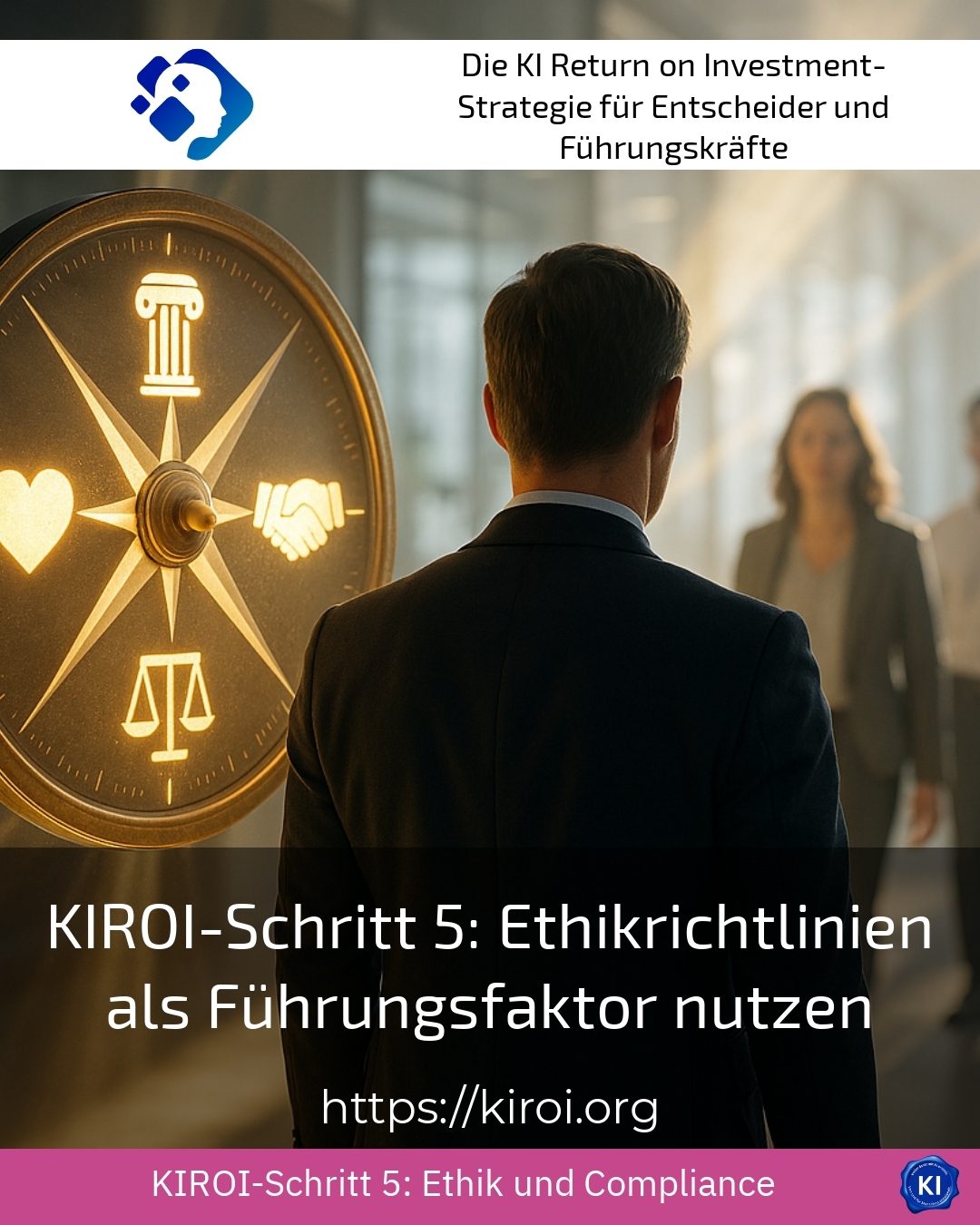
Utilising ethical guidelines as a leadership factor in companies
Ethical guidelines play a central role in modern businesses when it comes to shaping leadership culture and corporate responsibility. They are more than just sets of rules – they serve as a guide that supports leaders and employees in their daily decisions. Companies are increasingly facing the challenge of integrating ethical values into their strategic processes, thereby fostering trust both internally and externally.
Many executives use codes of ethics to set standards that not only ensure compliance but also foster a sustainable corporate culture. Ethical principles are thus often the foundation for integrity, fairness, and transparency in day-to-day operations. This is not about rigid prohibitions, but about guidance and conscious reflection on responsible action – even in grey areas where legal regulations do not provide exact coverage.
How ethical guidelines support leaders
Leaders are constantly faced with complex decisions that can have far-reaching consequences for companies and employees. Ethical guidelines help ensure that these decisions are made in line with company values and societal expectations. They provide direction – especially when legal requirements are absent or unclear. Adhering to these guidelines creates a common foundation that strengthens the trust of all involved.
Leaders frequently report that ethical guidelines help to identify conflicts early and resolve them through transparent communication. Furthermore, they create a framework for responsible leadership, which also serves long-term economic success. These impulses not only promote employee satisfaction but also loyalty and awareness of one's own actions within the company.
Practical examples from various industries
AIROI BEST PRACTICE at company XYZ (name changed due to NDA contract) The company has embedded ethical guidelines as an integral part of daily management. Managers use them to guide decision-making processes in difficult situations. In particular, when introducing new technologies, ethical considerations are systematically taken into account to balance the interests of employees with societal expectations. This approach strengthens the trust of all stakeholders and supports cultural change within the company.
AIROI BEST PRACTICE at ABC (name changed due to NDA contract) In this manufacturing company, ethical guidelines are used to ensure transparent dealings with suppliers and partners. Management ensures that all business partners adhere to ethical standards and are treated fairly. This approach helps to build sustainable partnerships and minimise risks such as corruption or conflicts. Employees particularly appreciate this stance because they know the working environment is characterised by respect and reliability.
MNO's Best Practices (Name changed due to NDA) The service company has developed ethical guidelines that are closely interwoven with the corporate culture. Managers use these guidelines as a catalyst to address ethical issues within the team and jointly develop solutions. This fosters open dialogues on topics such as data protection, diversity, and fair working conditions. This practice supports both team cohesion and the professional development of employees.
Instruments for implementing ethics guidelines
To effectively establish ethical guidelines, appropriate tools and support within the company are needed. Ethics training for managers can help to practice dealing with ethical challenges and reflect on one's own values. Regular communication and the integration of guidelines into existing management processes are equally important. This ensures that these guidelines are not just on paper, but are actively implemented in everyday leadership.
Furthermore, many companies report that a trusting exchange with external consultants or coaches is helpful for gaining new momentum and continuously developing the topic of ethics. Particularly when introducing new technologies or during transformation processes, supportive guidance can help to identify ethical risks and act responsibly.
My analysis
Ethical guidelines can serve as a strong guiding factor, supporting companies on multiple levels. They provide direction, foster trust, and create a shared values base. However, experience shows that it is crucial to understand ethical guidelines not as rigid regulations, but as living companions in day-to-day leadership. Conscious engagement with them and continuous impetus are important prerequisites for a lasting impact.
Professional support, such as coaching, can promote this process. This ensures that ethical guidelines are effectively integrated into company processes and helps to make responsible leadership visible. Leaders often report that this support strengthens them in their role, enabling them to face ethical challenges with greater confidence.
Further links from the text above:
[3] Ethics Guidelines | Works Council Lexicon
[5] Ethics Training in Companies – Approaches and Structure
For more information and if you have any questions, please contact Contact us on the topic or read more blog posts on the topic Artificial Intelligence Blog here.











 Deutsch
  English (UK)