
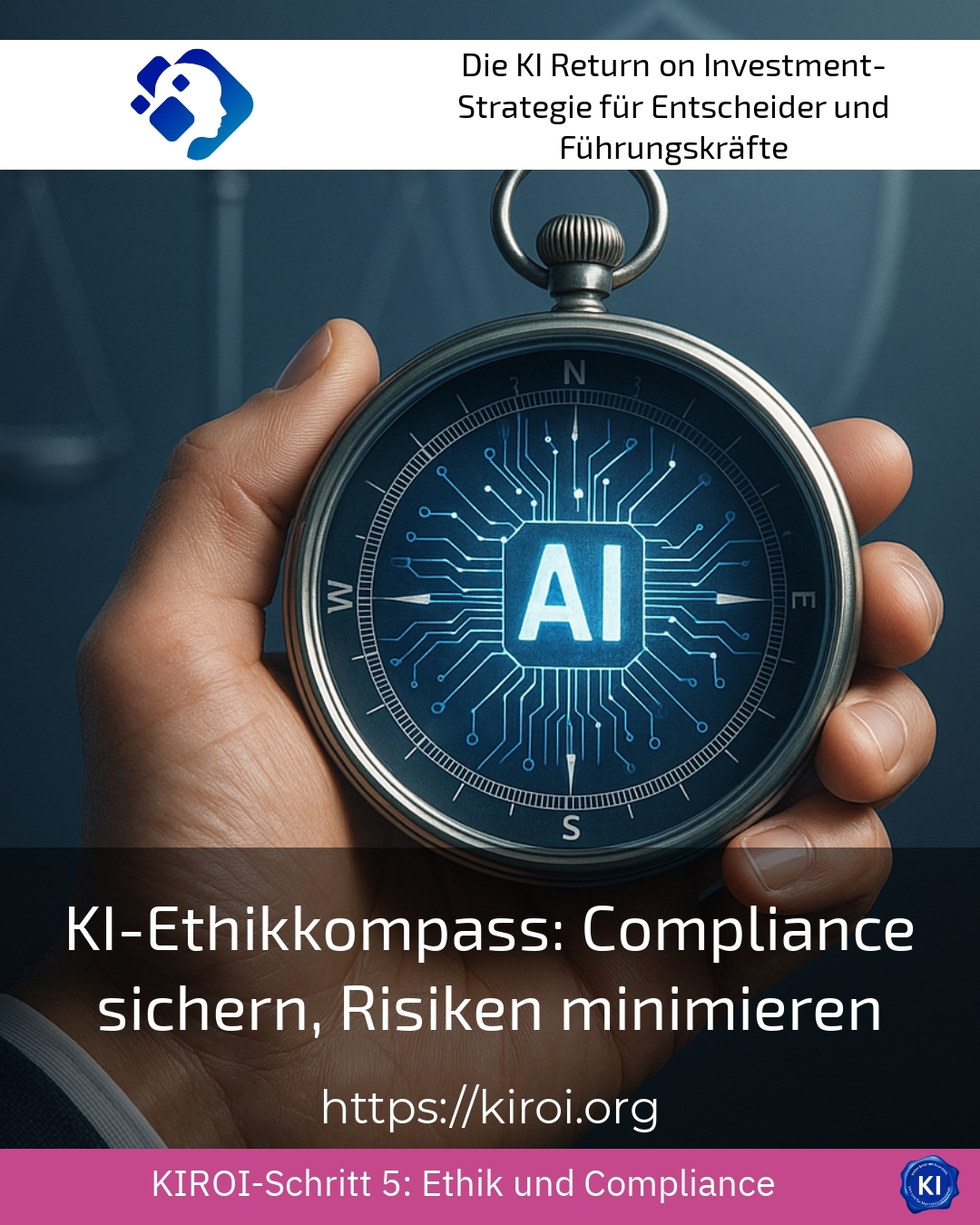
Imagine your organisation makes thousands of automated decisions daily that directly impact people's lives, and no one knows exactly what criteria these decisions are based on – a scenario that keeps many leaders awake at night and highlights the urgent need for a structured AI Ethics Compass: Securing Compliance, Minimising Risks underscores, because without clear guidelines and binding processes, every company is treading on thin ice when it comes to the responsible use of intelligent systems.
Why Moral Guardrails for Intelligent Systems Have Become Indispensable
The rapid development of algorithmic decision-making systems has raised a fundamental question that extends far beyond technical aspects, delving deeply into philosophical and societal dimensions. Organisations are faced with the challenge of employing technologies whose workings even experts cannot always fully comprehend, while at the same time, regulatory bodies worldwide are intensifying their requirements and the public is looking on more critically than ever [1]. This constellation generates enormous pressure that cannot be managed by superficial measures, but rather requires a fundamental shift in corporate culture.
For example, a medium-sized manufacturing company implemented a quality control system that automatically sorted out defective products. After a few months, it became apparent that the system systematically disadvantaged certain supplier batches. The cause lay in biased training data, which led to considerable economic damage and a loss of trust among business partners. A large logistics provider, in turn, used predictive analytics for route optimisation without noticing that the algorithm systematically avoided certain districts. This led to complaints of discriminatory delivery practices. Similar incidents occurred in the financial sector when a credit institution deployed automated creditworthiness checks that unfairly disadvantaged certain occupational groups.
The AI Ethics Compass as a Strategic Instrument for Risk Minimisation
A thoughtful AI Ethics Compass: Securing Compliance, Minimising Risks acts as a navigation instrument through complex ethical waters, providing guidance in situations where legal requirements alone are insufficient to ensure responsible action. This compass encompasses not only abstract principles but also concrete instructions for action, checklists, and escalation mechanisms that are actually applicable in daily operations [2]. The implementation of such a framework requires a profound understanding of both the technical possibilities and the societal expectations placed on modern organisations.
The relevance is particularly evident in the healthcare sector. A hospital group used a diagnostic support system that systematically tended towards misdiagnoses in certain patient groups. Only an ethical review revealed that the training data predominantly came from a homogeneous patient population. In turn, a pharmaceutical company used algorithmic systems to prioritise research projects, but recognised in time that this could lead to the neglect of rare diseases. A third example concerns an insurer who carried out automated risk assessments that systematically disadvantaged people with chronic illnesses, until an ethics audit uncovered this problem.
Best practice with a AIROI customer
An internationally operating group in the manufacturing sector approached transruptions-Coaching with a complex challenge, typical of many organisations undergoing digital transformation. The company had introduced algorithmic systems in various departments without establishing an overarching ethical framework, leading to inconsistent decisions and growing uncertainty among managers and employees. As part of the support process, we collaboratively developed a tailor-made code of ethics that considered industry-specific requirements while remaining flexible enough to keep pace with technological advancements. Particularly important was the involvement of various stakeholders, from works councils and data protection officers to external experts, to ensure broad acceptance. Implementation was carried out in phases and was accompanied by training programmes that empowered employees to independently identify and address ethical issues. Following the project's completion, the responsible parties reported significantly increased decision-making confidence and improved trust among customers and business partners, who appreciated the transparent approach.
Transparency as the Foundation for Trustworthy Technology Application
Transparency forms the indispensable foundation of any ethically justifiable technology application, and without it, even the most sophisticated regulatory framework ultimately remains ineffective, as neither internal nor external stakeholders have the opportunity to comprehend or critically question decision-making processes [3]. This transparency extends to several levels, from technical documentation through communication with those affected to regular reporting to supervisory bodies, and requires careful consideration between openness and the protection of legitimate business interests.
For example, a telecommunications company implemented a customer service system that automatically prioritised enquiries. Following critical media reports, it had to be transparent about the criteria used for this prioritisation. An energy supplier, in turn, used predictive maintenance systems for its infrastructure and had to demonstrate to regulatory authorities that safety aspects were not being subordinated to economic interests. In the retail sector, a major retail company introduced dynamic pricing but felt compelled to disclose the underlying mechanisms after consumer protection groups raised concerns.
Practical implementation of the AI ethics compass in everyday business
The practical implementation of a comprehensive ethical framework presents many organisations with significant challenges, as it requires not only technical expertise but also a cultural shift that deeply impacts established structures and processes. Clients who turn to transruptions-coaching often report uncertainty about the first steps and difficulty in engaging all relevant stakeholders without compromising operational capability. These challenges can be overcome through a structured approach that considers both the strategic and operational levels, while offering sufficient flexibility for industry-specific adaptations.
An automotive supplier faced the task of ethically evaluating autonomous inspection systems. To this end, they established an interdisciplinary committee that met regularly and supported difficult decisions. An insurance company, in turn, developed a multi-stage approval process for new algorithmic applications, which already incorporated ethical criteria in its early development phases. In the human resources sector, a leading provider implemented transparent selection criteria for automated pre-selection processes and trained recruiters to critically question algorithmic recommendations.
Compliance requirements and the AI ethics compass as a bridge to regulation
The AI Ethics Compass: Securing Compliance, Minimising Risks acts as an important bridge between voluntary commitments and binding regulatory requirements, which will continue to increase in the coming years. The European Union has set standards with its regulatory framework for algorithmic systems, which companies worldwide will have to orient themselves to if they want to operate in the European market [4]. This regulatory development should not be seen as a threat, but as an opportunity, because organisations that establish robust ethical structures early on will gain a significant competitive advantage over laggards.
An internationally active machine manufacturer proactively used this development, positioning its ethical standards as a unique selling proposition against Asian competitors. A software company developed certifiable ethics modules intended to support customers in meeting compliance requirements. In the financial sector, an investment company established ESG criteria for algorithmic trading systems that went beyond minimum regulatory requirements and met with great interest from institutional investors.
Best practice with a AIROI customer
A medium-sized company in the medical technology sector sought support in integrating ethical guidelines into its product development process after initial pilot projects with intelligent diagnostic systems encountered resistance from medical professionals. The scepticism did not stem from technical deficiencies, but from the lack of transparency in the algorithmic recommendations, which doctors perceived as an encroachment on their professional autonomy. Through transruptions-coaching support, a participatory process was initiated that involved medical personnel from the outset and systematically integrated their expertise. Together, we developed explainability mechanisms that made it transparent to users which factors led to a particular recommendation, without oversimplifying the complexity. The results of this collaboration were incorporated into training materials that empowered doctors to competently assess algorithmic recommendations and, where necessary, to override them with justification. The company reports significantly improved acceptance of its products and stronger ties with key customers who value the ethically reflective approach.
Risk minimisation through continuous monitoring and adjustment
An once-established ethical framework only unfolds its full effectiveness when it is kept alive through continuous monitoring mechanisms and regular adjustments, as technological development advances relentlessly, repeatedly challenging established assumptions. Organisations that have their AI Ethics Compass: Securing Compliance, Minimising Risks If considered as a static document, there is a risk of being overtaken by reality and resting on false security [5]. Instead, a dynamic approach is recommended, which systematically integrates regular audits, stakeholder feedback, and technological developments.
A logistics company established quarterly ethics reviews for all automated decision-making systems. These reviews repeatedly uncovered creeping biases that had developed over time. A media conglomerate, in turn, introduced a continuous monitoring process for its recommendation algorithms after critical reports about filter bubbles and radicalisation tendencies appeared on other platforms. In the chemical industry, a leading company implemented automatic warning systems that sounded the alarm for unusual decision patterns and required human review.
The role of leaders in ethical technology design
Leaders bear a particular responsibility for establishing an ethically reflective technology culture, because without their active support and visible commitment, even the best guidelines remain ineffective and are perceived by employees as a bureaucratic exercise. This role-model function extends from strategic decisions and resource allocation to everyday communication, where ethical aspects should be explicitly discussed and treated as equivalent to economic considerations. Many leaders report uncertainty about how to fulfil this role without being perceived as technophobic or hindering progress.
The CEO of an energy group made the ethical application of technology a personal focus of his board work. He regularly communicated about challenges and learning processes, fostering an open culture of mistakes. A retail managing director established weekly ethics briefings within her leadership team, which prepared for and reflected on complex decisions. In the healthcare sector, a clinic director introduced mandatory ethics training for all managers, which conveyed not only legal aspects but also moral philosophical foundations.
My AIROI Analysis
Addressing ethical questions in the context of algorithmic decision-making systems is not an optional extra, but a strategic necessity that can determine the long-term success or failure of organisations. In my work with numerous companies of various industries and sizes, I have observed that organisations that view ethical reflection not as an obstacle but as a catalyst for better decisions and more innovative solutions are the most successful. The AIROI approach offers a structured framework that considers both the strategic dimension and the operational implementation, enabling organisations to deal with ethical challenges proactively rather than reactively.
Particularly noteworthy is the observation that ethically reflective organisations often also operate more successfully economically because they recognise risks early, avoid reputational damage and can gain the trust of customers, employees and business partners. The investment in robust ethical structures pays off not only through avoided crises but also through improved innovation capacity, because open discourse about opportunities and risks demonstrably improves decision quality. For the coming years, I expect a further intensification of this development, as regulatory requirements increase and societal expectations for responsible technology application continue to rise.
Transruptions-Coaching supports organisations on this journey with a holistic approach that integrates technical, organisational, and cultural aspects, while always taking into account the specific needs and circumstances of the respective organisation. Experience shows that successful transformation is not achieved through external directives, but through internal conviction and participatory processes that involve and empower all relevant stakeholders to independently exercise ethical responsibility.
Further links from the text above:
[1] European Commission – European approach to artificial intelligence
[2] UNESCO – Recommendation on the Ethics of Artificial Intelligence
[3] AlgorithmWatch – Tracking Automated Decision-Making Systems
[4] EU AI Act – Comprehensive Resource
[5] OECD – Artificial Intelligence Policy Observatory
For more information and if you have any questions, please contact Contact us or read more blog posts on the topic Artificial intelligence here.











 Deutsch
  English (UK)