
Why do more than 60 percent of all companies fail to meet the ethical requirements of modern technologies, while others are precisely able to capitalize on these requirements to achieve their greatest market advantage?
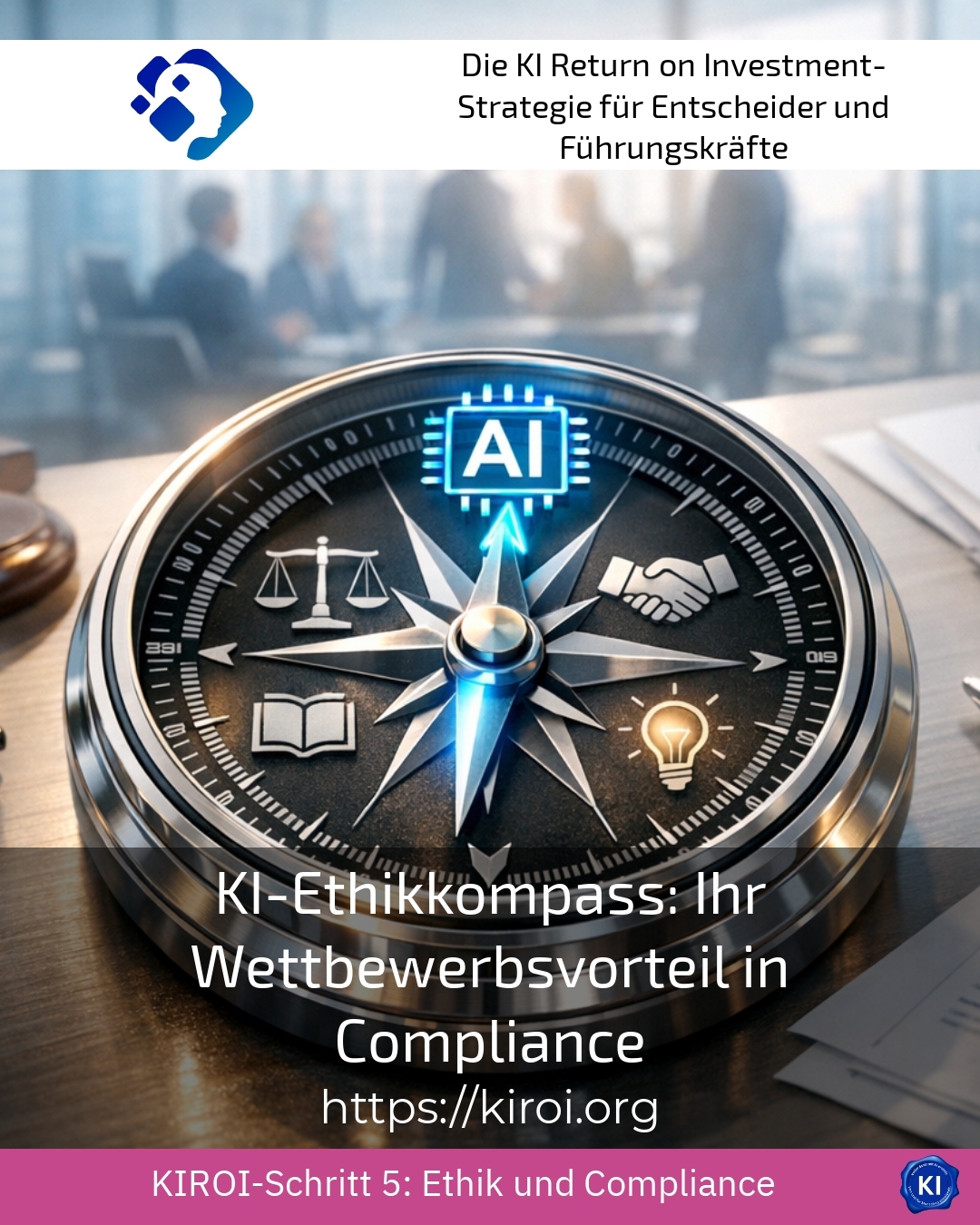
The answer lies in a systematic approach that more and more organizations are recognizing as a strategic tool. AI Ethics Compass: Your competitive advantage in compliance It accurately describes this paradigm shift that combines responsible action with economic success. In a time when regulatory requirements are growing exponentially and stakeholders increasingly scrutinize corporate operations, the right navigation through ethical issues determines the success or failure of entire business models. Companies that invest early in structured compliance frameworks often report significantly reduced risks and increased customer trust. This paper shows you how to use ethical principles not as a barrier but as a catalyst for sustainable growth, guiding you through the essential aspects of future-oriented corporate management.
The strategic value of ethical guidelines in modern organizations
Ethical principles form the foundation on which trustworthy business relationships can be built, and they are increasingly becoming a crucial differentiating factor in competition. While many companies view compliance merely as a necessary routine exercise, forward-thinking executives recognize the enormous potential that lies in a proactive approach to ethical issues. A financial services provider that employs transparent algorithms for credit decisions gains the trust of its customers while simultaneously reducing legal risks. Similarly, insurance companies that ensure fair claims assessments through comprehensible decision-making processes do the same. In healthcare, ethical standards determine whether patients accept or reject innovative diagnostic procedures [1].
The integration of an AI Ethics Compass: Your competitive advantage in compliance It enables organizations to not only reactively meet regulatory requirements but also actively shape them and thereby define market standards. Companies that implement ethical guidelines early on position themselves as trustworthy partners for customers, investors, and regulatory authorities alike. For example, a telecommunications provider that communicates transparent data usage policies significantly differentiates itself from competitors that neglect this issue. Similarly, retail companies that employ fair pricing algorithms and communicate this openly benefit from increased customer loyalty. In the field of human resources services, agencies that can guarantee non-discriminatory selection procedures are increasingly gaining importance among quality-conscious clients.
Best practice with a AIROI customer
A medium-sized company in the financial services sector faced the challenge of implementing automated decision-making processes without violating regulatory requirements or jeopardizing customer trust. As part of a transruptive coaching process, a comprehensive analysis of the existing processes was first conducted, with particular attention paid to potential discrimination risks and lack of transparency. Together with the leadership team, we developed a multi-stage implementation plan that integrated ethical review loops into every decision-making process while preserving the efficiency gains of automation. The employees were empowered through targeted training to recognize critical situations and respond appropriately, while a continuous monitoring system was established that promptly identified deviations from defined standards. Following the successful implementation, the company reported a significant increase in customer satisfaction, reduced complaint rates, and a significantly improved position in discussions with regulatory authorities. This case illustrates impressively how structured ethical guidelines can not only minimize risks but also generate measurable business benefits.
AI Ethics Compass: Your competitive advantage in compliance through structured implementation
The successful implementation of ethical principles requires a systematic approach that involves all levels of the organization and defines clear responsibilities. Clients often report that they are overwhelmed by the multitude of requirements and need support in prioritizing them. Structured guidance, which initially captures the status quo and then develops a tailored development path, is then required. For example, a logistics company that uses autonomous route optimization must consider other ethical aspects than a media company that personalizes content recommendations. Similarly, the requirements of a bank that automates creditworthiness checks are fundamentally different from those of a manufacturing company that implements predictive maintenance. The pharmaceutical industry, in turn, faces special challenges when it comes to the ethical design of research processes and patient data [2].
Transparency as the foundation of trust
Transparency forms the indispensable foundation of any ethical corporate governance, and it manifests itself in various dimensions that must be carefully coordinated with one another. First and foremost, it involves the accountability of decisions that must be communicated both internally and externally. An energy provider that offers dynamic tariff models should be able to explain to its customers how their prices are composed and what factors influence them. Similarly, insurance companies that analyze claims ratios and adjust premiums accordingly should disclose the underlying criteria openly. In the education sector, students and parents increasingly expect transparency regarding how assessments are made and the methods used in this process.
In addition, transparency also encompasses open communication about boundaries and uncertainties, because no system is perfect. Admitting limitations often strengthens trust more than exaggerated claims of perfection. A real estate company that offers automated valuations should clearly communicate under what conditions these estimates are reliable and when human expertise should be called upon. Similarly, travel companies benefit when they make it transparent how their recommendation algorithms work and what interests are taken into account. Finally, in the field of staffing consulting, service providers gain credibility by being open about the possibilities and limitations of automated preselection.
Fairness and non-discrimination in practice
Ensuring fairness represents one of the most complex challenges because it requires a deep understanding of the underlying processes and their potential impact. Clients often come to us concerned that their automated systems could unintentionally discriminate against certain groups without being immediately apparent. transruptions coaching helps organizations identify these hidden risks and develop effective countermeasures. For example, a trading platform must ensure that its search algorithms do not systematically disadvantage small providers and thereby distort competition. In banking, it is crucial that credit decisions are based on relevant criteria rather than discriminatory ones. Employers also face the challenge of designing recruitment processes in a way that promotes diversity rather than reinforcing unconscious biases [3].
Best practice with a AIROI customer
An internationally operating trading company noticed during an internal audit that certain customer groups were systematically being overlooked for premium offers more frequently than others, even though their purchasing behavior showed similar patterns. The reason for this was rooted in historical data that contained unconscious biases and was perpetuated in the automated recommendation systems. As part of the transruptive coaching process, a comprehensive data analysis was first conducted to reveal and quantify these patterns. Subsequently, together with the data science team, we developed corrective mechanisms to ensure fair treatment for all customer groups without compromising the personalization benefits. Particularly important was the involvement of various stakeholders in this process, as different perspectives contributed to identifying blind spots and developing practical solutions. The company also implemented continuous monitoring, regularly reviewing fairness metrics and automatically alerting when deviations occur. These measures not only led to fairer treatment of all customers but also unlocked untapped revenue potential in neglected market segments.
Data protection and privacy as the foundation of trust
Responsible handling of personal data is becoming a crucial differentiating factor, as customers are increasingly sensitive to data privacy breaches and adapt their business relationships accordingly. AI Ethics Compass: Your competitive advantage in compliance The report comprehensively addresses this topic and provides insights into a proactive data strategy. A healthcare provider that wishes to use patient data for research purposes must take different measures than an e-commerce company that analyzes purchasing behavior. Similarly, the requirements in the education sector, where learning progress is documented, differ from those in the financial sector, where transaction patterns are monitored. The insurance industry, in turn, faces the particular challenge of conducting risk assessments without excessively intruding on the privacy of policyholders.
An essential aspect of this is data minimization, the principle of collecting and processing only the information that is actually necessary for the respective purpose. Many organizations reflexively collect as much data as possible without being clear about its actual usefulness, thereby creating unnecessary risks and compliance burdens. Telecommunications companies, for example, can optimize networks without having to create detailed usage profiles of individual customers. Retailers, in turn, can improve inventory management without having to meticulously track the purchasing behavior of every individual customer. Mobility providers can also analyze traffic flows and improve offerings without having to store the complete movement profiles of their users [4].
Accountability and governance structures
Clear responsibilities form the organizational backbone of any effective ethics strategy, and they must be anchored at all levels of the hierarchy to have a lasting impact. Clients often report uncertainties about who has the decision-making authority on ethical issues and how conflicts between different goals should be resolved. For example, establishing an ethics board can help structure such questions and enforce consistent standards. A car manufacturer developing autonomous vehicle functions requires different governance structures than a media company that operates content moderation. In the financial sector, regulatory requirements are often so detailed that they provide a clear framework within which ethical decisions must be made. There are established ethics committees in the healthcare sector as well, whose structures can serve as a model for other industries.
Sustainability and social responsibility
Beyond the immediate compliance requirements, the question of how organizations contribute to solving societal challenges and how they can minimize the negative impacts of their business activities is becoming increasingly important. This expanded perspective is increasingly demanded by investors, customers, and employees and is evolving into a relevant factor in business decisions. For example, a logistics company that designs its route optimization not only based on efficiency but also on environmental impact positions itself as a responsible market participant. Similarly, energy providers can contribute to stabilizing electricity networks through intelligent load control, thereby supporting the energy transition. In the agricultural sector, precise analyses enable resource-efficient cultivation that offers both economic and environmental benefits [5].
Social aspects are also playing an increasingly important role, such as the question of how to make technological change compatible with the labor market and what training opportunities companies offer their employees. AI Ethics Compass: Your competitive advantage in compliance It also takes this dimension into account and helps organizations develop a holistic approach. An insurance company that introduces process automation can simultaneously offer retraining programs, thereby qualifying employees for new tasks. Similarly, banks that increase acceptance of change through proactive change management and reduce resistance benefit from this. Manufacturing companies also benefit when they communicate technological change as an opportunity for skills development rather than a threat.
My AIROI Analysis
The previous discussion clearly shows that ethical guidelines are much more than a necessary evil or a bureaucratic hurdle to overcome. Rather, they evolve into a strategic differentiating feature that determines the competitiveness of organizations and enables long-term business success. The AIROI analysis highlights that companies that invest early in structured compliance frameworks achieve significant advantages over reactive competitors. This manifests itself in increased customer trust, reduced regulatory risks, improved employee engagement, and not least in tangible financial benefits through avoided penalties and reputational damage.
Particularly noteworthy is the observation that ethical excellence is increasingly becoming the entry ticket to attractive markets, as demanding business partners and end customers demand corresponding standards. Companies that underestimate this development not only risk regulatory sanctions but also the loss of important business relationships and skilled employees who increasingly value responsible employers. Transruptions coaching has proven to be a valuable support, as it brings external perspectives, identifies blind spots, and provides practically tested solutions. Organizations that consistently follow this path regularly report positive surprises, such as when ethical initiatives open up new business fields or provide innovation impulses that go far beyond the original compliance focus.
In summary, it can be concluded that responsible use of technological possibilities is no longer an option but has become a business necessity. The question is not whether organizations implement ethical standards, but how quickly and comprehensively they do so. Those who hesitate here risk losing their position as trusted market leaders, while proactive actors are consolidating their position as trustworthy leaders.
Further links from the text above:
[1] European Commission – Approach for trustworthy technologies
[2] ISO/IEC standards for responsible system development
[3] OECD principles for responsible innovation
[4] General Data Protection Regulation – Official resource
[5] World Economic Forum – Future advice for responsible technology
For more information and if you have any questions, please contact Contact us or read more blog posts on the topic Artificial intelligence here.











 Deutsch
 English (UK)