kiroi.org

KIROI - Artificial Intelligence Return on Invest
The AI strategy for decision-makers and managers

Business excellence for decision-makers & managers by and with Sanjay Sauldie

KIROI - Artificial Intelligence Return on Invest: The AI strategy for decision-makers and managers

KIROI - Artificial Intelligence Return on Invest: The AI strategy for decision-makers and managers

Start » Employee competence development: KIROI Step 8 for decision-makers
10 August 2025

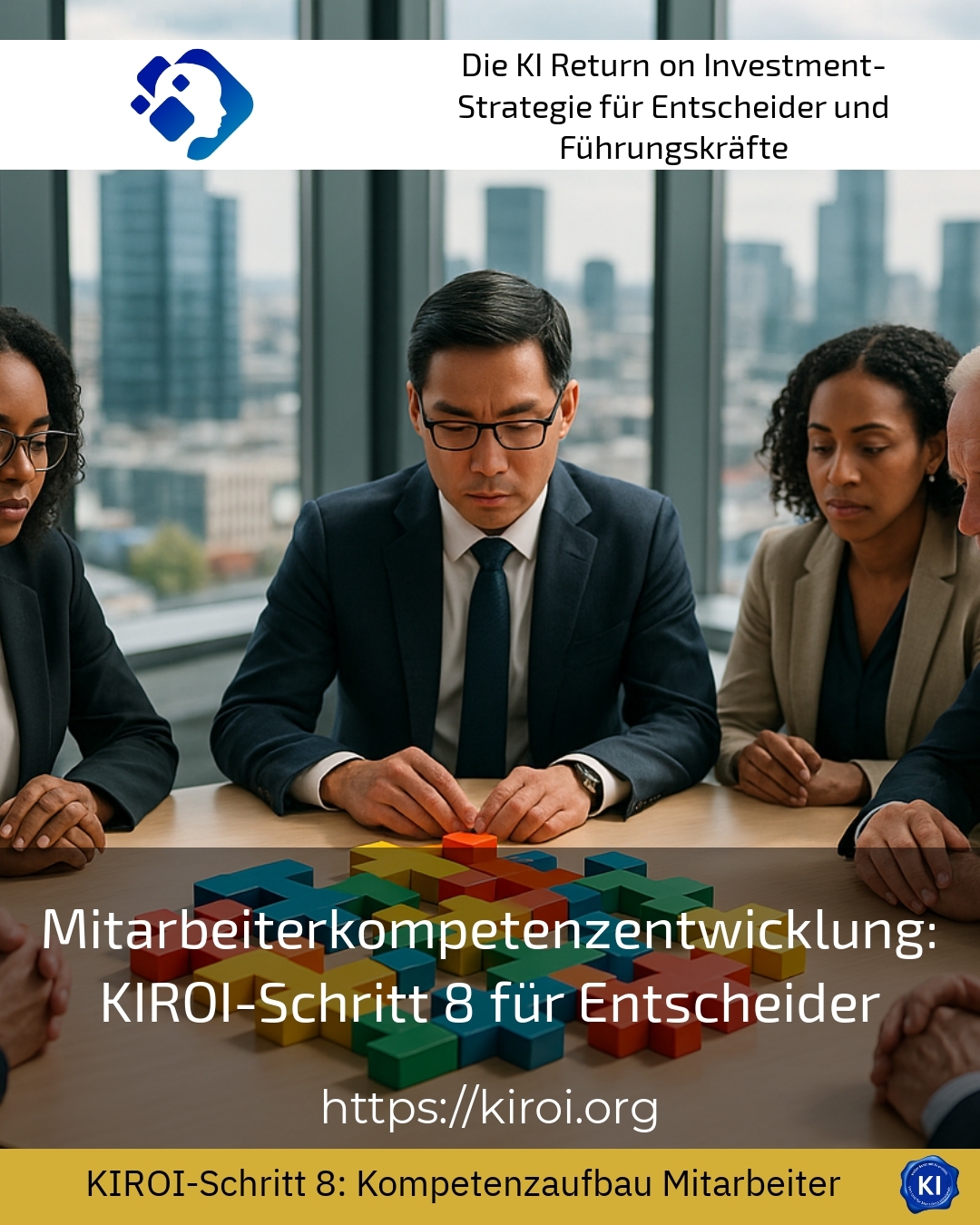
Employee competence development: KIROI Step 8 for decision-makers

4
(938)

Employee competency development is a central building block for sustainable company success. Many managers and decision-makers wonder how they can design this process in a targeted and sustainable way. Employee competency development is systematically supported, particularly in the eighth step of the KIROI model. Here, those responsible receive concrete impulses to promote individual potential and make the organisation fit for the future.

Why employee skills development is indispensable today

Businesses face constantly changing demands. New technologies, evolving markets, and a dynamic work environment require continuous adaptation. Employee skills development helps to master these challenges. It strengthens the capabilities of employees and ensures greater flexibility within the team.

Many clients report that they are primarily seeking support in areas such as project management, communication, and technical expertise. Staff competency development offers targeted solutions here. It promotes both professional and methodological skills and prepares employees for future tasks.

Employee Competency Development in the KIROI Model

Structured support in the eighth step

In the eighth step of the KIROI model, the focus is on targeted support for competency development. Companies rely on a combination of different learning formats. On-the-job training, in-house seminars, and external workshops complement each other effectively. This allows employees to learn directly at their workplace, as well as in theoretical settings.

In mechanical engineering, for example, industrial master craftsmen are prepared for leadership roles through academic courses and practical workshops. In the IT sector, companies use AI-powered platforms to recommend individual learning paths. In retail, job rotation promotes the development of versatile key skills.

These methods show how diverse employee competence development can be. It adapts to the needs of the industry and the individual strengths of the employees.

Practical examples from the business world

A medium-sized technology company introduced a mentoring programme. Experienced colleagues supported junior staff in tackling complex tasks. The employees reported that this support significantly improved their methodological skills. They tackled tasks more independently and contributed actively to project development.

In the manufacturing industry, companies are using AI systems to automatically identify training needs. Employees receive targeted training suggestions. This creates an individual learning environment that promotes motivation and knowledge acquisition.

In the financial services sector, AI-powered career planning tools are leading to greater transparency. Employees can clearly see their development options and remain with the company long-term.

BEST PRACTICE with one customer (name hidden due to NDA contract) A technology company combined a mentoring programme with on-the-job training. Employees reported that this practical support significantly enhanced their methodological competence. They were able to tackle complex tasks more independently and actively contributed to the innovation culture. The satisfaction and motivation within the team increased considerably.

Methods and Tools for Employee Competency Development

Three levels of competence development

Competence development occurs on three levels: Practice, Coaching, and Training. At the practice level, employees learn through direct application. Job rotation, project work, and on-the-job training are particularly effective here.

On the coaching level, the focus is on mentoring and individual coaching. Here, employees receive targeted feedback and support in overcoming challenges.

On the training level, workshops and seminars are offered. These impart theoretical knowledge and promote practical application.

Active forms of competence development

Companies are embracing active learning formats. Employees are taking on new tasks, working on challenging projects, and receiving regular feedback. This enables them to develop not only professional but also social and methodological skills.

In mechanical engineering, for example, project teams are formed to work on specific tasks. In the IT sector, employees work on interdisciplinary projects to learn new technologies. In retail, employees move through different departments to gain diverse experience.

Employee competence development as support through transruption coaching

Transruptions-Coaching supports companies with projects focused on employee competency development. It assists with the analysis of competency gaps, the development of individual learning pathways, and the implementation of measures. This creates a sustainable development process that strengthens both employees and the company.

Many clients report that coaching helps them gain new perspectives and specifically develop their skills. The support of experienced coaches helps them to overcome challenges and unlock their potential for development.

My analysis

Employee competency development is a crucial factor for the long-term success of companies. It fosters individual potential and strengthens the organisation as a whole. Through targeted support, diverse learning formats, and innovative technologies, sustainable development is achieved. The practical examples show how varied and effective these measures can be. Decision-makers receive valuable impulses for successfully implementing employee competency development.

Further links from the text above:

Competence Development: Definition + Successful Examples

Mastering Employee Development: Focusing on KIROI Step 8

Successful Competence Development: 9 Tips and 3 Levels

Skills development: importance and methods

Employee competence development: KIROI Step 8 for decision-makers

For more information and if you have any questions, please contact Contact us or read more blog posts on the topic Artificial intelligence here.
How useful was this post?

Click on a star to rate it!

Average rating 4 / 5. Vote count: 938

No votes so far! Be the first to rate this post.

Spread the love

transruption.org

The digital toolbox for
the digital winners of today and tomorrow

Business excellence for decision-makers & managers by and with Sanjay Sauldie

transruption
transruption

transruption: The digital toolbox for
the digital winners of today and tomorrow

Start » Employee competence development: KIROI Step 8 for decision-makers
10 August 2025

Employee competence development: KIROI Step 8 for decision-makers

4
(938)

Employee competency development is a central building block for sustainable company success. Many managers and decision-makers wonder how they can design this process in a targeted and sustainable way. Employee competency development is systematically supported, particularly in the eighth step of the KIROI model. Here, those responsible receive concrete impulses to promote individual potential and make the organisation fit for the future.

Why employee skills development is indispensable today

Businesses face constantly changing demands. New technologies, evolving markets, and a dynamic work environment require continuous adaptation. Employee skills development helps to master these challenges. It strengthens the capabilities of employees and ensures greater flexibility within the team.

Many clients report that they are primarily seeking support in areas such as project management, communication, and technical expertise. Staff competency development offers targeted solutions here. It promotes both professional and methodological skills and prepares employees for future tasks.

Employee Competency Development in the KIROI Model

Structured support in the eighth step

In the eighth step of the KIROI model, the focus is on targeted support for competency development. Companies rely on a combination of different learning formats. On-the-job training, in-house seminars, and external workshops complement each other effectively. This allows employees to learn directly at their workplace, as well as in theoretical settings.

In mechanical engineering, for example, industrial master craftsmen are prepared for leadership roles through academic courses and practical workshops. In the IT sector, companies use AI-powered platforms to recommend individual learning paths. In retail, job rotation promotes the development of versatile key skills.

These methods show how diverse employee competence development can be. It adapts to the needs of the industry and the individual strengths of the employees.

Practical examples from the business world

A medium-sized technology company introduced a mentoring programme. Experienced colleagues supported junior staff in tackling complex tasks. The employees reported that this support significantly improved their methodological skills. They tackled tasks more independently and contributed actively to project development.

In the manufacturing industry, companies are using AI systems to automatically identify training needs. Employees receive targeted training suggestions. This creates an individual learning environment that promotes motivation and knowledge acquisition.

In the financial services sector, AI-powered career planning tools are leading to greater transparency. Employees can clearly see their development options and remain with the company long-term.

BEST PRACTICE with one customer (name hidden due to NDA contract) A technology company combined a mentoring programme with on-the-job training. Employees reported that this practical support significantly enhanced their methodological competence. They were able to tackle complex tasks more independently and actively contributed to the innovation culture. The satisfaction and motivation within the team increased considerably.

Methods and Tools for Employee Competency Development

Three levels of competence development

Competence development occurs on three levels: Practice, Coaching, and Training. At the practice level, employees learn through direct application. Job rotation, project work, and on-the-job training are particularly effective here.

On the coaching level, the focus is on mentoring and individual coaching. Here, employees receive targeted feedback and support in overcoming challenges.

On the training level, workshops and seminars are offered. These impart theoretical knowledge and promote practical application.

Active forms of competence development

Companies are embracing active learning formats. Employees are taking on new tasks, working on challenging projects, and receiving regular feedback. This enables them to develop not only professional but also social and methodological skills.

In mechanical engineering, for example, project teams are formed to work on specific tasks. In the IT sector, employees work on interdisciplinary projects to learn new technologies. In retail, employees move through different departments to gain diverse experience.

Employee competence development as support through transruption coaching

Transruptions-Coaching supports companies with projects focused on employee competency development. It assists with the analysis of competency gaps, the development of individual learning pathways, and the implementation of measures. This creates a sustainable development process that strengthens both employees and the company.

Many clients report that coaching helps them gain new perspectives and specifically develop their skills. The support of experienced coaches helps them to overcome challenges and unlock their potential for development.

My analysis

Employee competency development is a crucial factor for the long-term success of companies. It fosters individual potential and strengthens the organisation as a whole. Through targeted support, diverse learning formats, and innovative technologies, sustainable development is achieved. The practical examples show how varied and effective these measures can be. Decision-makers receive valuable impulses for successfully implementing employee competency development.

Further links from the text above:

Competence Development: Definition + Successful Examples

Mastering Employee Development: Focusing on KIROI Step 8

Successful Competence Development: 9 Tips and 3 Levels

Skills development: importance and methods

Employee competence development: KIROI Step 8 for decision-makers

For more information and if you have any questions, please contact Contact us or read more blog posts on the topic Artificial intelligence here.
How useful was this post?

Click on a star to rate it!

Average rating 4 / 5. Vote count: 938

No votes so far! Be the first to rate this post.

Spread the love

Other content worth reading:

Employee competence development: KIROI Step 8 for decision-makers

written by:

Keywords:

#Big Data #compliance #Datenintelligenz #Ethikrichtlinien #InnovationDurchAchtsamkeit #yellow #Kompetenzentwicklung #artificial intelligence #Mitarbeiterentwicklung #mitarbeiterkompetenz #Sustainability #SmartData #Unternehmenserfolg #Unternehmenskultur #Verantwortungsketten

Follow me on my channels:

Questions on the topic? Contact us now without obligation

Contact us

[wpforms id="331781" title="false"]

More articles worth reading

    Leave a comment