
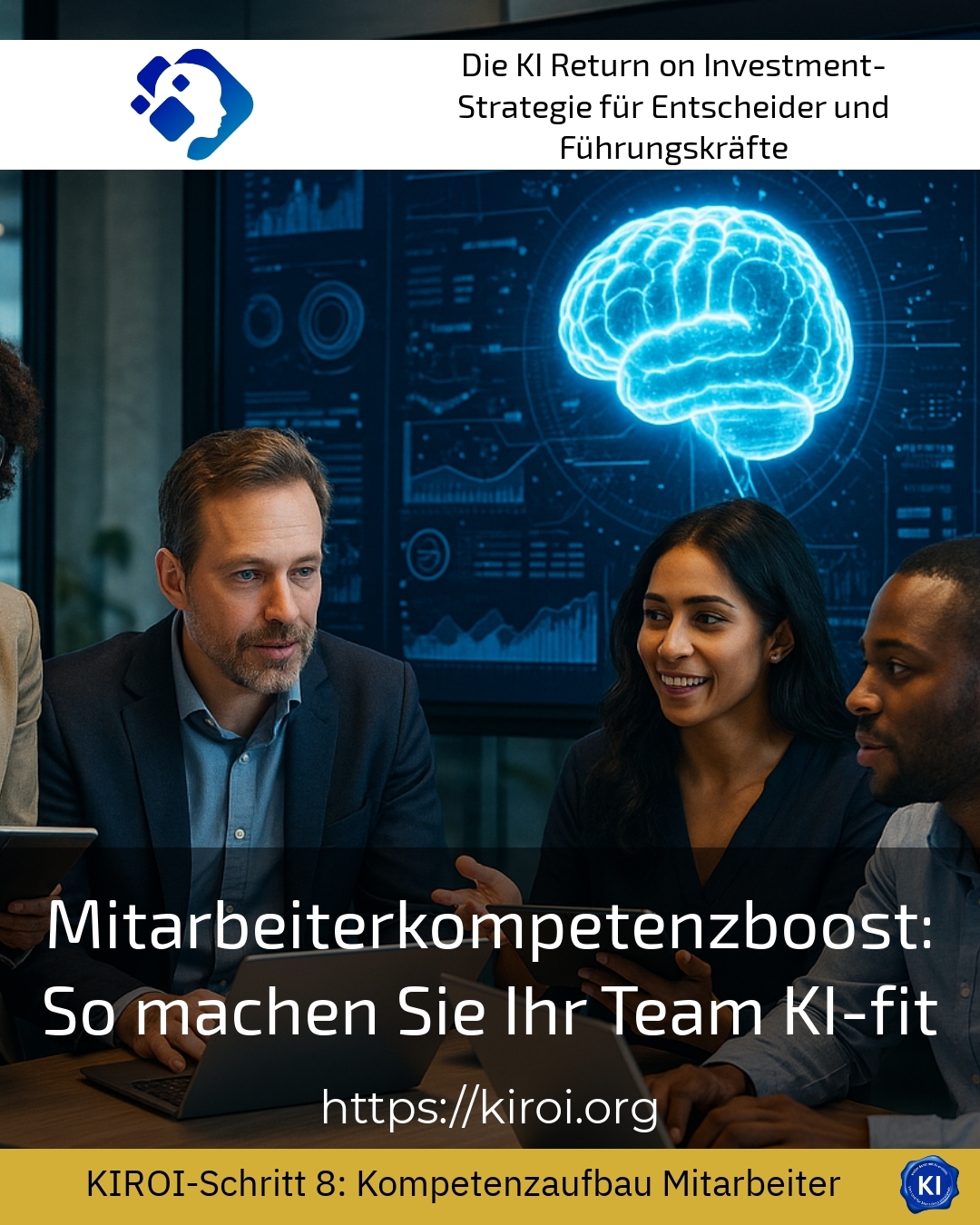
The digital transformation is fundamentally changing the workplace and poses a crucial question for companies: How do we prepare our workforce to work with intelligent systems? Boost in employee competence This becomes the key success factor, because technological investments only reach their full potential when people can use these tools confidently. In this article, you will learn what concrete steps organizations take to equip their teams for the future and why the human component should be at the center of these efforts.
The starting point: Why qualification becomes a strategic imperative
Many executives encounter similar challenges in consulting. They report resistance within the workforce towards new technologies. Employees feel overwhelmed or fear losing their relevance. These fears are understandable and deserve attention. At the same time, companies observe that competitors are achieving productivity gains through the skillful deployment of intelligent systems. The gap between technological possibilities and the actual potential used is growing steadily. Clients often report that expensive software solutions are only used superficially. The actual functions remain untapped because there is a lack of expertise and trust.
One manufacturing company, for example, implemented an intelligent maintenance system for its machines. The technology recognized wear patterns and predicted failures with remarkable precision. Nevertheless, the technicians initially ignored the system’s recommendations entirely. They trusted their own experience more than the algorithmic predictions. Only after an intensive training phase and the guidance of transruptive coaching did they learn to understand the system’s information as valuable additions to their expertise. A logistics company faced similar challenges when introducing route optimization. The drivers perceived the suggestions as paternalism and regularly deviated from the calculated routes. A trading company, in turn, struggled with the acceptance of an automated ordering system in the purchasing department.
The employee competence boost as a structured development process
Training teams to collaborate with intelligent systems requires a thoughtful approach. Random training sessions or one-time workshops are not enough. Instead, a continuous development process that combines different learning formats is recommended. This process ideally begins with an honest assessment of the existing competencies. Where are employees currently at in terms of basic digital skills? What fears and reservations exist? What potential may be dormant in the workforce that is not being discovered?
A medium-sized mechanical engineering company conducted a comprehensive competency analysis before introducing new technologies. The results positively surprised the management. Many employees already possessed digital skills that they had acquired privately. These existing resources were then specifically developed further. A chemical company discovered through a similar analysis that its laboratory technicians were already performing complex data analyses. However, they used cumbersome manual methods because they were unfamiliar with modern tools. An energy provider found that its network engineers possessed enormous experience that had not previously been systematically recorded.
Best practice with a AIROI customer
An internationally operating manufacturing company with several thousand employees faced the challenge of fundamentally modernizing its quality control. The previous inspection processes were time-consuming and prone to human errors in visual inspection. Management decided to introduce an image recognition system that would automatically identify product defects. Initially, this decision met with considerable resistance from experienced quality inspectors, who feared for their jobs. As part of the transruptive coaching support, a participatory approach was chosen, in which the employees were involved from the very beginning in the implementation. The quality inspectors trained the system using their expert knowledge and defined the criteria for error detection. This created a sense of ownership and pride in the jointly developed result. The employees recognized that their expertise remained indispensable because the system could not function without their expertise. After the successful implementation, the former auditors took on new responsibilities in system monitoring and continuous improvement. Their satisfaction increased measurably, and the error rate in production dropped significantly.
Practical approaches for boosting employee competencies in various fields
The paths of qualification differ significantly depending on the field of activity and the starting situation. Executives require different competencies than operational employees. Creative professions require different requirements than analytical activities. Nevertheless, some overarching principles can be identified that are valid across industries. A central element is learning through the concrete application of the subject matter. Abstract training courses on technological fundamentals do not motivate most people in a lasting way. Instead, training should be directly linked to everyday work. The employees then immediately recognize the benefits for their daily work.
An insurance company trained its claims handlers based on real claims from the past. The employees compared their own assessments with the recommendations of the intelligent system. In this way, they developed a sense of when they could trust the system and when critical scrutiny was appropriate. A bank qualified its customer advisors by having them conduct simulated consultations with intelligent support. The advisors learned to intelligently incorporate the system information into their conversation without neglecting the personal relationship with the customer. A hospital trained its nursing staff in using a monitoring system for vital signs through supervised practice periods on the ward.
The role of leaders in competence building
Leaders bear a special responsibility in the training of their teams. They must lead by example themselves and demonstrate openness to new ways of working. At the same time, they should create a safe space where mistakes are seen as learning opportunities. Fear of making mistakes is one of the biggest obstacles to adopting new technologies. People avoid experimenting when they fear negative consequences. Leaders can counteract this pattern by speaking openly about their own uncertainties.
The board of a automotive supplier candidly reported in a company meeting about their initial difficulties with a new planning software. This openness encouraged many employees to ask questions and seek support. The CEO of a media company organized weekly learning sessions where all levels of the hierarchy tried out new tools together. A department manager in a pharmaceutical company implemented a mentoring program in which digitally savvy younger employees supported their more experienced colleagues [1].
Overcoming resistance and fostering motivation
The Boost in employee competence It is only successful when people recognize the meaning and benefits of the change. Pure technical training is too short-sighted because it neglects the emotional dimension. Many employees are concerned about their professional future. They wonder whether their previous skills are still needed. These concerns deserve an honest answer. Transruptive coaching can provide valuable insights here because it addresses both the technical and the human aspects of transformation.
A telecommunications company found that its employees’ motivation increased after they had seen firsthand how the new tools facilitated their work. For example, call center agents received automatically relevant customer information, allowing them to have better conversations. A retailer observed similar effects as its sales representatives became more successful in advising customers through intelligent recommendation systems. Customer satisfaction increased, and with it, the success experiences of the employees. A construction company experienced a boost in motivation after its planners were relieved of time-consuming routine calculations by an intelligent system [2].
Best practice with a AIROI customer
A service company in the field of technical documentation had significant problems in implementing an intelligent translation and text generation system. The experienced technical editors perceived the technology as a threat to their professional expertise and showed clear resistance. They criticized the quality of the automatically generated texts and categorically refused to use them. As part of the collaboration with the AIROI consulting team, a differentiated approach was developed. The editors were tasked with actively improving the system by making corrections and proposing improvements. Their expertise was thus visibly enhanced rather than devalued. The quality of the automatically generated texts improved steadily as a result of this feedback. The editors began to view the system as a helpful assistant that took away routine tasks from them. This allowed them to free up time for more demanding tasks such as conception and quality assurance. The initial rejection turned into constructive collaboration between humans and machines. The department’s productivity increased significantly without any jobs being lost.
Ensure sustainability in employee competence enhancement
Employee training is not a one-time project with a defined end point. Technologies are constantly evolving, and so are the necessary skills. Companies should therefore create structures that enable and promote continuous learning. Regular refresher courses and in-depth training keep knowledge current. Peer-learning formats optimally utilize the existing knowledge within the company. Experimentation rooms allow for the safe testing of new possibilities.
A software company created an internal wiki where employees documented and shared their experiences with intelligent tools. This vibrant knowledge system grew organically and reflected the practical insights of the workforce. A consulting firm introduced monthly innovation labs where teams could try new technologies without having to fear failure. An industrial company established a network of change agents who acted as multipliers within their departments and supported colleagues when they had questions [3].
My AIROI Analysis
Observations from numerous consulting projects show a clear pattern: Technological change succeeds when people are at the center. Companies that actively involve their employees in transformation processes achieve better results than those that simply roll out technology and hope for acceptance. The investment in people Boost in employee competence It pays off multiple times. It not only increases productivity, but also strengthens employees’ commitment to the company. People who can develop remain more motivated and loyal.
At the same time, practice shows that there are no one-size-fits-all solutions. Each organization must find its own path that fits its corporate culture and the needs of its workforce. Transruptive coaching can help by providing guidance and uncovering blind spots. Leaders should have realistic expectations and be patient. Cultural changes take time. They cannot be imposed by decree; they must grow. The most successful transformations are those where employees become active agents of change rather than passive recipients of change. The future of work will be co-created by people and intelligent systems. Companies that prepare their workforce today for this collaboration will secure a crucial advantage. This advantage lies not only in efficiency but also in the innovation and adaptability of the entire organization.
Further links from the text above:
[1] McKinsey – The Human Side of Digital Transformation
[2] World Economic Forum – Future of Work
[3] Harvard Business Review – Change Management
For more information and if you have any questions, please contact Contact us or read more blog posts on the topic Artificial intelligence here.











 Deutsch
 English (UK)