
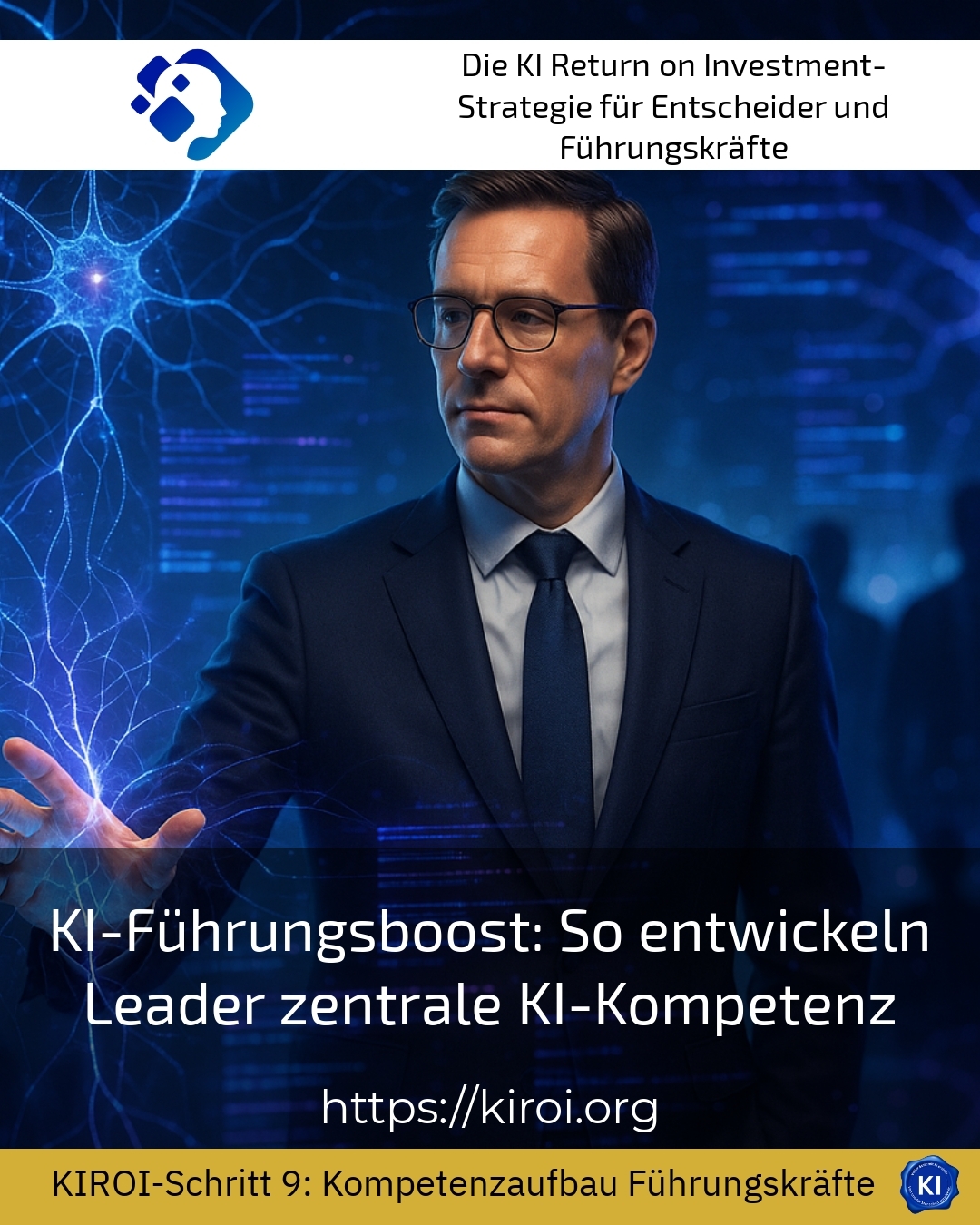
The digital transformation is currently transforming almost every industry and presenting leaders with completely new challenges that go far beyond traditional management competencies. AI Leadership Boost This is becoming a crucial success factor for companies. Today, those who hold responsibility must understand how intelligent systems can optimize processes and revolutionize business models. Many decision-makers come to advisory meetings with exactly this uncertainty. They report on the overwhelming workload caused by technological developments. At the same time, they feel the pressure to make their organizations future-proof. This article shows practically how leaders can build key competencies in handling intelligent technologies.
Why the AI leadership boost has become indispensable for modern leaders
The speed of technological innovation has increased dramatically in recent years. Executives face the challenge of making complex technology decisions. Often, they lack the necessary expertise. In the financial sector, institutions are already using automated risk analysis for credit decisions. Insurance companies are using intelligent systems for damage assessment. Banks are implementing chatbots for customer service with amazing results.
A manufacturing company in mechanical engineering recently reported similar experiences. The management realized that its competitors were implementing predictive maintenance systems. These systems reduce downtime and significantly reduce maintenance costs. However, without appropriate understanding at the leadership level, the potential remained untapped. Similarly, retail companies are increasingly recognizing the value of personalized product recommendations. Logistics companies are optimizing their route planning through intelligent algorithms. Energy providers are forecasting peak consumption with astonishing precision.
The transruptions coaching accompaniment supports executives in understanding and strategically positioning these technological opportunities, because it is precisely the combination of professional expertise and practical application that makes the crucial difference. Many clients report that they were only able to realize the significance of the changes for their industry through structured impulses. The accompaniment of projects of this type requires both technical understanding and change management expertise.
Best practice with a AIROI customer
A medium-sized healthcare company faced the challenge of preparing its management team for the deployment of intelligent diagnostic systems. The management team recognized early on that implementation would fail without the appropriate expertise at the management level. Through structured coaching, the leadership team first developed a fundamental understanding of the technology’s functionality. Subsequently, they collaborated to develop use cases for their specific departments. It became apparent that radiology could particularly benefit from imaging analysis systems. Laboratory diagnostics identified potential in the evaluation of blood images and other routine tests. After six months of intensive coaching, the leadership team felt capable of making informed technology decisions. They were able to lead their teams competently through the change process and address resistance constructively. Patient satisfaction improved measurably because waiting times for results dropped significantly.
The five core competencies for the AI leadership boost in practice
Successful executives today require a specific skill profile in handling intelligent technologies. These skills can be systematically developed and continuously expanded. The first core skill concerns strategic technology understanding. Leaders do not need to be able to program. However, they must understand what problems intelligent systems can solve. One pharmaceutical company used this understanding to accelerate drug development. An automotive supplier optimized its quality control through image-based error detection systems. A textile manufacturer improved its demand forecasts and significantly reduced overproduction.
The second competence encompasses ethical judgment in technology decisions. Leaders must be able to assess the societal impact of their decisions. For example, a human resources provider had to weigh whether automated applicant screening could be designed in a fair and transparent manner. An insurance company examined which customer data could be used ethically for risk assessments. A media company discussed intensively the automated generation of news content.
Strengthening data-based decision-making as a leadership competency
The third skill concerns the ability to critically evaluate data-based insights and incorporate them into decisions. Clients often report a lack of certainty about how to interpret algorithmic recommendations. A retail company used sales forecasts to plan its product assortment. The management team had to learn when to trust the recommendations. A construction company used project simulations for resource planning. The responsible managers developed an understanding of the limits of the predictions. A tourism company analyzed booking patterns for dynamic pricing with impressive results [1].
The fourth competency focuses on change leadership in technological change. Leaders must be able to guide their teams through change processes. Communication and empathy play a central role in this. A telecommunications company implemented intelligent network optimization and had to address employee fears. A logistics service provider implemented autonomous warehouse systems and simultaneously trained its workforce. A financial institution automated standard processes and developed new areas of activity for affected employees.
Establishing an innovation culture as the foundation for technological progress
The fifth competency encompasses the ability to establish and promote an innovation culture. Leaders must create spaces for experimentation and demonstrate a tolerance for failure. One chemical company established innovation labs where teams could test new application scenarios. Another real estate company promoted cross-departmental projects aimed at process automation. A food manufacturer established regular hackathons where employees developed and presented their own optimization ideas [2].
Best practice with a AIROI customer
An internationally operating industrial company with a focus on plant construction decided to comprehensively develop the skills of its top management. The challenge was that the executives brought very different backgrounds to the table. Some had already gained practical experience with intelligent systems. Others viewed the technology with great skepticism or even rejection. The coaching began with individual assessments of each participant’s background. Subsequently, the executives developed a vision for the use of the technology in the company together. The exchange of experiences between different business units was particularly valuable. The sales manager reported on successful pilot projects in customer segmentation. The production manager shared her experience with predictive maintenance in the production line. The human resources manager described the introduction of intelligent systems for talent identification. Following the implementation, there was a significantly higher willingness to innovate at all levels.
AI leadership boost through structured learning formats and practical application
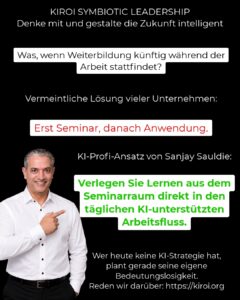
Developing technology competencies at the leadership level requires thoughtful learning formats and continuous practical application. Traditional training formats often fall short here. Executives learn most effectively through concrete projects in their own area of responsibility. An energy provider established so-called technology tandems between experienced managers and young data specialists. A consumer goods manufacturer introduced monthly technology briefings for the management team. An engineering firm developed a mentoring program in which technology-oriented junior professionals mentored senior partners.
The transruptions coaching accompaniment for projects of this type relies on the combination of theoretical knowledge and practical application. Executives develop concrete application scenarios for their specific situation. They develop decision-making skills based on the real challenges of their company. A medical technology company identified potential for automated quality testing of its products. A fashion company recognized opportunities in trend forecasting and collection planning. A sports equipment manufacturer developed ideas for personalized product recommendations in e-commerce [3].
Use networking and exchange of experience as accelerators
Exchange with other executives significantly accelerates the development of competencies. Cross-industry networks enable learning from different contexts and experiences. A facility management company benefited from insights from the real estate industry on building automation. A trade show organizer adopted ideas from the retail sector for visitor flow analysis and control. A educational institution adapted concepts from the entertainment industry for personalized learning support.
Many executives report that it was only when they interacted with like-minded peers that their perspective expanded. They recognized new application possibilities for their own industry. After a sector meeting, a publishing house developed innovative concepts for automated content creation. An architectural firm discovered potential in parametric design optimization. An accounting firm identified opportunities for automated document review and anomaly detection [4].
My AIROI Analysis
The development of technology competencies at leadership level is no longer an optional additional qualification today. It is one of the key success factors for future-oriented organizations. AI Leadership Boost It enables leaders to make informed decisions and to guide their teams competently through change processes. The AIROI-methodology provides a structured framework for competence development. It combines technological fundamental understanding with practical application competence and ethical reflexivity.
What seems particularly important to me is the realization that technology expertise at the leadership level does not require deep technical knowledge. Rather, it is about the ability to strategically align technological opportunities and to use them responsibly. Leaders must be able to ask the right questions. They must be able to critically evaluate vendor promises. They must be able to lead their teams through change. The examples from various industries impressively show what potential can be unlocked through competent leadership.
The transruptions coaching accompaniment can provide valuable impulses and accelerate the development of competencies. However, it does not replace the continuous consideration of technological developments within one’s own sphere of responsibility. AI Leadership Boost It only achieves its full effect through the combination of structured learning, practical application, and regular reflection. Leaders who consistently follow this path position themselves and their organizations successfully for the challenges of the digital future.
Further links from the text above:
[1] McKinsey: The State of AI
[2] Harvard Business Review: Artificial Intelligence Insights
[3] Gartner: Artificial Intelligence Research
[4] World Economic Forum: AI and Robotics
For more information and if you have any questions, please contact Contact us or read more blog posts on the topic Artificial intelligence here.






 Deutsch
 English (UK)