
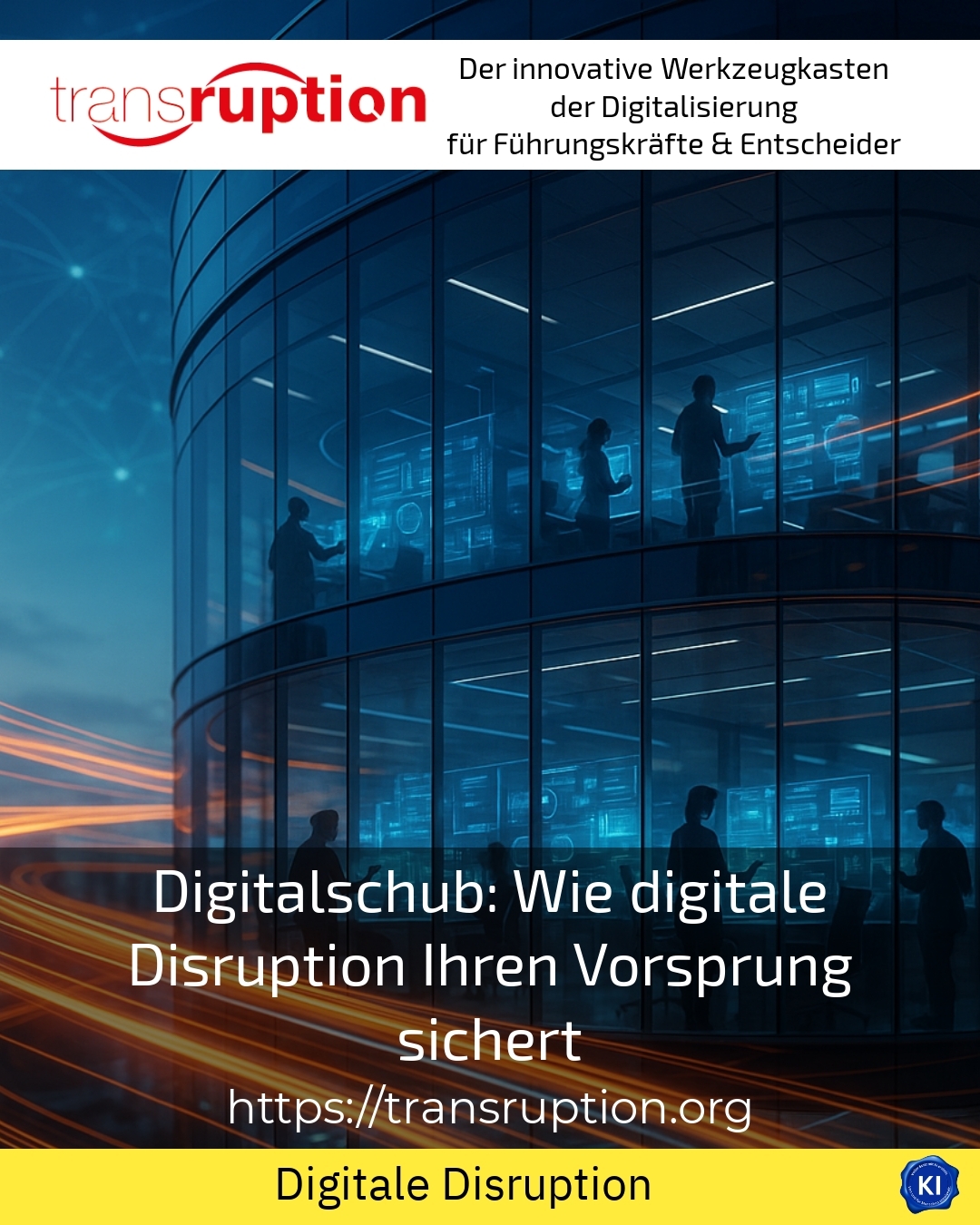
A targeted digital push opens up diverse opportunities for companies to assert themselves in the dynamic competitive landscape in the long term. More and more organisations are recognising the importance of understanding digital disruption not as a threat, but as a catalyst for innovation and growth. Digital technologies can make processes more efficient, open up new business areas and sustainably improve the customer experience.
Why a digital boost is crucial today
Many industries are experiencing profound changes in businesses due to technological innovations. Automation, artificial intelligence, and cloud solutions are now part of everyday life. For example, companies in mechanical engineering are integrating IoT devices to monitor machine performance in real-time and minimise downtime. In retail, new digital platforms enable personalised shopping experiences. This significantly increases customer loyalty and sales opportunities. Retail companies, for instance, report that a well-organised digital push has noticeably strengthened their market position.
Digital tools are also creating faster and more transparent processes in the financial sector. Banks are automating credit decisions using predictive analytics, thereby improving both efficiency and customer satisfaction. In turn, the automotive industry is using digital simulation methods to accelerate product development and test innovations early on. Such examples show deeper impacts: the digital push means strategically and agilely developing the entire business.
BEST PRACTICE at the customer (name hidden due to NDA contract) As part of its digital transformation, a medium-sized industrial company focused on the end-to-end digitalisation of production planning. Manual processes were replaced by a cloud-based system. The result: planning times were reduced by 40 %, and product quality measurably increased due to the minimisation of error sources.
Shaping the digital push through smart technologies
Anyone looking to leverage the digital boost should integrate modern technologies such as artificial intelligence, automation, and data analysis early on. An example from the service sector shows how chatbots can relieve customer support while providing quick answers. This allows the service team to focus on more complex issues and increases customer satisfaction.
The use of ERP systems also helps to automate workflows and create transparency across business processes. A logistics company was able to reduce its transportation costs and shorten delivery times by digitising its supply chains. This also makes the company more flexible in meeting new market demands.
BEST PRACTICE at the customer (name hidden due to NDA contract) A service provider in the healthcare sector implemented a digital platform for scheduling appointments. The digital boost relieved the reception desk and allowed spontaneous rescheduling in real time, which significantly increased patient satisfaction.
The significance of a clear strategy for the digital push
The digital boost is most successful with a clearly defined strategy. Companies should first assess the current situation and formulate goals that are concretely measurable. It is also important to involve employees and overcome existing fears of change through comprehensive training. This increases acceptance and strengthens the change culture.
The automotive supplier industry is an impressive example: companies with a structured digital roadmap can react more quickly to market shifts and precisely cater to new customer needs. Company managements often report how they have been able to shorten innovation cycles and develop new business models through the digital boost.
BEST PRACTICE at the customer (name hidden due to NDA contract) A consumer goods manufacturer used the digital boost to implement several product innovations within a year through agile project management. This led to a significant increase in revenue and improved their position against competitors.
Digital boost for your practice – practical recommendations
How can companies actively support the digital boost? First, a thorough analysis of processes is recommended to identify digitisation potentials. At the same time, pilot projects should be realised that quickly provide feedback and minimise risks.
Another option is to rely on modular software solutions. These are often more flexible and particularly attractive for medium-sized companies, as they can better control investments. Collaboration with experienced consultants can also provide important impetus to avoid typical stumbling blocks in digital transformation.
Personalised workshops and coaching help teams to engage with digital change and internalise new ways of working. This support makes the digital push more sustainable and ultimately increases the chances of success for the entire project.
My analysis
The digital boost is currently an important lever for companies to remain competitive. It opens up diverse opportunities to make processes more efficient, drive innovation, and improve customer satisfaction. Through a strategic approach and employee involvement, it is possible to actively leverage digital disruption and thus secure a market advantage. Impressive practical examples can be seen in almost every industry, demonstrating how valuable a well-measured and well-supported digital boost can be.
Further links from the text above:
SAP – What is digital transformation?
Prosci – The Significance of Digital Transformation
ICB GmbH – 10 Success Factors for Digital Transformation
For more information and if you have any questions, please contact Contact us or read more blog posts on the topic TRANSRUPTION here.










 Deutsch
  English (UK)