
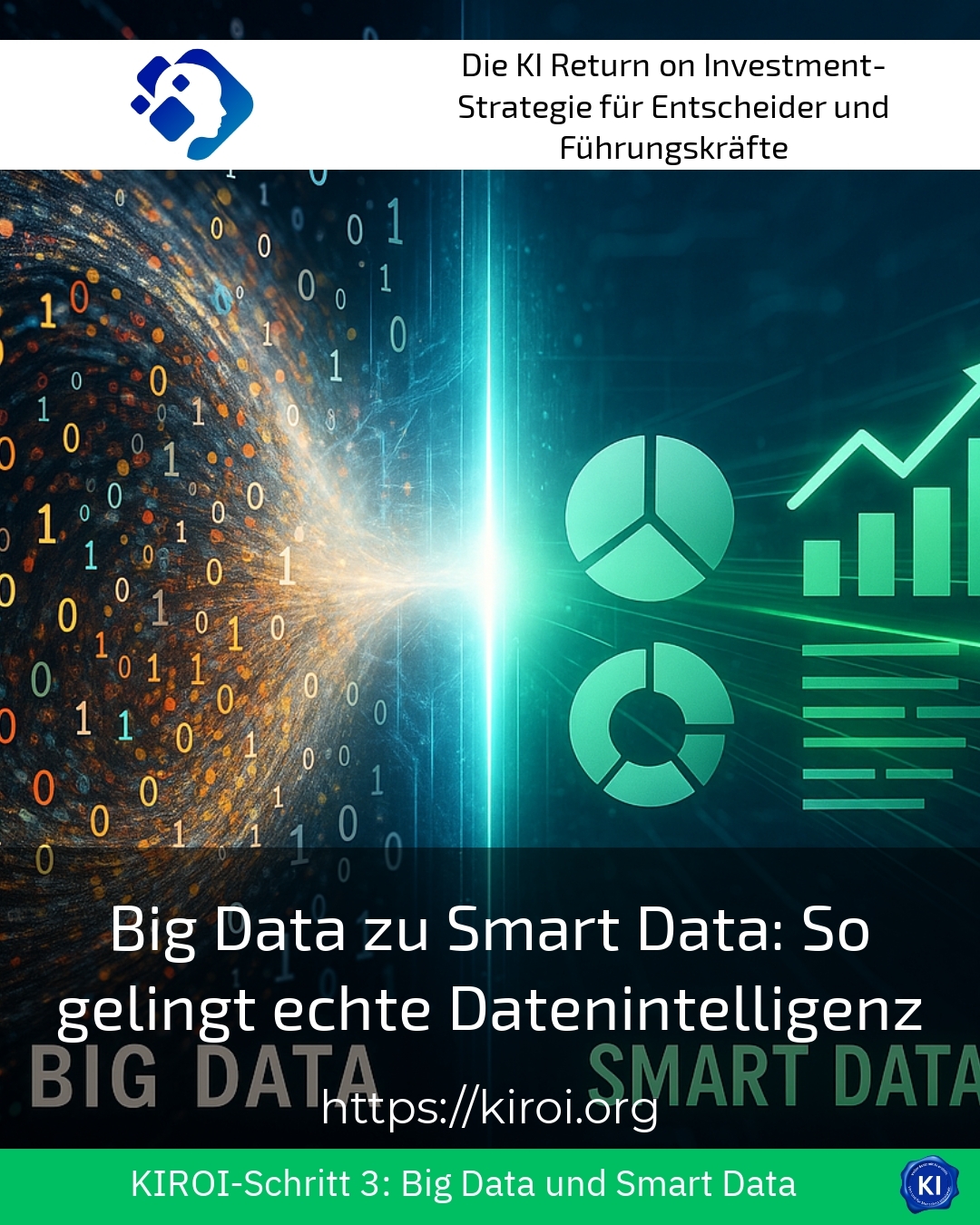
Have you ever wondered why companies are drowning in mountains of information yet unable to make informed decisions? The transformation from big data to smart data represents the crucial turning point where raw volumes of data become true data intelligence. Today, many organisations collect more information than ever before, but only a few manage to generate genuine added value from it. This challenge affects almost every industry and business model alike.
Why the sheer volume of data is no longer enough
The digital world produces unimaginable amounts of information every second. Servers store transactions, sensors record measured values, and communication systems log every exchange. Yet, many executives report a paradoxical phenomenon. They have more data at their disposal than ever before, but at the same time feel less informed. This feeling arises from the lack of processing and contextualisation of the collected information. A logistics company, for example, records millions of location data points of its vehicles every day. However, without intelligent evaluation, these figures remain worthless. Real value is only created when algorithms recognise patterns and derive recommendations for action. An energy supplier continuously collects its customers' consumption data. The mere storage of these values does not create a competitive advantage. Intelligent analysis systems, on the other hand, can predict consumption peaks and deploy resources optimally. This pattern is also clearly evident in the healthcare sector. Hospitals have extensive patient files and treatment histories. It is only through intelligent linking that insights for better therapy decisions emerge.
Big Data to Smart Data: The path to real value creation
The transformation of raw data into actionable insights requires a structured process. This begins with the cleaning and harmonisation of disparate data sources. This is followed by enrichment with contextual information and the application of analytical methods. A retail company illustrates this process by way of example. It records point-of-sale data, inventory levels and customer footfall in its branches. First, these different data streams must be brought together. Then algorithms enrich the information with external factors such as weather data. Finally, forecasts are generated for optimal order quantities and staff planning. A financial institution goes through a similar transformation process when granting loans. Transaction histories, credit rating information and market data flow together. Intelligent systems assess risks and recommend individual terms. A manufacturing company uses this approach for predictive maintenance. Sensor data from machines are continuously evaluated. Failures can thus often be detected before they occur.
Best practice with a AIROI customer
A medium-sized enterprise from the mechanical engineering sector approached us with a classic data intelligence challenge. The company had accumulated production data over years without systematically evaluating it. The production management reported recurring quality issues whose causes remained hidden. As part of our transruptions coaching support, we first analysed the existing data landscape and identified relevant correlations between machine parameters and scrap rates. Together, we developed a strategy for the phased implementation of intelligent analysis tools. The employees were actively involved in the transformation process and received training on how to interpret the new dashboards. After six months of intensive support, a clear improvement in manufacturing quality became apparent. The scrap rate was noticeably reduced, and for the first time, production management was able to make data-driven decisions in real time. Particularly valuable was the newly acquired ability to identify quality deviations at an early stage and take countermeasures. This project illustrates how transruptions coaching can support companies in transforming their data strategy.
Technological foundations for data intelligence
Modern analytics platforms form the foundation for intelligent data processing. Cloud-based solutions now enable flexible scaling of computing capacities. Machine learning and Artificial intelligence significantly accelerate pattern recognition [1]. A telecommunications provider uses these technologies to predict customer churn. By analysing usage patterns and service requests, vulnerable customer relationships can be identified. An insurance company employs similar methods for loss prevention. Historical claims are analysed and risk profiles are created. A tourism company forecasts booking trends by evaluating search queries and social media. These examples demonstrate the range of possible applications for intelligent analysis systems. The technological infrastructure must always be adapted to specific requirements. Not every company needs the same solution.
Human expertise as a key factor in big data to smart data
Technology alone is not enough to achieve true data intelligence. Human expertise and experience remain indispensable components of successful data projects. Analysts must interpret results and place them within a business context. A pharmaceutical company illustrates this aspect in drug development. Algorithms can recognise patterns in clinical trials. However, evaluating the medical relevance requires medical expertise. A real estate company combines market data analysis with the experience of its agents. This results in more precise valuations and better investment decisions. A media company uses data analysis for its content strategy. However, creative implementation remains in the hands of experienced editors [2]. This combination of technological capability and human judgment characterises successful data projects.
Create the organisational prerequisites
The introduction of data-driven decision-making processes often requires profound organisational changes. Cross-departmental collaboration becomes a necessity. Data silos must be broken down and common standards established. A retail group describes this shift in its corporate culture. Previously, purchasing, marketing and logistics worked largely in isolation from one another. Today, they share a common database and make coordinated decisions. An automotive supplier has had similar experiences. The integration of development, production and quality assurance enables faster responses to problems. A municipal utility has restructured its entire organisation around data flows. Customer service, network planning and energy procurement now use the same sources of information. These examples show how profound the transformation can be.
Best practice with a AIROI customer
A financial services provider approached us with the challenge of making their customer service more data-driven. The advisors felt overwhelmed by the flood of information and wanted clearer recommendations for action. As part of our transruptions coaching process, we supported the company in defining relevant key performance indicators and developing user-friendly dashboards. Integrating the employees into the design process was particularly important. They contributed their experience from customer contact and helped prioritise the information. The technical implementation was carried out step-by-step to avoid overload. Following the rollout, the advisors reported a noticeable improvement in their quality of work. They were able to identify customer needs more quickly and make suitable offers. Customer satisfaction developed positively, and the efficiency of the advisory meetings also improved. This project demonstrates how transruptions coaching can bridge the gap between technology and daily working practice. The human component always remained at the heart of our support.
Consider data protection and ethical aspects.
The intelligent use of data raises important questions regarding data protection and ethics. Companies must create transparency and build trust [3]. Compliance with legal requirements is merely the minimum standard in this regard. An online retailer experienced this when personalising its offers. Overly intrusive recommendations led to customer irritation and complaints. A return to more respectful methods improved customer relations. A bank had to review its credit decision algorithms. Unconscious discrimination in the models had been noticed. The correction required intensive collaboration between technicians and ethics experts. A healthcare provider is struggling with the balance between data usage and patient protection. Sensitive information requires special care and clear consent processes. These examples illustrate the complexity of ethical issues.
Recommend step-by-step implementation
The transformation from big data to smart data should take place gradually. Pilot projects make it possible to gather experience without excessive risk. Successes can then be systematically transferred to other areas. A logistics company began by optimising a single delivery route. Following positive results, the approach was rolled out across the entire network. A hospital started by analysing patient flows in the emergency department. The insights gained were later incorporated into the planning of other departments. A construction company initially piloted data-driven project management on a showcase project. The success also convinced sceptical project managers of the benefits. This iterative approach reduces resistance and increases acceptance within the company.
My AIROI Analysis
The transformation of raw data into actionable intelligence poses fundamental challenges for companies across all industries while simultaneously offering enormous opportunities for sustainable competitive advantages. In my consulting practice, I regularly encounter organisations that, despite massive investments in data infrastructure, fail to achieve noticeable improvements in their decision-making quality. The causes often lie not in the technology, but in missing strategies and insufficient involvement of employees. Transruption coaching can provide valuable impulses here and accompany companies in the development of tailored solutions. The most successful projects are characterised by a clear focus on business benefit. Technology serves as a tool, not as an end in itself. Human expertise remains indispensable for the interpretation and implementation of data-driven insights. The ethical dimensions of data use deserve special attention and should be considered from the outset. Companies that take these aspects into account create the foundation for sustainable data intelligence. The path from data collection to real value creation requires patience, endurance and the willingness to learn continuously. I am happy to support organisations in this endeavour with my experience from numerous successful projects.
Further links from the text above:
[1] IBM – What is machine learning?
[2] McKinsey – Insights on Analytics and AI
[3] Datenschutz.org – GDPR Overview
For more information and if you have any questions, please contact Contact us or read more blog posts on the topic Artificial intelligence here.











 Deutsch
  English (UK)