
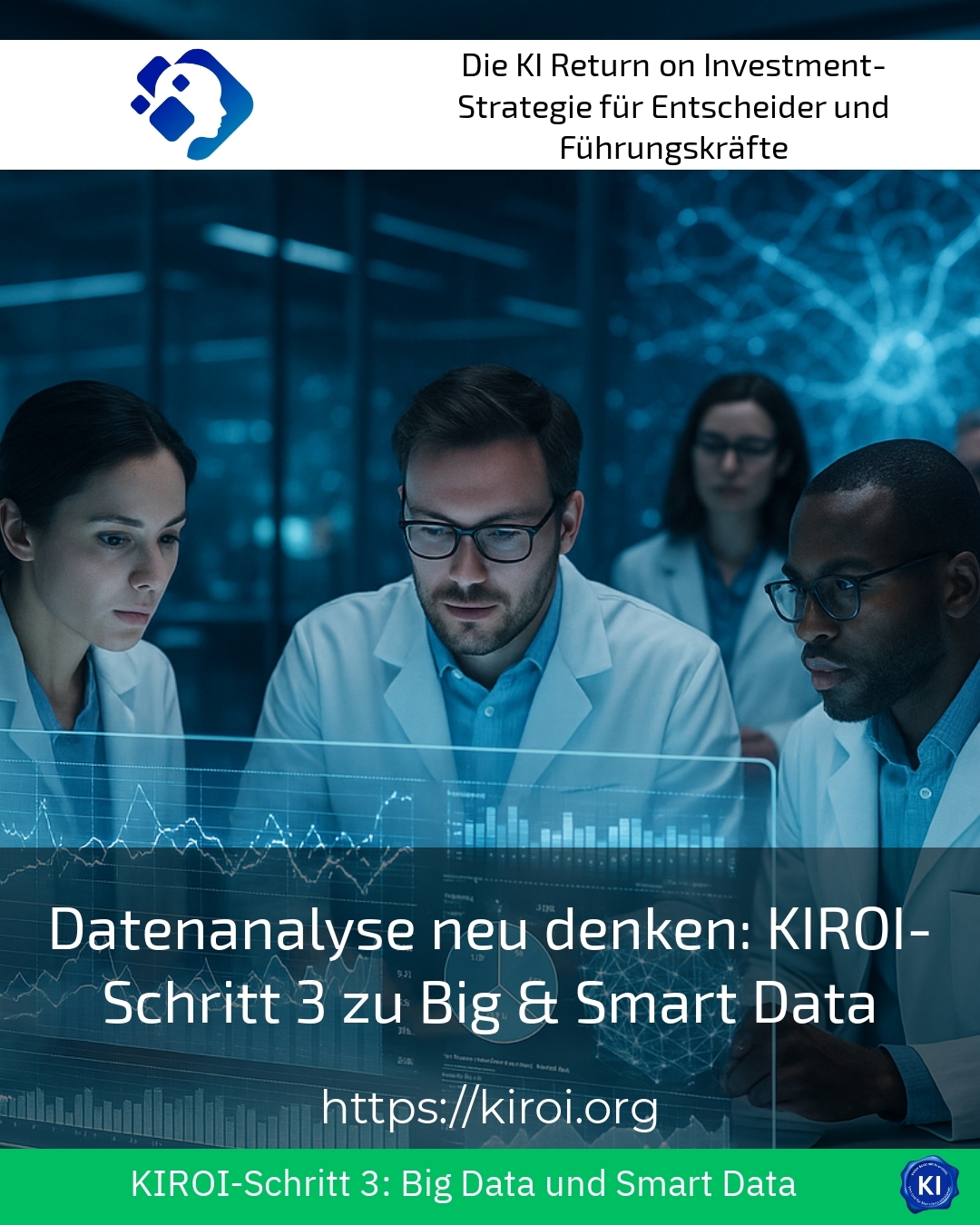
Rethinking data analysis means not only collecting large amounts of data, but also using it purposefully and intelligently. The focus is on transforming Big Data into Smart Data – a process that helps companies gain valuable insights and make data-driven decisions with confidence. AIROI Step 3 offers structured support precisely for this purpose, to successfully master this challenging phase in data management.
From Big Data to Smart Data: A New Approach in Data Analysis
Big Data refers to massive, diverse, and rapidly emerging datasets from a wide variety of sources. The challenge lies in processing these raw data masses in such a way that they are transformed into valuable information – this is Smart Data. In the AIROI process, the third step means specifically supporting this transformation while always keeping an eye on benefits, data quality, and data protection.
Practical examples show how companies benefit from this approach. A trading house can use Smart Data to precisely analyse purchasing behaviour, identify seasonal trends, and thus dynamically adapt its product range. A logistics company, in turn, uses intelligent data analysis to optimise routes in real-time and reduce costs. In marketing, high-quality data helps to finely segment customer profiles and precisely control personalised campaigns.
BEST PRACTICE with one customer (name hidden due to NDA contract) The support was in the transition from conventional data storage to smart real-time data processing. This enabled the client to react more quickly and precisely to market changes operationally – with clearly measurable success in increased revenue and efficiency gains.
Methodological aspects of modern data analysis in AIROI step 3
The third step focuses on several core processes: data preparation, pattern recognition, and semantic analysis. Raw data is structured, errors are corrected, and missing values are supplemented. Subsequently, algorithms and machine learning are applied, which are capable of discovering hidden connections. This transforms seemingly complex information into relevant knowledge.
In practice, this means, for example, that a manufacturing company will continuously analyse production data in order to predict downtimes and plan maintenance cycles more effectively. An e-commerce provider uses similar methods to systematically identify abandoned purchases and reduce them through targeted measures. In healthcare, smart data analysis helps to better manage patient flow or evaluate treatment outcomes on a data-driven basis.
BEST PRACTICE with one customer (name hidden due to NDA contract) the implementation of automated anomaly detection in production data was accompanied. This enabled early warning of machine failures and significantly reduced unexpected downtime.
KIRO's practical support in the development of Smart Data
AIROI's coaching support ensures that all stakeholders understand the complexity of data analysis and can confidently implement it in their projects. A key element is the close collaboration between data experts and operational teams to communicate requirements and results transparently.
For instance, AIROI coaching supports a start-up in building its data-driven marketing strategy by helping to identify the right data sources and select analysis methods. Another client from the financial sector reports that the support in developing a dashboard for risk analysis significantly accelerated decision-making processes. An industrial company uses the consultancy to leverage customer data for personalised after-sales services.
BEST PRACTICE with one customer (name hidden due to NDA contract) AIROI supported the project team in building an interdisciplinary understanding of data processes and confidently managing the transformation of Big Data into Smart Data – with sustainable knowledge transfer and continuous development.
Recommendations for Successful Data Analysis
For businesses, it is recommended to first define clear questions. Data analysis works particularly well when it is specifically geared towards concrete problems or opportunities. Another important tip is data quality assurance. Properly prepared data is a prerequisite for achieving reliable results.
In addition, the results should be presented in an understandable and accessible way. Visualisations and dashboards help to give non-experts access to the findings. This creates a shared understanding that promotes the implementation of data-based measures.
In practice, this could mean: a service provider analyses customer satisfaction data and conveys the insights in a manageable way to the service team. A retail business uses visual analyses of sales figures to dynamically adjust its product range. An insurance company develops personalised offers with data models that are based on actual customer needs.
My analysis
Rethinking data analysis and taking the step from Big Data to Smart Data is a strategic driver of success for many industries. The combination of quality-assured data, intelligent evaluation and practical support, as implemented in AIROI Step 3, creates transparency and enables well-founded decisions. Companies that embrace this development can set impulses, optimise processes and secure competitive advantages. At the same time, the reflected use of data opens up new potential for innovative products and services.
Further links from the text above:
[1] What is Smart Data? – b2bsmartdata.de
[3] Big Data explained simply – expedition.digital
[6] With these data analysis methods you can your – omr.com
[9] Mastering Data Analysis: AIROI Step 3 – risawave.org/
For more information and if you have any questions, please contact Contact us or read more blog posts on the topic Artificial intelligence here.










 Deutsch
  English (UK)