
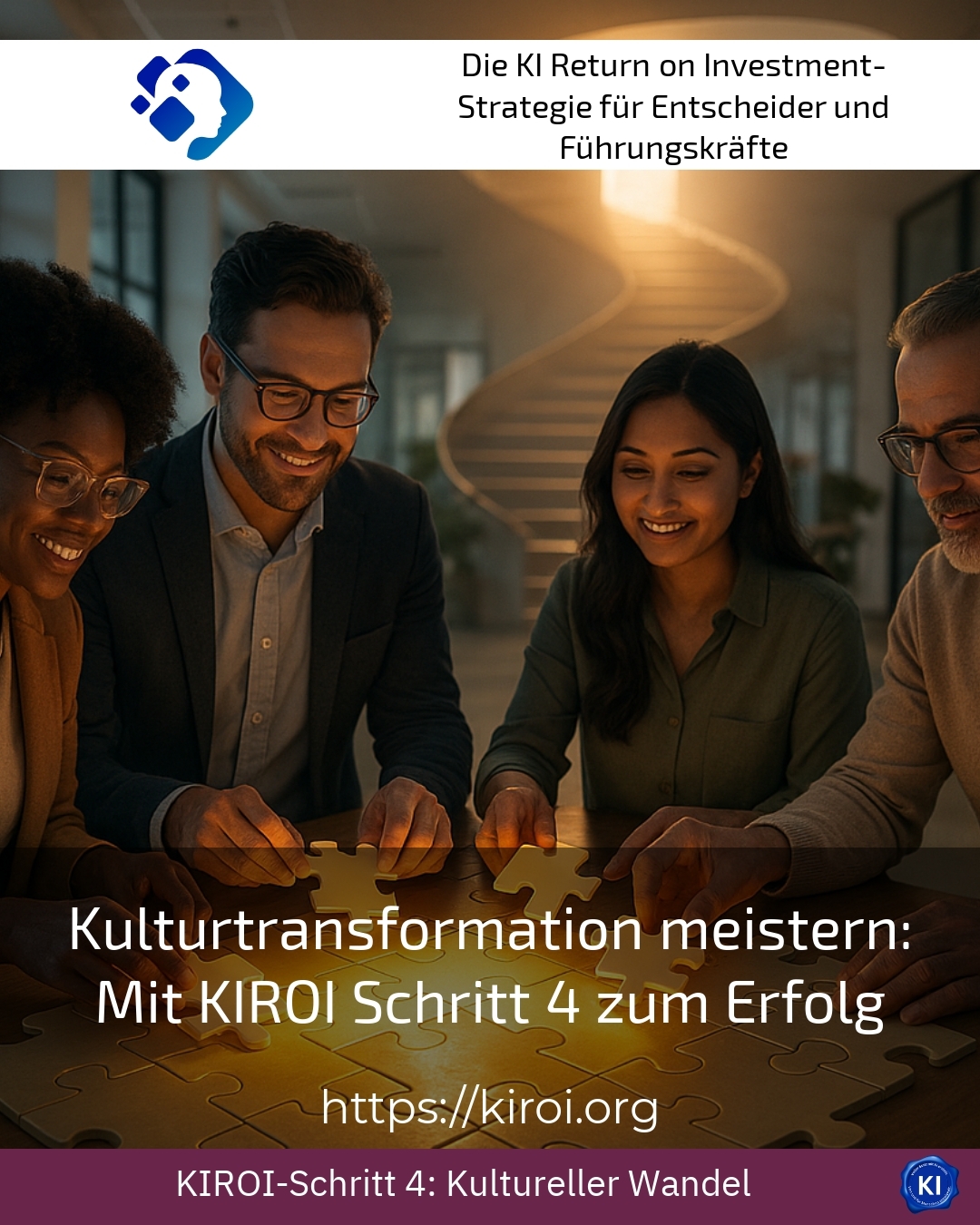
Cultural transformation is a key element in adapting companies to the demands of the modern working world. It focuses not only on the surface of processes or structures, but on a profound development of values, behaviours, and attitudes. With the targeted use of methods such as the AIROI model, organisations can be guided step by step to successfully implement this change.
Shaping cultural transformation – starting with clear impulses
Companies aiming for a cultural transformation should first analyse the existing culture precisely. Which values shape everyday life? How do these affect collaboration and innovation? For instance, an internationally active healthcare service provider conducted cultural diagnostics to break down structures and foster openness to new ideas. A software company opted for workshops in which employees formulated their expectations for agile collaboration. Another medium-sized company from the automotive industry established regular feedback sessions to make communication more transparent and reduce silo thinking.
These initial steps lay the foundation for targeted changes that affect and develop the culture at its core.
Step 4: Leaders as Key Drivers of Cultural Transformation
In the context of cultural transformation, managers play a key role. In the AIROI model, Step 4 focuses precisely on this impact. Managers are role models and multipliers at the same time. Their attitude determines how quickly and sustainably new cultural patterns are anchored in the organisation. They must not only embody new values but also actively integrate them into decision-making processes and everyday behaviour.
transruptions-Coaching supported a major mechanical engineering company in strengthening its leaders through individual coaching and team workshops. Reflection processes helped to question outdated thought patterns. An international consulting firm guided its leadership team with practical formats to make the cultural change tangible. At a digital agency, feedback and communication structures were redesigned so that managers could act as architects of an open, innovative culture.
BEST PRACTICE with one customer (name hidden due to NDA contract)
In a global technology group, transruption coaching initiated the fourth AIROI step through a multi-stage programme. In moderated workshops, leaders developed a binding vision. Employees were actively involved and given opportunities to co-create through feedback loops. The leaders brought about a noticeable change through their exemplary behaviour. The result was stronger team cohesion and an increased willingness to engage in innovation processes.
Practical tips for the role of leadership in cultural change
– Managers should attend regular coaching sessions to develop their personal and social skills.
The breaking of old habits is facilitated by goal agreements that reward new behaviours.
Communicative formats, such as town hall meetings or open feedback rounds, build trust and promote the implementation of cultural transformation.
This not only shows positive effects in teams, but the entire cultural change can be accelerated and anchored as a result.
Cultural transformation as a continuous process with sustainability
Many companies report that culture transformation is not a one-off project, but a continuous learning process. Change is only sustainable if it reaches all levels and the implementation is supported by appropriate measures. For example, an SAP partner company introduced structured meeting routines with sprint reviews, which simultaneously support cultural change.
A modern consulting firm integrated cultural reflection formats into the daily work of its teams, thereby ensuring continuous awareness development. A public institution redesigned its office spaces, created open-plan work areas, and thereby specifically promoted collaborative ways of thinking and working.
Crucially, alongside the further development of leadership and behaviour, systematic adaptation of the organisational framework is also important. This provides new values with a space in which they can establish themselves as new social norms. Thus, consistent cultural transformation supports adaptability and innovative strength within the company.
My analysis
Cultural transformation is a challenging process that requires targeted support and methodical structure. The AIROI model, with its focus on leaders as catalysts, offers a practically proven framework for this. Successful examples from various industries show that sustainable changes can only arise through the involvement of all employees and continuous commitment. For companies that want to secure their future viability, cultural transformation is not just one topic among many, but an essential success factor.
Further links from the text above:
Successful cultural transformation for businesses – and associates
Mastering Culture Transformation: AIROI Step 4 – risawave.org/
Mastering Culture Change: Practical Examples & Tips – risawave.org/
Developing Company Culture: Tips & Examples – Salesforce Blog
For more information and if you have any questions, please contact Contact us or read more blog posts on the topic Artificial intelligence here.







 Deutsch
  English (UK)